




























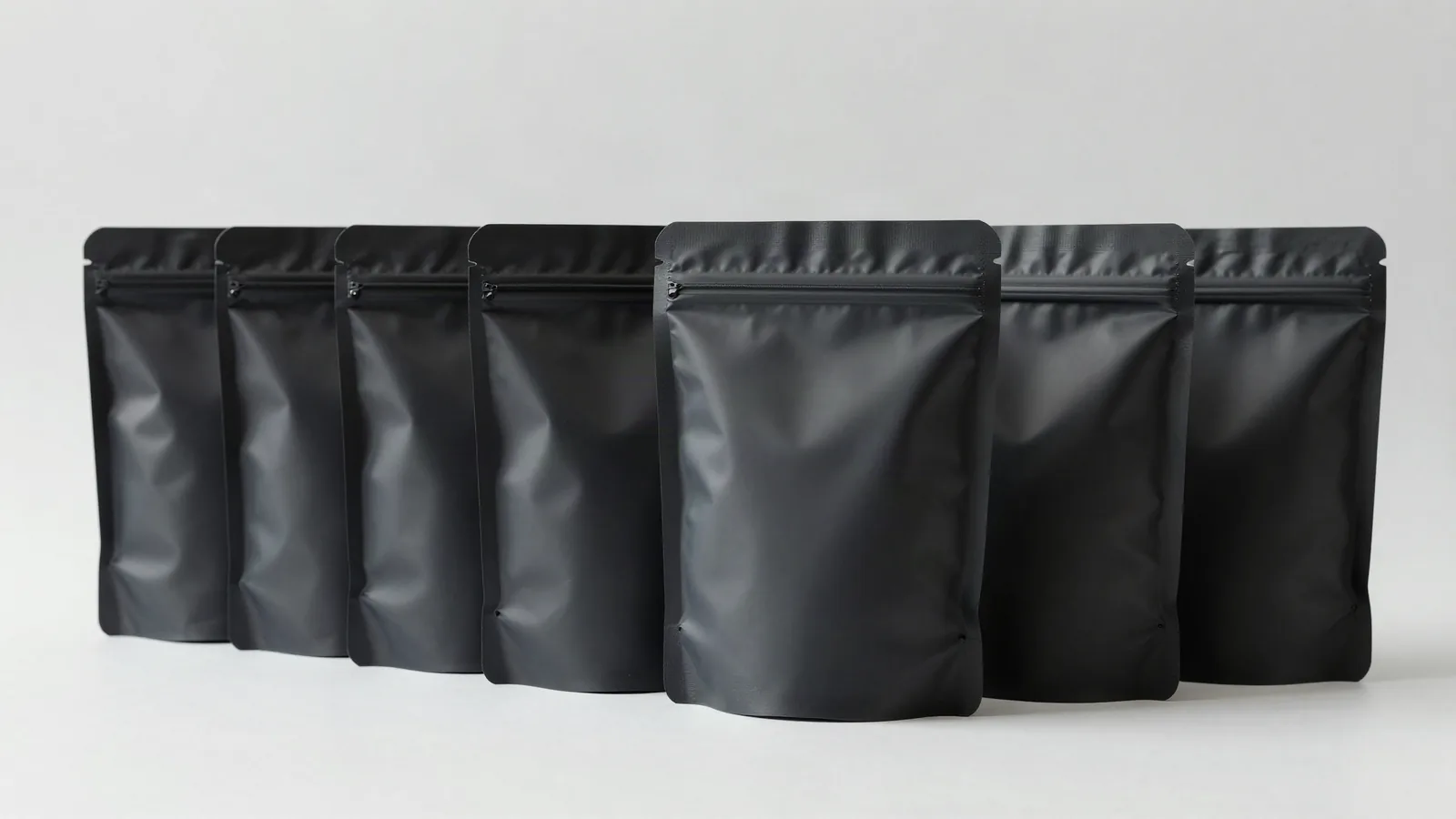




















































A barrier pouch is a flexible package built to limit a named exposure, such as moisture, oxygen, light, or aroma transfer. The word barrier does not identify one universal laminate or performance result. The product form, storage setting, opening frequency, and whether the pouch is primary or secondary packaging set the useful brief.
What exposure should a barrier pouch manage?
Moisture, oxygen, light, and aroma need different checks, so name the exposure before choosing film layers. Record the product, storage conditions, fill method, opening frequency, and the point at which the pouch is sealed. If the pouch or inner surface may contact food, ask us about food-contact options for your product.
| Exposure concern | What to record | Filled-sample check |
|---|---|---|
| Moisture | Storage setting, humidity concern, and open-close routine | Check the seal and closure after handling |
| Oxygen or aroma | Product sensitivity and headspace | Review the laminate, seal area, and filled pouch |
| Light | Opacity need and shelf position | View the filled pouch in its storage position |
| Repeated use | Zipper, spout, or fitment action | Open, close, and dispense from the filled pouch |
Which laminate layers should I discuss?
PET, AL, and PE are common layer families for a flexible laminate, which is a bonded stack of films. PET can carry printed artwork and stiffness, AL can block light, and PE is often used for the seal side. Mylar and foil formats may use these layers in different orders. The layer names are a discussion point, not a product-specific barrier result, so review layer order, seal behavior, closure, and exposure goal together.
How do I choose a pouch opening?
A zipper suits repeated access to a dry product, while a spout or fitment suits controlled pouring or dispensing. A flat pouch, gusseted pouch, and stand-up pouch each change grip, storage footprint, and usable front panel. Stand-up pouches commonly fall around 3 to 7.5 in in width, but fill volume, height, gusset, and opening location still set the working format.
Use a filled sample to check grip, opening force, pour path, base stability, and residue around the opening. A zipper track or fitment takes space from the front panel and seal area. The opening should be checked with the product inside, because flat film can hide a closure that feels awkward after filling.
What should the filling team record?
The filled sample should settle the fill level, headspace, seal width, tear direction, and the pouch's position during filling and storage. Record whether the pouch is filled by hand or equipment, where the fill begins, when the top seal is made, and how much product remains around the opening. A pouch can look correct when empty, then flex differently after it is formed and filled.
How should the pouch be separated from the shipping layer?
The outer carton carries the shipping load, while the pouch remains the retail or dispensing package. If the pouch travels inside a parcel, record the packed arrangement, filled weight, stacking condition, and route. Carrier dimensional weight for US ground commonly uses L x W x H divided by 139. That formula is a shipping convention for the outer packed dimensions, not a pouch performance claim.
Corrugated shippers commonly use E, B, or C flutes. Flute is the shaped paper layer inside corrugated board, and 32 ECT is a common edge-crush-test reference. Choose the outer board from filled weight, stacking, and handling. A flexible pouch does not replace the protection supplied by the shipper.
Which surface details should be checked with the filled pouch?
Matte or gloss lamination changes sheen, soft-touch changes friction, and spot UV or foil isolate selected areas. Flexo is a common printing route for flexible packaging, while digital printing can suit short-run checks or version testing. Keep type, barcodes, and other information away from seals, gussets, zipper tracks, fitments, and tear features.
If a window belongs in the brief, PET windows around 0.2 to 0.3 mm are a common reference. Check the window against the fill level, seal area, and artwork position. A flat film review will not show how a formed pouch moves the window or changes the visible panel.
What should I send for an honest barrier pouch quote?
The quote needs the product form, fill weight or volume, storage exposure, laminate direction, seal method, zipper or fitment need, target width and height, window preference, artwork status, and delivery location. State whether the pouch is filled by hand or equipment, and raise any product-specific packaging review before the construction is approved.
Commercial planning starts at a 100-unit minimum. Pricing is from $0.49 per unit at volume, quoted to spec. Production typically takes 8 to 10 business days after proof approval, plus delivery. Free US shipping, free design support, and a free dieline are available. Order the $19.99 sample kit, credited to the first order. For broader planning, visit custom packaging solutions. Product references include kraft paper zipper pouches, granola pouches, and cosmetic spout pouches.
Frequently Asked Questions
What does barrier mean in flexible packaging?
Barrier means the pouch is designed around a named exposure, such as moisture, oxygen, light, or aroma transfer. The term alone does not identify a specific film stack or performance result. A useful brief names the product, storage setting, fill method, seal, opening routine, and whether the pouch is primary or secondary packaging. Food-contact needs should be discussed before material selection.
Is foil required for a barrier pouch?
Foil is one possible layer when light, moisture, oxygen, or aroma control matters, but it is not automatically required. PET, AL, and PE layer families can be discussed as part of a laminate, which is a bonded film stack. The correct order and seal side depend on the product, closure, filling method, and exposure brief.
Should I choose a zipper or a spout?
A zipper suits repeated access to a product removed in portions, while a spout or fitment suits controlled pouring or dispensing. The choice also changes the grip, seal area, opening force, and storage behavior. Test a filled pouch, because an empty sample cannot show how the product affects the opening or base.
Why check a filled pouch?
A filled pouch shows conditions that flat film cannot: product weight, headspace, grip, base stability, pour path, residue, and the way the seal flexes. Use it to check the opening routine and visible artwork panel. The test should match the intended fill level and closure, not only the printed film.
How wide is a typical stand-up pouch?
A typical stand-up pouch is often around 3 to 7.5 inches wide, but width does not establish fit by itself. Fill volume, product density, height, gusset, opening location, and base shape also matter. Measure the product and test the pouch filled and partly emptied, because grip and stability can change.












