




























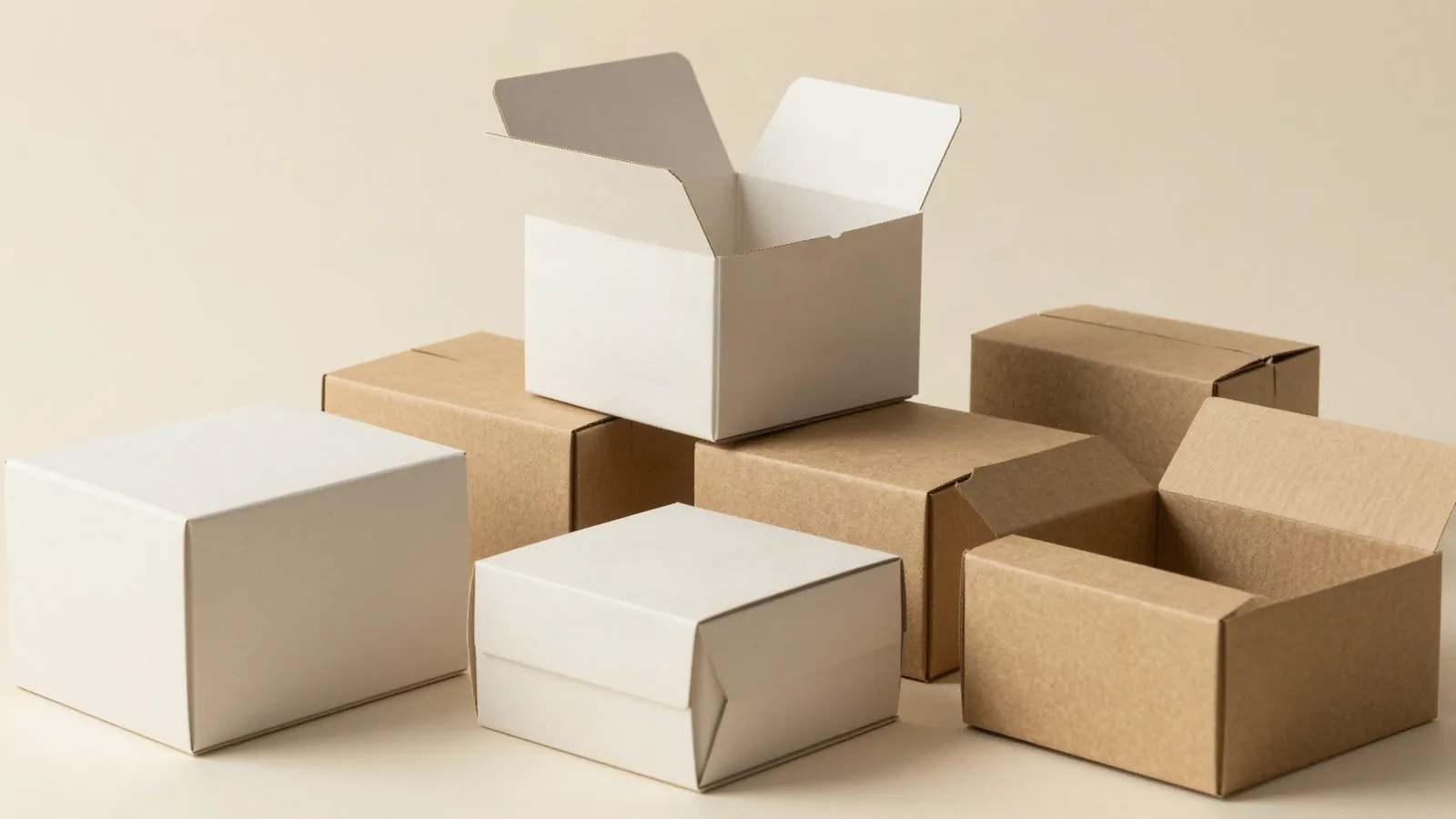




















































A custom book box is a package built around a finished book and the pieces that travel with it. A pack-out is the complete set placed inside the box, such as the book, wrap, printed matter, insert, and gift item. Decide what the recipient sees first, what lifts out next, and what stays protected underneath before choosing the structure.
How should a custom book box open?
The opening order should match how the recipient sees and removes each piece. A two-piece rigid box reveals a base and lid. A magnetic flap creates a hinged front. A drawer or slide makes the reader pull the contents forward. A sleeve can hide and reveal the printed package beneath it. Choose the sequence around the book's weight, the companion pieces, and how often the recipient will reopen the box.
What belongs inside a book box?
The cavity must account for the finished book, dust jacket or wrap, cards, bookmark, tissue, insert, and every object paired with the book. A paperback, hardcover, journal, or edition set can change the fit. So can a letter, edition certificate, or small gift item. Keep the presentation layer separate from the outer delivery layer in the brief.
| Pack-out layer | Possible contents | Buyer decision |
|---|---|---|
| Primary item | Paperback, hardcover, journal, edition set | What must stay centered and protected? |
| Printed companion | Card, letter, edition certificate, bookmark | Visible on opening or stored beneath the book? |
| Protective layer | Tissue, paperboard divider, fitted insert | What prevents scuffing, shifting, or contact? |
| Gift item | Small object paired with the book | Separate cavity or removable holder? |
| Outer route | Sleeve, mailer, secondary shipping package | How does the presentation box travel? |
Which board works for a book box?
Rigid chipboard in the 1.5 to 3 mm range, wrapped in 100 to 157 gsm art paper, gives a book box a fixed shape without a fold. Folding paperboard can use SBS, C1S, or C2S in the 12 to 24 pt range. Kraft board commonly falls in the 18 to 24 pt range. These are typical industry references. Confirm the material after the book, pack-out, closure, and handling route are defined.
How does a book box ship?
A presentation box and a shipping package have different jobs. A rigid box may need a sleeve, mailer, or secondary package for its delivery route. A folding carton or roll end tuck top mailer, commonly referenced as FEFCO 0427, can support a direct parcel path for suitable products. State whether the box will sit on a shelf, be handed over as a gift, enter a subscription shipment, or travel inside another mailer.
What dimensions should a custom book box use?
Measure the finished pack-out, not an empty box, before setting the cavity. Write dimensions as length x width x depth and label every measurement as inside or outside. About 1/16 in, or 1.5 mm, is a common packaging tolerance reference, but the filled pack-out must settle the fit. For US ground, carrier dimensional weight uses L x W x H / 139. Record the outer dimensions after the lid, sleeve, tray, or drawer is assembled.
Which catalog structures can I compare?
A foam insert changes the cavity, while a shoe carton, wine box, or Woozy bottle box changes the structure being compared. Use custom foam box inserts for a fitted holder, shoe box packaging for folding carton movement and lid clearance, wine box packaging for presentation-led structure, and custom Woozy bottle boxes for an organized shaped cavity. These are structural references, not book-specific dimensions.
How do I approve the book box proof?
Load the real book and every companion piece into the proposed cavity before approving artwork. Check the opening order, removal grip, lid or drawer movement, sleeve tension, insert fit, corner clearance, title placement, spine-facing panels, readable type, and finish locations. Keep the approved proof, physical reference, quantity, destination, and outer shipping plan together.
For the design brief, use custom packaging design and include the book format, complete pack-out, opening sequence, structure reference, artwork, finish, and destination. Custom Packaging Lane quotes book boxes from a 100-unit minimum, with pricing from $0.49 per unit at volume, quoted to spec. Production is typically 8 to 10 business days after proof approval, plus delivery. Free US shipping and free design support include a free dieline. Order the $19.99 sample kit, credited toward the first order.
Frequently Asked Questions
What is a complete book-box pack-out?
A complete book-box pack-out includes the finished book plus every piece placed in the cavity, such as a dust jacket or wrap, card, letter, edition certificate, bookmark, tissue, divider, insert, or gift item. Measure and arrange those pieces together because a book that fits alone may not fit once the full set is loaded.
When does a rigid book box need an outer mailer?
A rigid book box needs an outer mailer when the presentation box and the delivery route require different structures. The rigid box can organize the opening sequence, while a sleeve, mailer, or secondary shipping package handles the parcel path. Check the assembled outside dimensions of both layers before approving the final pack-out.
What is FEFCO 0427 used for?
FEFCO 0427 is a common reference for a roll end tuck top mailer. The format combines a corrugated shell with a tuck closure and can be compared with a folding carton when a package must move through a parcel route. The actual fit still depends on the book, pack-out, board, and assembled outside dimensions.
How should I measure a book with a dust jacket?
Measure the book with its dust jacket or wrap in the intended finished position, then add every card, bookmark, tissue layer, insert, or companion item. Record length x width x depth and label the measurements as inside or outside. A physical filled reference is the best check for lid clearance and removal grip.
Should a book box use a tray or insert?
A tray or insert is useful when the book and companion pieces need separate positions or a defined removal order. A fitted insert changes the usable cavity and may need its own clearance under the lid, sleeve, or drawer. Choose the insert after mapping the complete pack-out, then check the assembled box with every piece loaded.












