




























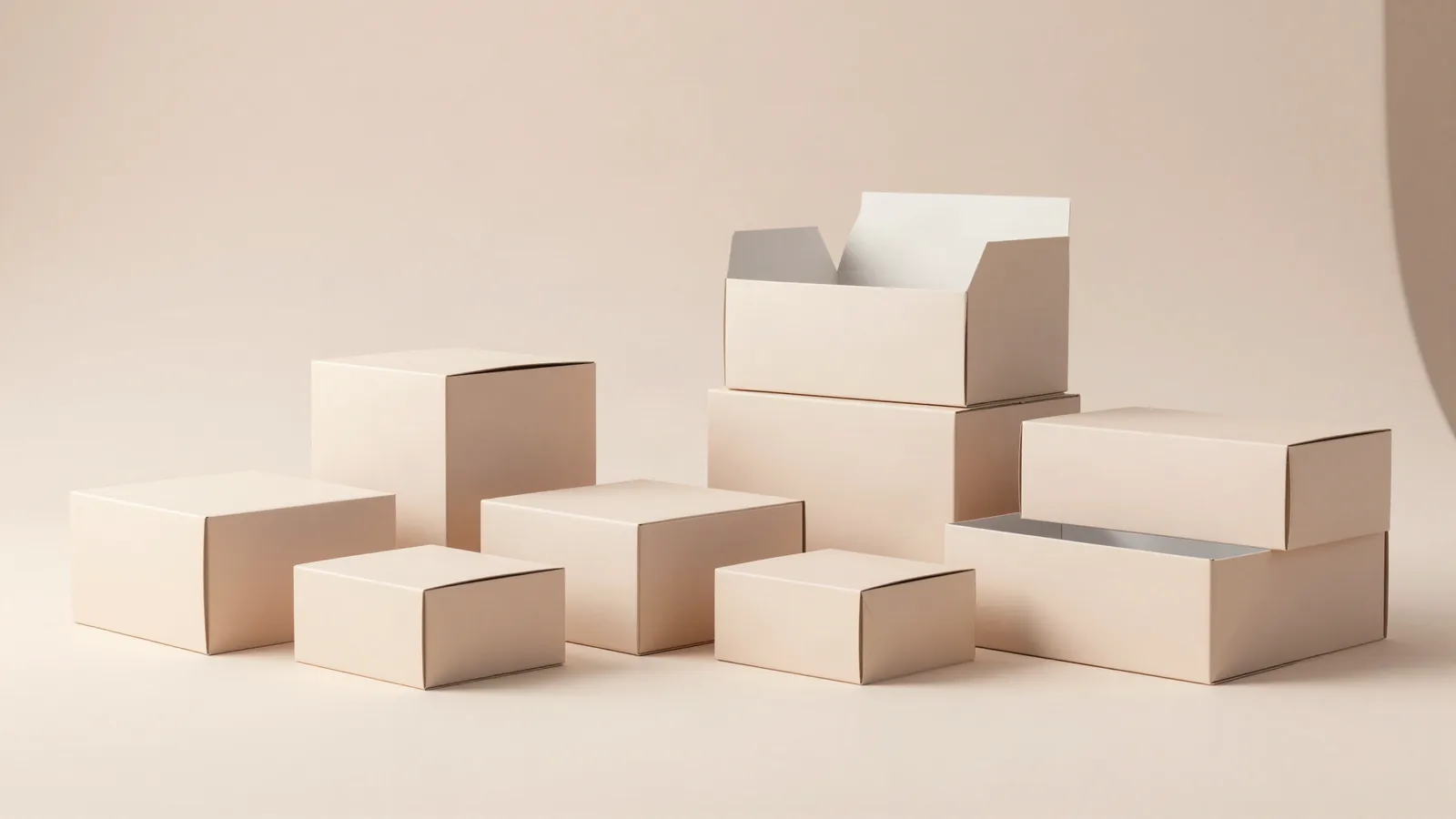




















































What should a custom package box brief cover?
A custom package box brief starts with the packed product, opening method, handling route, artwork, quantity, and destination. A dieline is the flat cutting template used to print, cut, and score the box. Record the packed length, width, and depth, including caps, lids, sleeves, and protective components that will sit inside.
State whether the box will sit on a shelf, travel in a parcel, or be handed over as a gift. Add the required panels, brand colors, copy, barcode position, finish, insert, window, and artwork status. For a broader format review, see custom packaging solutions.
How should package box dimensions be measured?
Use inside length by width by depth when the box must hold a product, then list the outside dimensions for shelving and shipping review. A common packaging tolerance reference is about 1/16 in, or 1.5 mm, but the actual product, insert, score placement, and closure still need a physical check.
Measure the item in its normal packed orientation and note any part that can move during handling. A cap, handle, sleeve, or protective wrap can change the cavity even when the main product dimensions look simple. Keep the outer footprint separate from the cavity so the quote does not confuse product fit with shipping size.
Which materials fit different package box jobs?
Board choice changes stiffness, folding behavior, print surface, and parcel performance. The references below are typical industry ranges, and the final grade follows the packed item and structure.
| Material direction | Common industry reference | Typical use |
|---|---|---|
| SBS, C1S, or C2S paperboard | 12 to 24 pt | Printed folding cartons and sleeves |
| Kraft paperboard | 18 to 24 pt | Natural visual direction for cartons and wraps |
| Rigid chipboard | 1.5 to 3 mm, wrapped in 100 to 157 gsm art paper | Firm presentation boxes and set packaging |
| Corrugated board | E, B, or C flutes, with 32 ECT as a common reference | Mailers and shipping-oriented structures |
SBS gives a clean coated print surface. Kraft paperboard keeps more of its natural fiber appearance. Rigid chipboard holds shape without a fold, while corrugated board uses a fluted inner layer to add thickness and cushioning.
Which package box structure should I compare?
A straight tuck end and reverse tuck end differ in opening direction and seam position. An auto-lock or crash-lock bottom creates a formed base when the package needs to close quickly. A roll end tuck top mailer is a parcel-oriented structure, and FEFCO 0427 is a recognized mailer-style reference.
For presentation, compare a two-piece rigid box, magnetic flap, drawer or slide, or sleeve. Choose after the fit and handling route are defined. A structure that looks right empty can pinch the product once the insert, scores, and closure are in place.
How do printing and finishing change the box?
Offset CMYK suits detailed paperboard artwork, digital printing can suit short runs or artwork tests, and flexo is common for corrugated work. Match the print route to the substrate and ink coverage. RGB artwork can shift when converted for press, so approve the digital proof against the intended color and panel positions.
Matte or gloss lamination changes reflection and scuff behavior. Soft-touch changes hand feel, spot UV creates a gloss contrast, and foil stamping, embossing, and debossing add reflective or tactile detail. Put each finish on a map and keep folds, seams, glue tabs, and closures clear.
Which product formats can guide the box comparison?
Use shoe box packaging as a reference for a broad, easy-access opening. Compare wine box packaging when a taller product and insert shape the structure. custom Woozy bottle boxes can frame bottle-fit questions, while custom foam box inserts can help when movement inside the outer box needs attention. These pages are starting points, not substitutes for measuring the actual item.
What should I check before approving a custom package box?
Review the full-size dieline and confirm inside dimensions, panel orientation, cut lines, score lines, seam position, closure clearance, insert position, artwork direction, bleed, and finish boundaries. A physical mockup can expose interference that a flat file hides, especially around folds and closures.
Place the packed product in its intended orientation and check the insert before approving the proof. Low-resolution art, RGB conversion, type too close to a score, and missing bleed are easy to catch before print and expensive to discover after the run is on a pallet.
How do I start a custom package box quote?
Send the packed product dimensions, desired opening, quantity, destination, artwork status, finish preference, insert, and window requirements together. The $19.99 sample kit is credited to the first order and can help compare material and finish directions.
Custom Packaging Lane quotes to spec from a 100-unit minimum, with pricing from $0.49 per unit at volume. Production is typically 8 to 10 business days after proof approval, plus delivery, with free US shipping and free design support, including a free dieline.
Frequently Asked Questions
What is the first step for a custom package box?
The first step for a custom package box is measuring the packed product, then recording inside length, width, and depth, opening method, handling route, artwork panels, and finish direction. Those details separate a folding carton, mailer, rigid box, sleeve, or insert-supported format. A measured brief gives the dieline a practical starting point.
Should custom package box dimensions be inside or outside?
Custom package box dimensions should be inside length by width by depth when product fit is the goal. Outside dimensions matter for shelving, parcel planning, and carrier review because board thickness and folded edges add space. Check the physical product against the proposed cavity before approval, especially when an insert, closure, or protruding component changes clearance.
Which custom package box structure fits parcel delivery?
A roll end tuck top mailer is a common parcel-oriented structure, and FEFCO 0427 is a recognized mailer-style reference. Corrugated E, B, or C flutes can be compared when shipping handling matters. A folding carton may sit inside an outer shipper, but the complete handling path should guide the structure choice.
Can a custom package box use special finishes?
A custom package box can use matte or gloss lamination, soft-touch, spot UV, foil stamping, embossing, and debossing. Offset CMYK suits detailed paperboard artwork, digital printing can suit short runs, and flexo is common for corrugated work. Put every treatment on a finish map and keep it clear of folds, seams, glue tabs, and closures.
What should I send for a custom package box quote?
A custom package box quote should include the packed product dimensions, desired opening, quantity, destination, artwork status, finish preference, insert or window requirements, and handling route. Add photos or an orientation sketch when the product has protrusions or a specific presentation side. The quote should be based on the measured item, not only the box name.












