



















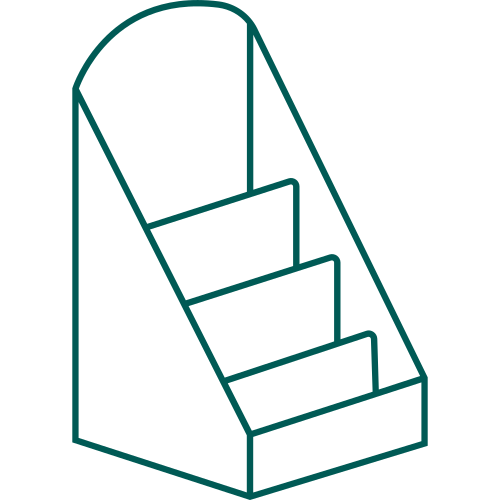


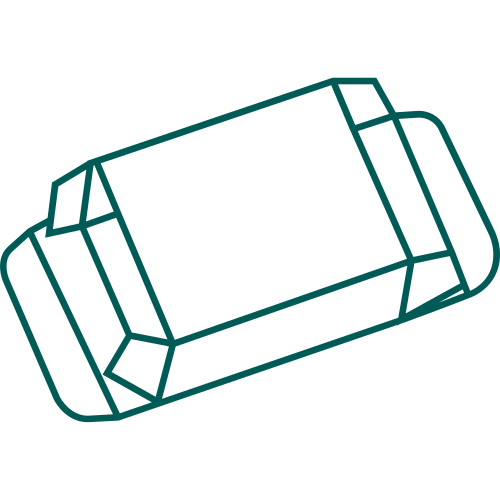











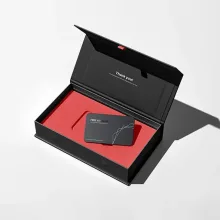














































A custom packaging planefield is a set of fields for one package brief. It records the product, inside measurements, material, closure, artwork, finish, and delivery need in one place. That separation matters. A visual idea can hide a fit problem, and a product dimension alone cannot describe how the package opens, folds, prints, or ships.
What should a custom packaging planefield record first?
Retail presentation, parcel shipping, gifting, and display place different demands on the same package. Record the product and the job it must perform, then separate physical fit from visual direction. A product may need an insert or protective structure while the front panel still needs readable information and a defined opening.
| Brief field | Record this | It affects |
|---|---|---|
| Product and use | What it holds and how it is handled | Structure, opening, and support |
| Inside size | Length x width x depth measured inside | Panel dimensions and fit review |
| Material | Board, substrate, or laminate direction | Stiffness, print surface, and weight |
| Closure | Tabs, tuck panels, lock, sleeve, or drawer | Assembly and user interaction |
| Print and finish | Coverage, coating, and decorative effects | Artwork and surface scope |
| Delivery | Ship-to location and packout needs | Delivered-package planning |
Which material fields need real values?
Folding cartons commonly use SBS, C1S, or C2S paperboard in a typical 12 to 24 pt range. SBS means solid bleached sulfate; C1S and C2S identify one-side and two-side coated board. Board caliper is its measured thickness. Kraft board in a typical 18 to 24 pt range changes the surface and paper direction. Rigid formats commonly use chipboard in a typical 1.5 to 3 mm range wrapped in 100 to 157 gsm art paper. GSM means grams per square meter. Corrugated flute is the wave-shaped paper layer. E, B, and C flutes have different thickness and stacking behavior, and 32 ECT, an edge crush test rating, is a common performance reference. Mylar or foil laminates can combine PET, AL, and PE layers. PET is polyester film, AL is aluminum, and PE is polyethylene. These are industry conventions, not CPL order data.
Which structure should the planefield compare?
Closure and opening direction come before artwork because folds, seams, and closure panels determine the printable area. Straight tuck end and reverse tuck end cartons open differently. Auto-lock bottom and crash-lock structures change how the base forms during setup. A mailer may use a roll end tuck top construction, commonly associated with the FEFCO 0427 convention. Two-piece rigid, magnetic flap, drawer or slide, sleeve, gable, and pillow formats each change the package's folds, assembly, and removal motion.
How should print and finish fields be written?
Print method and surface treatment answer different questions in a brief. Offset CMYK, the four-color process, is commonly used for detailed paperboard artwork, flexo is common for corrugated board, and digital printing can suit short runs or artwork testing. We send a digital proof before anything prints. Matte or gloss lamination changes the surface. Soft-touch changes the tactile feel. Spot UV, foil stamping, embossing, debossing, and window patching affect selected areas. Mark folds, seams, glue zones, and required copy before decorative effects are assigned.
Which product references can anchor the planefield?
A real product page gives the abstract fields something physical to compare. Custom tin packaging raises questions about a container, lid, and surface. Custom taper candle packaging helps frame a tall product presentation. Custom stevia packaging gives a compact unit-pack direction, while custom drone packaging boxes prompts questions about component arrangement and protective layout. These are references, not substitutes for the actual product dimensions.
How should dimensions and proof details be checked?
Inside length x width x depth is the cleanest starting record for fit. A dieline is the flat cutting template that shows the package before it is folded. About 1/16 in, or 1.5 mm, is a common tolerance reference during dieline review. Check product clearance, seam placement, fold lines, and window areas against the actual item or a reliable drawing. For US ground planning, L x W x H / 139 is a common dimensional-weight convention based on the outer package. It is a planning reference, not a destination-specific charge.
What files should accompany a planefield quote request?
Start with inputs that settle fit before decoration.
- Provide the actual product, component drawing, or reliable reference.
- State inside length, width, and depth, plus any clearance concern.
- Identify the preferred structure and closure behavior.
- Name the board, substrate, laminate, or finish direction.
- Mark artwork panels, print coverage, seams, folds, and information areas.
- Share the delivery location and intended handling environment.
What ordering terms should the planefield contain?
The fields are ready for a quote when the product and delivery job are written down. Projects are quoted to spec from a 100-unit minimum, with pricing that may be from $0.49 per unit at volume. Production is typically 8 to 10 business days after proof approval, plus delivery. Free US shipping and free design support are available, with a free dieline. The $19.99 sample kit is credited toward the first order. Use custom packaging design when the fields are ready for design and proof review.
Frequently Asked Questions
What does custom packaging planefield mean?
Custom packaging planefield is a planning framework for one packaging project, not a fixed box style. It brings product fit, inside measurements, structure, board or substrate, artwork, finish, and delivery into one reviewable brief. The framework exposes missing inputs before the dieline and proof are prepared.
Which measurements belong in a packaging planefield?
Record the product's length, width, and depth first, then define the intended inside length, width, and depth of the package. Add protrusions, handles, lids, seams, inserts, and clearance concerns. About 1/16 in, or 1.5 mm, is a common packaging tolerance reference during dieline review.
Why keep material and structure as separate fields?
Material controls stiffness, surface, and print behavior, while structure controls folds, closure, assembly, and opening. A 12 to 24 pt paperboard direction does not describe the same package behavior as a corrugated mailer or a rigid drawer. Separate fields stop a visual concept from being mistaken for a finished construction.
Can one planefield cover both retail and shipping?
One planefield can cover retail and shipping when the two jobs are recorded separately. Retail may prioritize front-panel artwork, finish, and opening. Shipping may require a mailer structure, corrugated flute, or internal support. Listing both uses makes it possible to test whether one format can do both jobs.
What files help start a planefield review?
Start with the product or a reliable drawing, inside measurements, preferred structure, artwork files, logo assets, copy, finish references, and delivery location. For several components, show their arrangement and orientation. The clearer the input, the less the first dieline has to guess about fit, panel order, and opening direction.