




























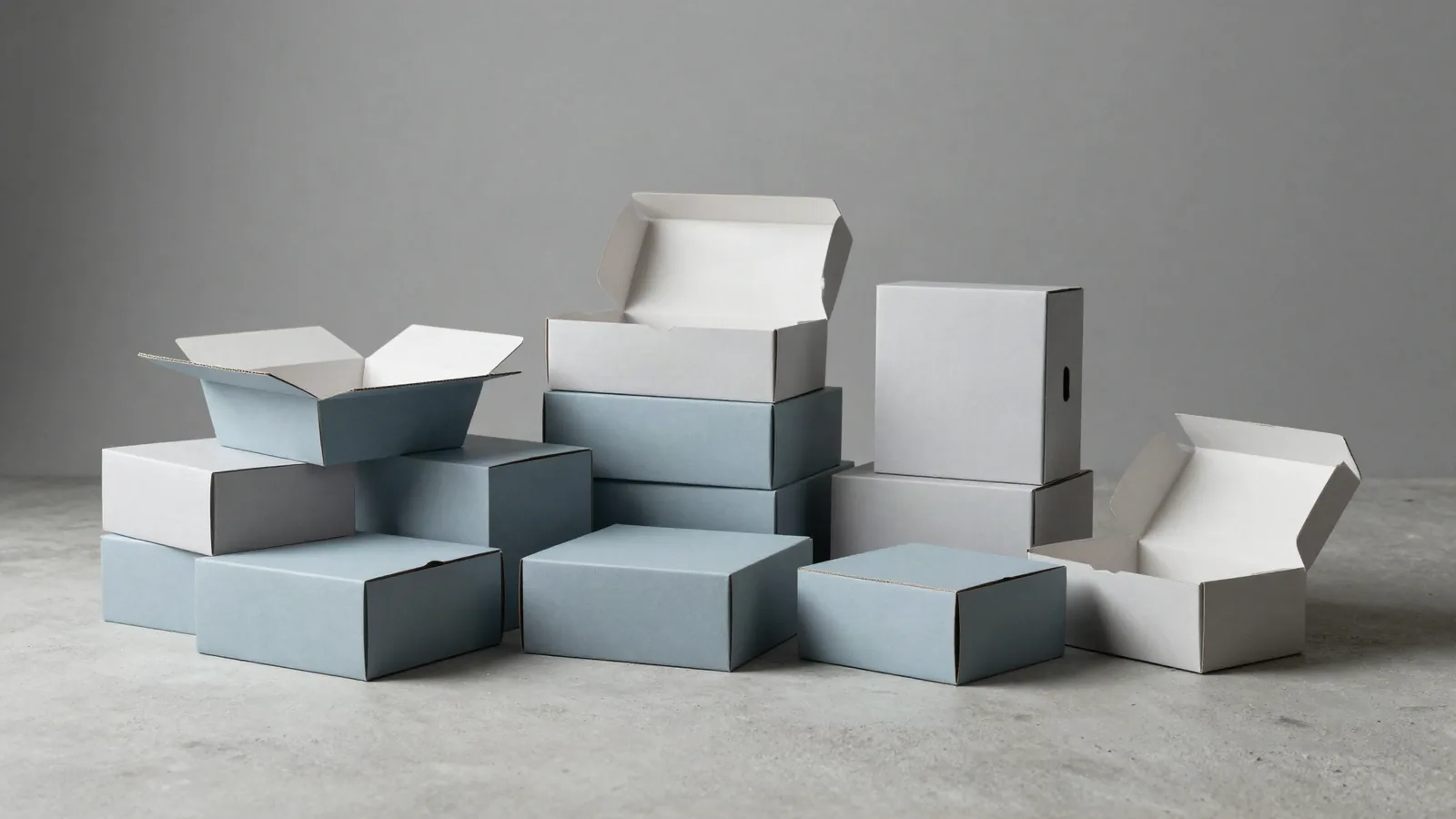




















































What should I lock before making seasonal artwork?
Lock the product fit, opening, material, and pack-out before choosing holiday colors or campaign graphics. A dieline is the flat cutting template for a package, with panels, scores, cut lines, glue tabs, and fold order shown in one drawing. State length, width, depth, clearance, closure, insert, artwork panels, finish, quantity, and delivery format. Mark which panels can change and which must stay fixed across versions. Custom printed macaron packaging boxes prompt useful questions about presentation panels, while custom tin packaging gives a different giftable format to compare.
Which seasonal format fits the customer moment?
Gift presentation usually calls for control over the opening, while direct shipment needs closure and packed protection first. Use the structure as the fixed part of the seasonal plan, then change artwork inside its safe areas.
| Seasonal objective | Structures to discuss | Planning focus |
|---|---|---|
| Gift presentation | Two-piece rigid, magnetic flap, drawer or slide | Opening sequence, hand feel, visible panels |
| Direct shipment | Mailer, roll end tuck top mailer, or crash-lock | Closure, packed protection, outside dimensions |
| Small product reveal | Sleeve, pillow, gable, or windowed carton | Product visibility, folds, window area |
| Limited artwork edition | Straight tuck end or reverse tuck end carton | Stable dieline, controlled panel changes |
Which materials can change the seasonal look?
SBS, C1S, or C2S paperboard in the 12 to 24 pt range gives folding-carton artwork a consistent print surface. Kraft board around 18 to 24 pt changes the visual base. Rigid gift presentation commonly uses 1.5 to 3 mm chipboard wrapped in 100 to 157 gsm art paper. Flexible seasonal packaging may use Mylar or foil laminates with PET, AL, and PE layers. Choose the material after checking the product, structure, folds, window, and delivery path. These are general industry references, not company order data.
How should I control seasonal artwork versions?
Give every artwork version a name and keep the approved dieline attached to that file. Offset CMYK is common for detailed paperboard artwork, digital printing can suit short runs or an artwork test, and flexo is common for corrugated formats. Matte or gloss lamination changes the surface. Soft-touch changes the tactile surface. Spot UV, foil stamping, embossing, and debossing can separate a seasonal mark from the base print. Check RGB conversion, bleed, panel order, finish zones, seams, folds, and glue areas on every proof.
Do windows, bags, and pouches change the seasonal plan?
A window, bag, or pouch changes the area the artwork must leave open and the way the product is packed. PET in the 0.2 to 0.3 mm range is a common general reference for window material. Plan the patch around board, folds, scores, and glue. Non-woven polypropylene around 80 to 120 gsm or cotton canvas around 8 to 12 oz can suit bag formats. Stand-up pouches commonly measure 3 to 7.5 in wide, but the product and fill plan should set the finished dimensions.
How should I check seasonal dimensions for delivery?
Use length x width x depth for the package and label product, inside, and outside measurements. Inside dimensions guide fit. Outside dimensions guide display and shipping comparisons. About 1/16 in, or 1.5 mm, is a common packaging tolerance reference. For US ground planning, carrier dimensional weight is commonly discussed as L x W x H / 139 using the outer packed configuration. State whether units ship flat, assembled, nested, or inside a larger shipper, and include the destination.
Which catalog formats can anchor a seasonal brief?
Catalog examples are most useful when each one answers a different fit or presentation question. Custom taper candle packaging can frame narrow product fit and gift presentation. Custom greeting card packaging can frame flat-item organization, sleeves, and seasonal artwork panels. Compare the references by material, structure, opening, finish, and delivery path. Then send the actual product and seasonal artwork plan so the quote follows the requested package.
What should I include in a seasonal version plan?
- Define the fixed product fit, structure, closure, insert, and information areas.
- List each artwork version and identify the panels that change.
- Mark finish treatments, window areas, folds, seams, and glue zones.
- Provide quantity, destination, packed configuration, and delivery requirements.
- Keep one approved dieline connected to the current artwork files.
Send the product details, artwork status, version list, material direction, finish request, quantity, and delivery location. Custom Packaging Lane quotes seasonal packaging from a 100-unit minimum, with pricing from $0.49 per unit at volume, quoted to spec. Production is typically 8 to 10 business days after proof approval, plus delivery. Free US shipping, free design support, and a free dieline support the preparation process. The $19.99 sample kit is credited toward the first order. Request seasonal work through custom packaging design.
Frequently Asked Questions
How many seasonal artwork versions can one structure support?
A single structure can carry several artwork versions when the fixed panels, changing panels, file names, finish zones, and proof status are defined before printing. Keep the dieline and structural specification consistent unless the project calls for a deliberate change. Each version still needs its own artwork check for copy, color, bleed, and panel order.
Should seasonal packaging ship flat or assembled?
Ship seasonal packaging flat when storage space and assembly at the destination suit the operation. Ship assembled when the opening, insert, or presentation needs to arrive ready for use. Compare outside dimensions, nested count, protection, labor, and the delivery path with the actual product packed inside before choosing the configuration.
Is a window useful for seasonal packaging?
A window is useful when product visibility is part of the presentation. PET in the 0.2 to 0.3 mm range is a common general reference for window material. Keep the patch clear of scores, folds, glue areas, and important artwork, then check the real product behind the window before approving the proof.
Can flexible materials carry seasonal graphics?
Yes. Flexible seasonal formats can use Mylar or foil laminates with PET, AL, and PE layers, depending on the product and pack-out. Bags can use non-woven polypropylene around 80 to 120 gsm or cotton canvas around 8 to 12 oz. Confirm the fill plan, seal area, artwork panels, and finished dimensions.
What should stay unchanged across seasonal versions?
Keep the product fit, structure, closure, insert, required information, and dieline controls consistent unless the brief calls for a structural change. Let artwork panels, colors, surface treatments, or seasonal marks vary within those boundaries. Mark each changed panel and finish zone so every proof matches the intended version.












