




























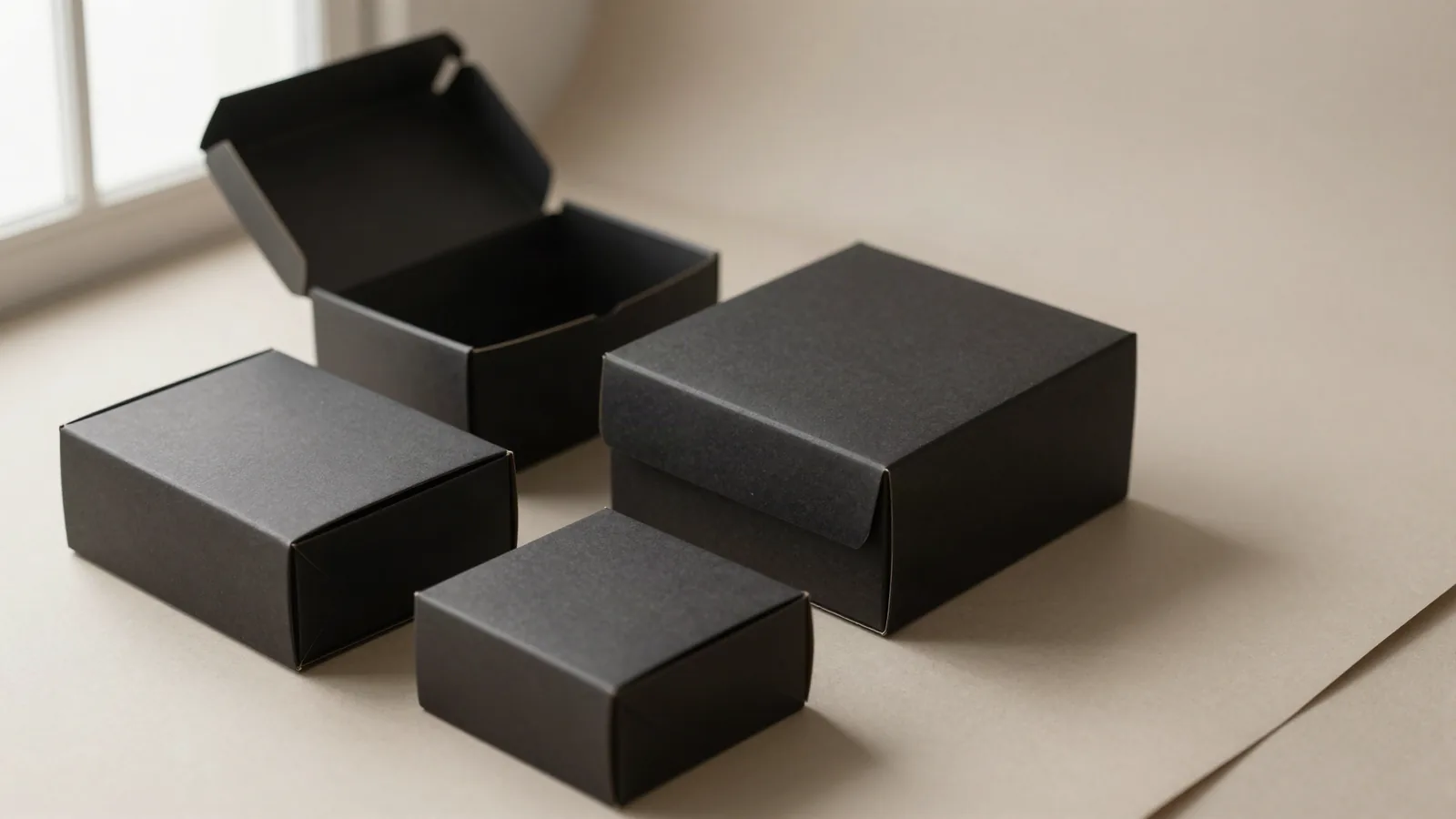




















































What problem does a custom shape box need to solve?
A package with an unusual outline earns its cut only when it fixes fit, display, opening, or component separation. Start with the product's actual inside length, width, and depth, then map the surfaces that must stay flat for graphics and the areas that can carry folds or adhesive. If the only goal is a different silhouette, write the reason beside the product dimensions so the dieline has a job.
A dieline is the flat cutting template for a package. It maps cut paths, score lines, glue tabs, bleed, safe zones, and the panels that become the front, back, top, and underside. About 1/16 in (1.5 mm) tolerance is a common fit-checking convention, not a replacement for testing the real item.
Which structure fits an unusual outline?
A die-cut folding carton with an insert handles a contour when the product needs support at defined edges; other structures change the opening and presentation.
| Shape or experience goal | Structure to explore | Design check |
|---|---|---|
| Contour around a product | Die-cut folding carton with insert | Which edges need support, clearance, or protection? |
| Distinctive soft silhouette | Pillow or gable | Does the shape stay stable when filled and closed? |
| Layered opening | Drawer or slide, or sleeve | What guides the opening path and retains the inner pack? |
| Structured geometric form | Two-piece rigid or magnetic flap | Does the structure support the intended presentation? |
| Compact reusable container | Custom tin | Does metal construction suit the product and graphic direction? |
A shaped shoulder can guide the eye toward a bottle or insert, while a sleeve frames a non-standard inner pack. A drawer or slide creates a guided opening path. A two-piece rigid box or magnetic flap creates a fixed base and lid relationship, while a pillow or gable silhouette can change shelf recognition. A custom tin changes the material and closure conversation altogether.
What board thickness works with the shape?
Paperboard keeps a custom shape box foldable, and its caliper has to support scores, narrow tabs, and the product weight. SBS, C1S, and C2S paperboard commonly range from 12 to 24 pt; kraft board commonly ranges from 18 to 24 pt.
Rigid chipboard commonly measures 1.5 to 3 mm and can be wrapped in 100 to 157 gsm art paper. Wrapped corners, tray clearance, and closure fit need attention because a rigid box does not fold around a weak score the way paperboard does. Choose kraft when the board character is part of the visual direction, and white coated stock when detailed graphics need a clean print surface.
How should print and finish follow the cut path?
Offset CMYK suits detailed paperboard graphics; digital printing can suit shorter runs or versions, and flexo is commonly associated with corrugated surfaces. Keep important type away from scores, glue tabs, and the edge of a die cut. RGB art can shift when converted for press, and low-resolution art will show its limits after the shape is cut.
Matte lamination lowers surface sheen, while gloss lamination makes the printed area brighter and more reflective. Soft-touch adds a smooth tactile layer. Spot UV places a hard glossy coating on selected areas, and foil stamping, embossing, or debossing can mark a logo or contour. Check every finish against folds and die-cut edges before approval; a surface treatment that looks good on a flat panel can crack at a score or crowd a narrow point.
What should I check before approving an irregular dieline?
Fit is ready for approval only after the actual product or a verified dimensional model has been checked against every critical inside edge.
- Mark where the product may touch, where it needs clearance, and where an insert must hold it.
- Check cut lines, score lines, glue tabs, tuck flaps, and insert contact points as separate features.
- Turn the flat art mentally, then inspect orientation on the front, opening, underside, and any narrow panel.
- Test whether the finished box stands, stacks, opens, closes, and nests into its master carton as planned.
Leave bleed beyond the cut line and keep barcodes away from scores; the exact allowance and barcode setup should follow the printer's production file and any applicable industry standard. The physical fit check catches expensive mistakes, especially an insert cut to the exact product size that leaves no room for loading.
Which real products help me brief the format?
Catalog examples are useful for describing a structure, not for borrowing another product's measurements. Compare a custom foam box insert when the item needs separated support. Review a custom DNA test kit box for an organized component presentation. A wine box package can help you think through bottle support and opening order.
How do I move from the sketch to a quoted box?
The request should contain the product dimensions, desired outline, closure, quantity, artwork status, and finish direction. Send the brief through our custom packaging solutions route and request the $19.99 sample kit when board feel or a physical fit check matters. Custom Packaging Lane quotes custom shape boxes from a 100-unit minimum. Pricing is from $0.49 per unit at volume, quoted to spec. Production is typically 8 to 10 business days after proof approval, plus delivery. Free US shipping, free design support, and a free dieline are available. The sample kit is credited to the first order.
Frequently Asked Questions
What qualifies as a custom shape box?
A custom shape box uses a product-specific outline, panel arrangement, or opening geometry instead of a standard rectangle. Die-cut folding cartons, sleeves, pillows, gables, rigid boxes, tins, and fitted inserts can all create a shaped package. The useful test is practical: the geometry should improve fit, presentation, handling, or the way the package opens.
How much tolerance should I allow for a shaped package?
About 1/16 in (1.5 mm) is a common fit-checking convention for a shaped package, but it is only a planning reference. Inside length, width, and depth still need to come from the actual product. Score lines, inserts, folds, and contact points can reduce usable space, so check the finished structure before approving the dieline.
Should I use paperboard, rigid board, or a tin?
Paperboard suits foldable printed forms, with SBS, C1S, and C2S commonly ranging from 12 to 24 pt and kraft board from 18 to 24 pt. Rigid chipboard commonly measures 1.5 to 3 mm and can use 100 to 157 gsm art paper. A tin changes the material and closure direction.
How do I keep artwork aligned on an unusual box?
Map every panel on the dieline and mark cuts, scores, glue areas, opening edges, and the intended front before placing artwork. Offset CMYK suits detailed paperboard graphics, while RGB files can shift during press conversion. Keep type away from folds and die cuts, then inspect every panel orientation before approval.
Can an insert be designed with the outer shape?
An insert can be designed with the outer shape. The insert and outer shell should be planned together because both control fit, retention, opening behavior, and the visual reveal. Foam or paperboard inserts can separate components or follow a contour. Leave loading clearance instead of cutting the cavity to the exact product size, then test the complete pack.












