























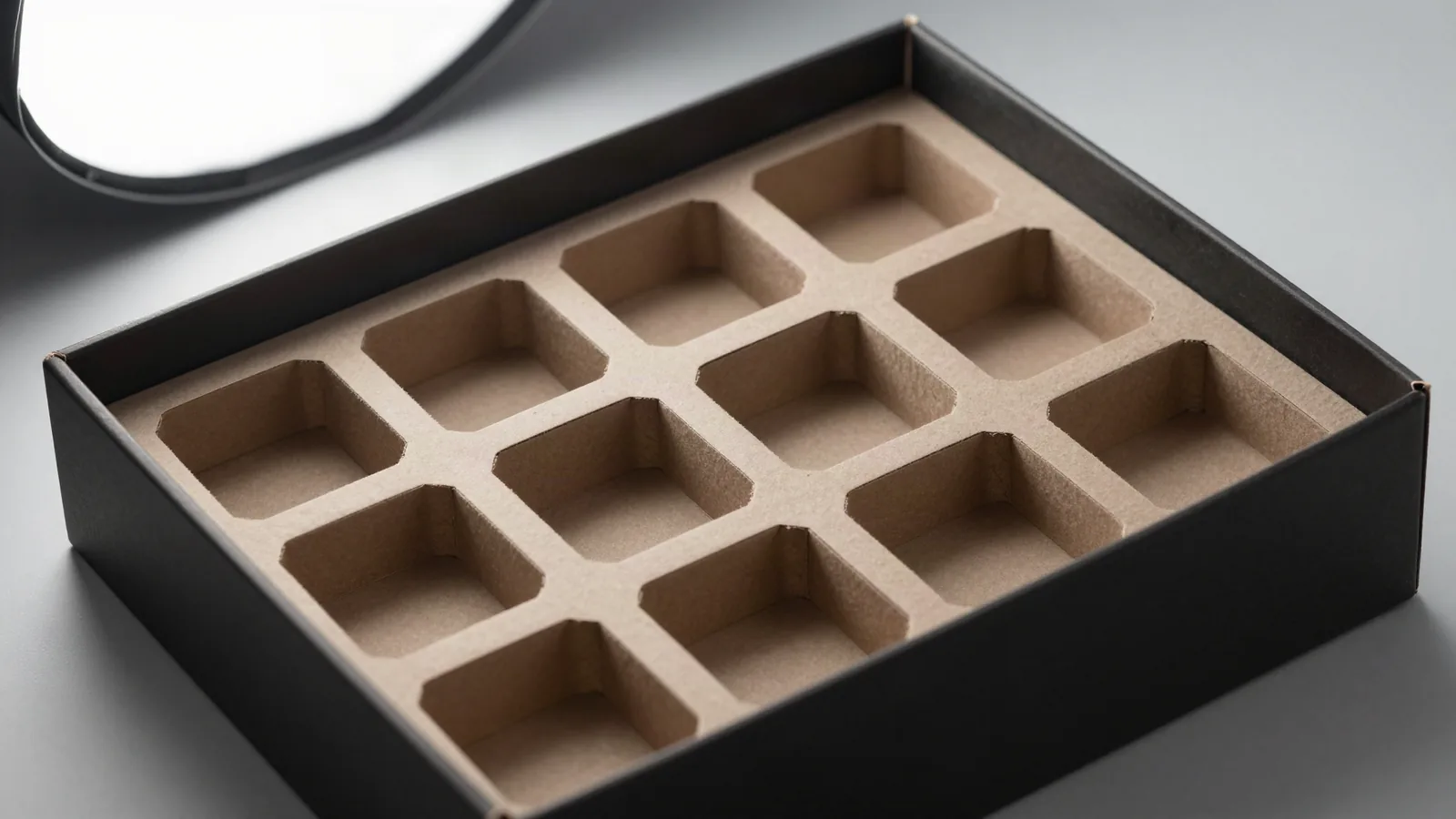















































A custom styrofoam insert is a shaped cushioning piece that holds a product inside a box, case, or mailer. In a packaging request, styrofoam is a broad label, so identify the actual foam construction and conversion method, such as die-cut, routed, or formed. A dieline is the flat cutting template used to show the cavity, walls, folds, and cut lines before production.
The insert has to match the packing job. Mark fragile surfaces, protrusions, removal points, loading order, and space needed for cables or handles. An insert inside a rigid box has different checks from one inside a folding carton or shipping mailer because the lid, walls, and closure leave different room around the product.
What do custom styrofoam inserts hold?
The cavity keeps the product located during packing, handling, and removal. State the product orientation first, then show the areas that need support and the areas that need clearance. A cavity that grips every surface can slow the packer down, while a loose cavity can let the product shift inside the box.
If the insert sits inside a rigid box, folding carton, or shipping mailer, draw the insert and outer package as one stack-up. The cavity, insert edge, box wall, lid, and closure all need room. A photo helps explain shape, but a drawing or physical sample gives the dieline something dependable to follow.
How much clearance should a foam insert have?
About 1/16 in, or 1.5 mm, is a common packaging tolerance reference, but the fit also depends on foam compression, cut accuracy, box caliper, and loading method. Give the outer box as inside length x width x depth, then mark every surface that must not rub.
| Insert approach | Common planning use | Details to confirm |
|---|---|---|
| Die-cut foam | Repeatable cavities and separated components | Profile, cavity clearance, cut edges, and removal access |
| Routed foam tray | Deeper or more shaped product pockets | Depth, corner radii, wall thickness, and product orientation |
| Board insert with foam pads | Light separation inside a folding carton | Pad placement, glue areas, fold sequence, and compression |
| Foam in a corrugated mailer | Protective presentation for parcel handling | Inside dimensions, closure, void space, and shipping cube |
For an irregular product, send a drawing, sample, or clear photographs with important surfaces called out. Mark handles, cable exits, finger notches, and removal access on the same reference. The insert should follow the product geometry and the way the packer handles it.
Which foam and board materials should I compare?
Expanded polystyrene and polyethylene foam behave differently because cell structure, surface, resilience, and cut method affect the finished insert. Ask which construction the quote describes. The word foam does not identify thickness, compression behavior, or the contact pattern by itself.
The outer package may use rigid chipboard in the 1.5 to 3 mm range wrapped in 100 to 157 gsm art paper. SBS and C1S paperboard commonly fall in the 12 to 24 pt range, while kraft board commonly falls around 18 to 24 pt. Check the board edge, glue area, lid clearance, and insert contact points together.
How should artwork stay clear of the insert?
Offset CMYK is common on paperboard, while digital print can suit short runs. Matte or gloss lamination changes the surface response. Soft-touch, spot UV, foil stamping, embossing, and debossing create different effects on compatible panels. Keep small type and important marks away from scores, seams, glue zones, and surfaces that touch the insert.
For a window, PET commonly falls around 0.2 to 0.3 mm. Its position has to line up with the cavity, not with the flat artwork alone. A press check should look at ink coverage, small type, registration, and the relationship between the printed panel and the assembled box.
Which boxes work with custom styrofoam inserts?
Custom rigid boxes with inserts fit a firm presentation structure. Custom foam box inserts focus the discussion on cavity shape and foam construction. Custom cardboard boxes with inserts give a folding-carton route. Jewelry boxes with inserts provide another reference for small cavities and hand access.
What should I send before an insert proof?
Send the packed product dimensions, outer box preference, orientation, loading order, fragile surfaces, cavity clearances, access points, artwork needs, and shipping environment. Include every component that belongs in the pack-out, plus any area that must remain open for the user's hand or a cable.
- Mark support surfaces, separation points, and removal access.
- State whether the insert is removable, fixed, folded, or layered.
- Coordinate the cavity with the outer box and closure.
- Call out the product surfaces that must not rub.
Custom Packaging Lane quotes to spec from a 100-unit minimum, with pricing from $0.49 per unit at volume. Production is typically 8 to 10 business days after proof approval, plus delivery. Free US shipping and free design support are included, along with a free dieline. The $19.99 sample kit is credited to the first order. Send the product dimensions before the proof is drawn. For wider format planning, see custom packaging solutions.
Frequently Asked Questions
How do I measure a product for a styrofoam insert?
Measure the product at its longest, widest, and tallest points, then mark handles, cables, lids, protrusions, fragile surfaces, and the direction of entry. Give the outer package's inside length, width, and depth, plus the clearance needed for removal. A drawing or physical sample is useful when the product has an irregular profile.
When should I use a rigid box with a foam insert?
A rigid box with a foam insert fits a project that needs a firm outer presentation structure around shaped cavities. A folding carton takes a different route when storage volume and material use matter more. Check product weight, lid clearance, loading order, and the finished interior before choosing the outer box.
Can a foam insert include finger notches or cable exits?
Finger notches and cable exits can be drawn into the cavity layout when their positions, depths, and clearances are shown. A notch gives the packer a handhold, while an exit keeps an accessory from crossing the product face. Check the insert edge, box wall, lid, and closure together so the access point stays usable.
What artwork works on a box with a foam insert?
Offset CMYK and digital print are common choices for paperboard packaging, with matte or gloss lamination, soft-touch, spot UV, foil stamping, embossing, or debossing available on compatible surfaces. Keep type away from scores, seams, glue areas, and insert contact points. Request the dieline before placing artwork so folds and opening direction are visible.
Can styrofoam inserts be used with food-contact packaging?
Styrofoam inserts should be discussed with the complete package when food contact is part of the job. Ask Custom Packaging Lane about food-contact options for the product, then describe contact surfaces, outer board, coatings, inks, adhesives, and whether the insert is separated from the product. The foam name alone does not answer the packaging question.