

























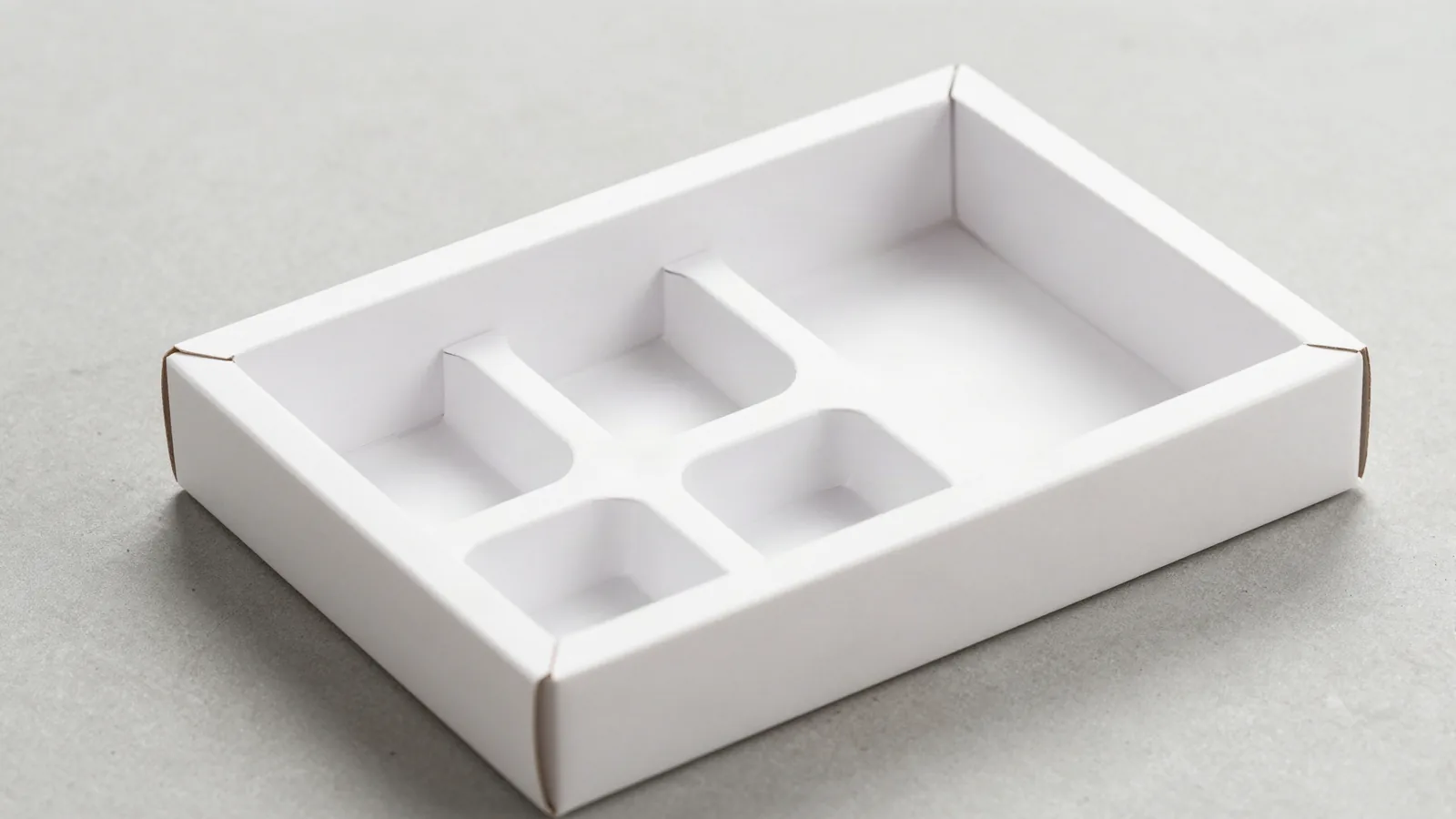





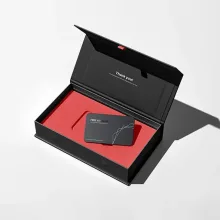











































A dunnage insert is the internal packaging structure that separates, positions, cushions, or presents a product inside an outer package. Start with the product as it will ship, including lids, wraps, cards, accessories, and any inner tray. Catalog directions include custom rigid boxes with inserts, custom foam box inserts, custom cardboard boxes with inserts, and custom candle boxes with inserts. For the wider package route, see custom packaging solutions.
What should a dunnage insert do inside the box?
The insert should be specified against a failure, such as a product shifting, two components touching, or a small item disappearing below the opening. A divider separates parts, a shaped cavity controls orientation, a platform lifts the product, and a spacer fills a defined gap. Describe every contact point, the loading order, the grip used for removal, and the outer package that contains it.
| Insert job | Structure to discuss | Test at the bench |
|---|---|---|
| Separation | Divider, compartment, or individual pocket | Items do not share a cavity |
| Positioning | Contoured cavity, platform, or support wall | Required face stays visible |
| Void control | Spacer, block, fold, or fitted cavity | Movement stays within the clearance |
| Presentation | Tray, riser, sleeve, or layered reveal | Product reaches the intended opening position |
Box dimensions are written as length x width x depth, with inside measurements controlling fit. About 1/16 in, or 1.5 mm, is a common planning tolerance reference, but the usable clearance still follows the board, fold geometry, product variation, and assembly method. A cavity cut to the exact product size can jam during loading, while a cavity with too much room lets the product rattle.
Which material should hold the product?
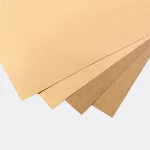
Folded paperboard is useful when the insert needs dividers, tabs, folds, or a locked shape. SBS is solid bleached sulfate paperboard. C1S is coated on one side, and C2S is coated on two sides. Those stocks are commonly discussed around 12 to 24 pt. Kraft board is commonly around 18 to 24 pt when a natural surface is wanted. Rigid inserts use chipboard, commonly 1.5 to 3 mm, wrapped in 100 to 157 gsm art paper, so the insert keeps a more structured presentation. Foam inserts are another catalog direction when the cavity needs a shaped material.
Match the material to the product surface, contact points, loading motion, and removal grip. A paperboard divider and a foam cavity do different work. The first sets compartments through folds and walls. The second can hold a shaped recess. Review the foam-insert format when the cavity shape is the main problem, and the cardboard-insert format when folded board and compartments are the better fit.
How do I measure an insert and its outer box?
Measure each product in the condition in which it will be packed, including caps, closures, protective wraps, cords, cards, and accessories. Record the widest point, tallest point, finger access, and loading direction. For several items, draw their positions together instead of measuring each cavity in isolation.
The insert and outer package must be sized as one assembled unit. Check the insert against flaps, lid panels, seams, glue areas, and closure clearances. For bottle-led packaging, custom woozy bottle boxes are a useful catalog reference for coordinating cavity and outer-box geometry.
Which box structures pair with dunnage inserts?
A straight tuck end or reverse tuck end carton can take a folded insert when top loading is simple. An auto-lock bottom or crash-lock base changes the setup at the packing bench. A roll end tuck top mailer is commonly associated with FEFCO 0427, a standard structure reference for that format. Two-piece rigid, magnetic flap, and drawer or slide structures give a different opening sequence and compartment layout.
The outer structure controls access to the insert. A deep cavity may need a platform or finger notch so the product can be removed without pulling the insert out with it. A rigid format can hold a fixed presentation, while a folding carton stores flatter before assembly. Check the assembled package, not the insert alone.
Should the insert be printed or left plain?
An unprinted cavity is easier to inspect than one carrying dense instructions or a full presentation surface. Print the insert when it needs instructions, labels, a diagram, or a visible presentation surface. Offset CMYK is commonly used for detailed paperboard artwork, while digital printing is often considered for shorter runs or revisions.
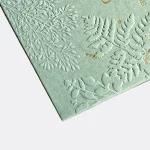
Matte or gloss lamination changes surface sheen. Soft-touch changes the hand feel. Spot UV, foil stamping, embossing, and debossing should stay away from scores, folds, glue areas, and product contact points. If a finish adds thickness or stiffness, show it on the proof and check the closure again.
What should I test before approving the insert?
- Load every component in the actual packing order.
- Check orientation, retention, closure clearance, and removal grip.
- Review divider height, cavity depth, fold direction, and product contact areas.
- Test the insert inside the assembled outer package, not by itself.
- Repeat the open, remove, and re-pack sequence before the specification is fixed.
- If the package may touch food, ask us about food-contact options for your product.
Custom Packaging Lane provides free design support and a free dieline for fit planning. The quote is from a 100-unit minimum, with pricing from $0.49 per unit at volume, quoted to spec. Production is typically 8 to 10 business days after proof approval, plus delivery. Free US shipping applies. Order the $19.99 sample kit, credited to the first order, when a physical insert review will settle the cavity and loading decisions.
Frequently Asked Questions
How does a dunnage insert differ from loose packing material?
A dunnage insert is part of the package geometry. It creates repeatable pockets, dividers, supports, or cavities for a defined product arrangement. Loose packing material fills open space without setting the same loading and removal path. Choose between them by checking product contact points, movement, packing order, removal access, and the outer box.
What belongs on an insert's artwork layer?
A custom dunnage insert can stay plain when the outer box carries the artwork, or it can carry instructions, labels, diagrams, or a presentation surface. Offset CMYK and digital printing are common directions for paperboard. Keep print away from scores, folds, glue areas, and product contact points, then check the assembled insert inside the closed package.
Which dimensions should an insert request show?
An insert request should show each product in its packed condition and record every cavity as inside length x width x depth. Include caps, closures, wraps, cards, cords, and accessories. Mark the loading direction, widest point, tallest point, and finger access. Review the insert and outer box together because a cavity can fit the product and still interfere with a flap, lid, seam, or closure.
Can the outer carton use a mailer, folding carton, or rigid box?
A custom dunnage insert can be planned inside folding cartons, roll end tuck top mailers, rigid boxes, sleeves with trays, and drawer or slide structures. The correct outer carton follows the loading direction, opening sequence, storage method, and delivery route. Check the assembled insert against the outer package's flaps, lid panels, seams, glue areas, and closure.
When should foam replace folded paperboard dunnage?
Foam is worth comparing when a shaped cavity is the main requirement, while folded paperboard is useful for dividers, tabs, folds, and compartments. The choice should follow the product surface, contact points, loading motion, removal grip, presentation goal, and outer package. Test the chosen material in the assembled box before fixing the cavity.