


























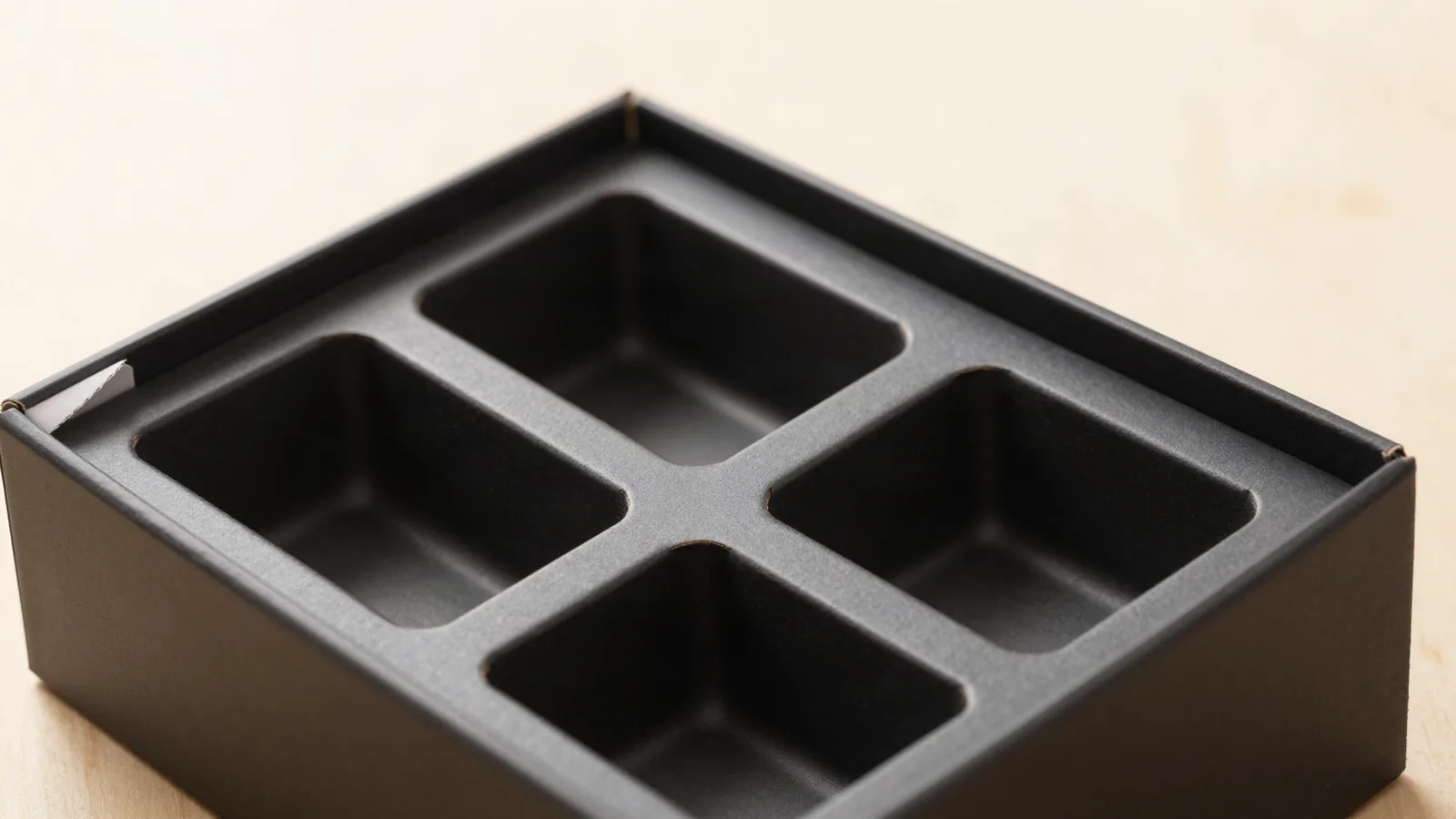

















































Custom styrofoam packaging means a foam cushioning component plus the package around it. A complete brief names product geometry, protected surfaces, the outer carton, closure, loading order, and printed panels. A dieline is the flat cutting template that shows the package shape before it is printed, cut, folded, or glued.
The foam is one part of the pack-out. It does not replace the carton that controls the product's outside dimensions, closure, and parcel route. Start with the object inside, then work outward through the insert, carton, artwork, and shipping case.
What does a styrofoam packaging system need to define?
The first useful file shows corners, edges, protrusions, fragile surfaces, and the direction of entry. The outer route comes next: folding carton, corrugated carton, mailer, or rigid presentation box. The foam cavity, carton inside measurements, and closure need one combined check.
Custom drone packaging boxes are a catalog reference for a product that needs deliberate internal positioning. The useful lesson is the pack-out logic: define where the product sits, which surfaces stay clear, and how the lid or flap closes around it.
How does foam compare with paperboard or corrugated support?
Foam fits a shaped contact pattern around a product. Paperboard and corrugated inserts often separate, locate, or display parts. The right component follows the job it has to do inside the carton.
| Pack-out component | Common role | Specification to clarify |
|---|---|---|
| Foam cushioning component | Positions a product inside an outer package | Product contact points, geometry, and material description |
| Corrugated insert | Separates or locates parts inside a carton | Flute direction, fit, and board specification |
| Paperboard carton | Creates printed panels around a smaller product | Board caliper, closure, and artwork coverage |
| Rigid presentation box | Provides a structured outer presentation | Chipboard thickness, wrap, lid, and interior clearance |
Foam type, density, compression behavior, and fit need checking against the actual product. If the package will carry food-related items, ask us about food-contact options for your product. The material name alone does not describe the complete package.
Which board materials can frame the cushioning?
SBS, C1S, and C2S paperboard commonly fall in the 12 to 24 pt range. Kraft board commonly falls in the 18 to 24 pt range and has a different print surface. A more structured outer can use rigid chipboard in the 1.5 to 3 mm range wrapped in 100 to 157 gsm art paper.
Board caliper changes how much room remains for the cavity, glue tabs, lid, and insert edge. Check those surfaces on the assembled structure. A printed panel can look correct on the sheet and still sit under a flap or against the foam after folding.
Which box structures work with an insert?
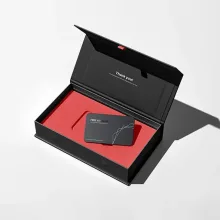
Straight tuck end and reverse tuck end structures suit lighter folding-carton presentations. An auto-lock bottom or crash-lock structure reduces manual bottom assembly. A two-piece rigid box, magnetic flap, drawer or slide, and sleeve each change how the packer loads and closes the package.
For a shipping outer, E, B, and C corrugated flutes are common references. E-flute is thinner and gives finer print detail, B-flute gives more thickness for a different stacking requirement, and C-flute is a common shipping reference. 32 ECT is a common board specification. Choose the structure after the product and insert arrangement are clear.
What tolerance should the insert and carton use?
About 1/16 in, or 1.5 mm, is a common packaging tolerance reference. It is a starting point for the drawing, not a substitute for checking each contact point. Give the cavity and carton as inside length x width x depth, then mark movement space for the lid, flap, sleeve, or drawer.
A product sample, drawing, or verified dimensions keeps the dieline from assuming a perfectly uniform shape. It also gives the proof review something real to compare against when a handle, cable, corner, or protrusion sits outside the main body.
How should print and finish fit around the insert?
Offset CMYK carries detailed carton artwork, while digital printing can suit a short run or concept check. Matte or gloss lamination changes the surface response. Soft-touch, spot UV, foil stamping, embossing, and debossing mark selected panels, but they do not alter the foam geometry.
Keep fold lines, glue areas, seams, the opening direction, and foam-facing zones visible on the proof. A press check should look at ink coverage, registration, small type, and whether the finished effect lands on the panel that the customer actually sees.
Which product references can guide the package direction?
Custom screw packaging gives a compact component format. Custom scissor packaging gives a longer, narrow profile. Custom tin packaging gives a container format to compare with an insert inside a carton. Use these catalog references to discuss structure and presentation, not to assign an unprovided foam size.
What should I send for a foam packaging brief?
Send product dimensions, weight, orientation, contact surfaces, protruding parts, cushioning role, insert geometry, outer structure, inside measurements, closure, loading sequence, board, wrap, print coverage, finish, quantity, delivery location, and any food-contact question.
Before approval, check cavity shape, product orientation, contact points, clearance, lid or flap movement, closure sequence, printed panels, seams, folds, and finish zones. If the product drawing changed, update the package check before approval.
Custom Packaging Lane quotes from a 100-unit minimum, with pricing from $0.49 per unit at volume. Production is typically 8 to 10 business days after proof approval, plus delivery. Free US shipping, free design support, and a free dieline are included. The $19.99 sample kit is credited to the first order. For wider format planning, see custom packaging solutions.
Frequently Asked Questions
Is Styrofoam a complete protective package by itself?
No. Styrofoam is a foam component, while the complete pack-out also includes the product cavity, outer carton, closure, clearances, and loading sequence. Define the cushioning material and the package around it together. Delicate edges, handles, and protrusions should appear on the drawing before the insert is designed.
What information is needed before a foam packaging quote?
A foam packaging quote needs product dimensions, weight, orientation, contact surfaces, protrusions, intended outer structure, inside measurements, closure, and loading sequence. A drawing or physical sample helps check cavity shape and clearance. Photos can support the brief, but they should not replace dimensions for an irregular product.
Can corrugated or paperboard replace a foam component?
Corrugated or paperboard can replace a foam component when the job is separation, location, or display rather than a shaped cushioning contact pattern. The choice follows product geometry and the required pack-out function. Compare the complete system, including the outer carton, cavity, closure, and loading method, before selecting the insert material.
Which box structure pairs with an insert?
Straight tuck, reverse tuck, auto-lock bottom, crash-lock, two-piece rigid, magnetic flap, drawer or slide, sleeve, and mailer structures all change how a product is loaded and closed. Check the insert, closure, inside measurements, and pack-station sequence together. A box that looks suitable empty can become awkward after the product and cushioning are added.
What should be checked on a foam packaging proof?
A foam packaging proof should be checked for cavity shape, product orientation, contact points, clearance, lid or flap movement, closure sequence, printed panels, seams, folds, and finish zones. If the product drawing changed, update the package check before approval. The approved proof should represent the current product and the actual outer structure.