




























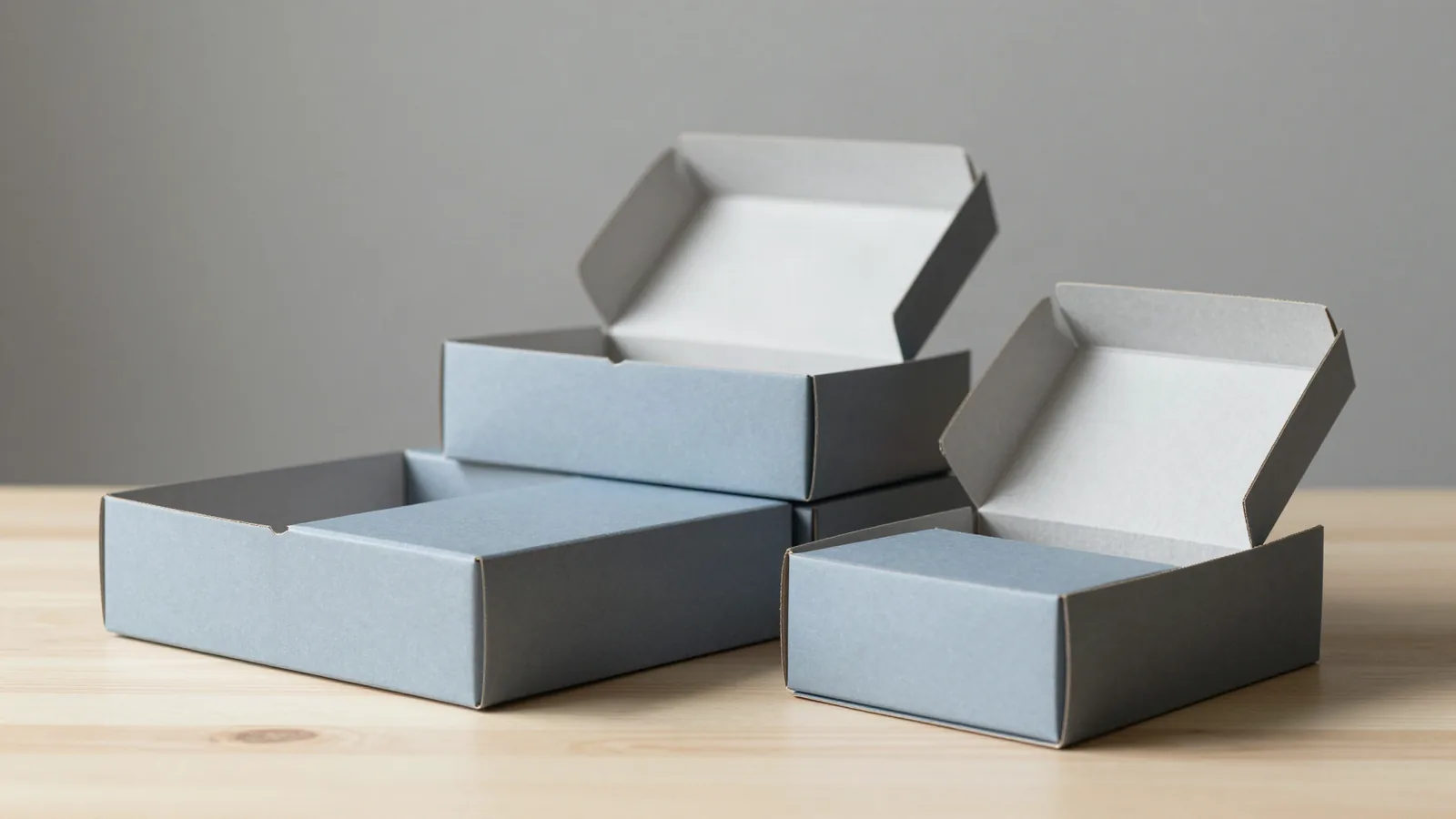




















































A twist top is a folding-carton closure with a lid that folds through a set closing sequence. That motion gives the package a defined opening point, but it also puts pressure on scores and closure contact areas. Start with the packed product, how it will be handled, and which panels must remain readable after assembly. A twist top box works best when the closure, product fit, and artwork are planned together.
Why choose a twist top box for a defined opening?
The lid follows a defined closing sequence, so the opening action becomes part of the package brief. Use the structure when the front panel needs a clean field and the box should close in the same order each time. Note whether the product is handed over, shelved, or sent through parcel handling, since those conditions affect the board, insert, and closure check.
For a compact retail format, compare custom tuck top boxes. A package that travels through parcel handling may need the sturdier starting structure of custom tuck top mailer boxes. If the artwork calls for a brown paper face, custom kraft tuck top boxes are the closer reference.
Which board thickness and finish suit a twist top box?
The common folding-carton reference is 12 to 24 pt for SBS, C1S, or C2S paperboard, while kraft board is commonly discussed at 18 to 24 pt. Caliper means board thickness. State the board family, caliper target, exterior color, and whether the inside needs print, because each choice changes folding, scoring, and how the artwork reads.
Offset CMYK is a common route for detailed carton graphics. Matte or gloss lamination changes reflectivity and surface feel; soft-touch adds a smoother hand feel. Spot UV, foil stamping, embossing, and debossing are separate finish choices. Keep heavy decorative areas off scores and closure contact surfaces until the proof or physical sample confirms that the lid still moves cleanly.
What measurements and clearances belong on a twist top dieline?
Inside length x width x depth gives the usable starting space, while a dieline is the flat cutting template used to print, cut, and crease the box.
| Planning area | Common packaging reference | Why it matters |
|---|---|---|
| Box measurements | Inside length x width x depth | Sets the product cavity before panels are sized |
| Fold allowance | About 1/16 in, or 1.5 mm | Gives the fit check a stated tolerance |
| Closure design | Twist top, straight tuck end, or reverse tuck end | Sets the closing motion and panel order |
| Product visibility | PET window film, commonly about 0.2 to 0.3 mm | Sets the clear area away from scores and glue |
Ask for panel names, cut lines, crease lines, bleed, glue areas, and the intended closing sequence. A physical sample shows whether the lid twists smoothly, the package stays closed during handling, and graphics align after assembly.
What insert should go inside a twist top box?
A partition separates multiple units, while a custom foam insert creates a shaped cavity for a smaller product. The packed arrangement controls the box depth, removal path, and closure clearance. Decide whether the product is packed directly, wrapped, bagged, or held in an insert before the blank is finalized.
For candles or similarly compact products, compare custom votive candle boxes. For bottles, a custom Woozy bottle box shows how product geometry changes the structural brief.
What artwork problems should I catch before the proof?
Low-resolution art, RGB files, missing bleed, and type set too close to a score are the problems to catch before a press check. RGB artwork can shift when it is converted for press, and a score through small type can make the finished panel hard to read. Keep critical copy, barcodes, and logos inside the usable panel area.
A digital proof should show panel orientation, fold direction, closure contact, finish placement, and any window or glue area. During a press check, compare printed color, ink coverage, registration, and finish location with the approved proof. If freight handling matters, ask how the assembled boxes nest in the master carton.
What should I send for a twist top box quote?
A useful request starts with packed product dimensions and the closing sequence, then adds product count, board preference, print coverage, finish, destination, and insert or window needs. Send flat artwork after the dieline is confirmed. Production follows the approved proof, so check every fold, score, tab, and closure before approval.
Custom Packaging Lane quotes custom twist top boxes to spec with a 100-unit minimum. Pricing is from $0.49 per unit at volume. Production is typically 8 to 10 business days after proof approval, plus delivery. The order includes free US shipping, free design support, and a free dieline. The $19.99 sample kit is credited to the first order. Use the custom packaging design hub to organize the product dimensions, artwork, and closure brief.
Frequently Asked Questions
Can a twist top box include a window?
Custom twist top boxes can include a PET window when the clear area fits the panel and stays clear of scores, glue zones, and closure contact areas. PET window film is commonly about 0.2 to 0.3 mm. The dieline should mark the window boundary, and a physical sample should confirm adhesion, alignment, and lid movement after assembly.
What measurements should I provide for a twist top box?
Provide the product's maximum inside length, width, and height, plus any wrap, insert, or clearance requirement. Write box dimensions as length x width x depth and identify inside measurements. About 1/16 in, or 1.5 mm, is a common fit-checking reference, but the packed product and finished board should confirm the final cavity.
Which finishes work on twist top cartons?
Offset CMYK is commonly used for detailed folding-carton artwork. Matte or gloss lamination changes surface reflectivity, while soft-touch changes hand feel. Spot UV, foil stamping, embossing, and debossing add separate surface effects. Show each finish on the artwork proof and keep it clear of folds, glue zones, and closure contact areas.
Can a twist top box hold more than one item?
A twist top box can hold multiple items when the interior is drawn around the packed arrangement. A paperboard partition can separate units, while a foam insert can create individual cavities. Check product orientation, removal space, closure clearance, and assembly order with every item inside the box.
What should I include in a twist top box quote request?
A twist top box quote request should include product dimensions, product count, packed arrangement, opening action, board preference, print coverage, finish, insert or window needs, quantity, and destination. State which faces need print and where the closure must land. That information gives the structural brief a usable starting point.












