




























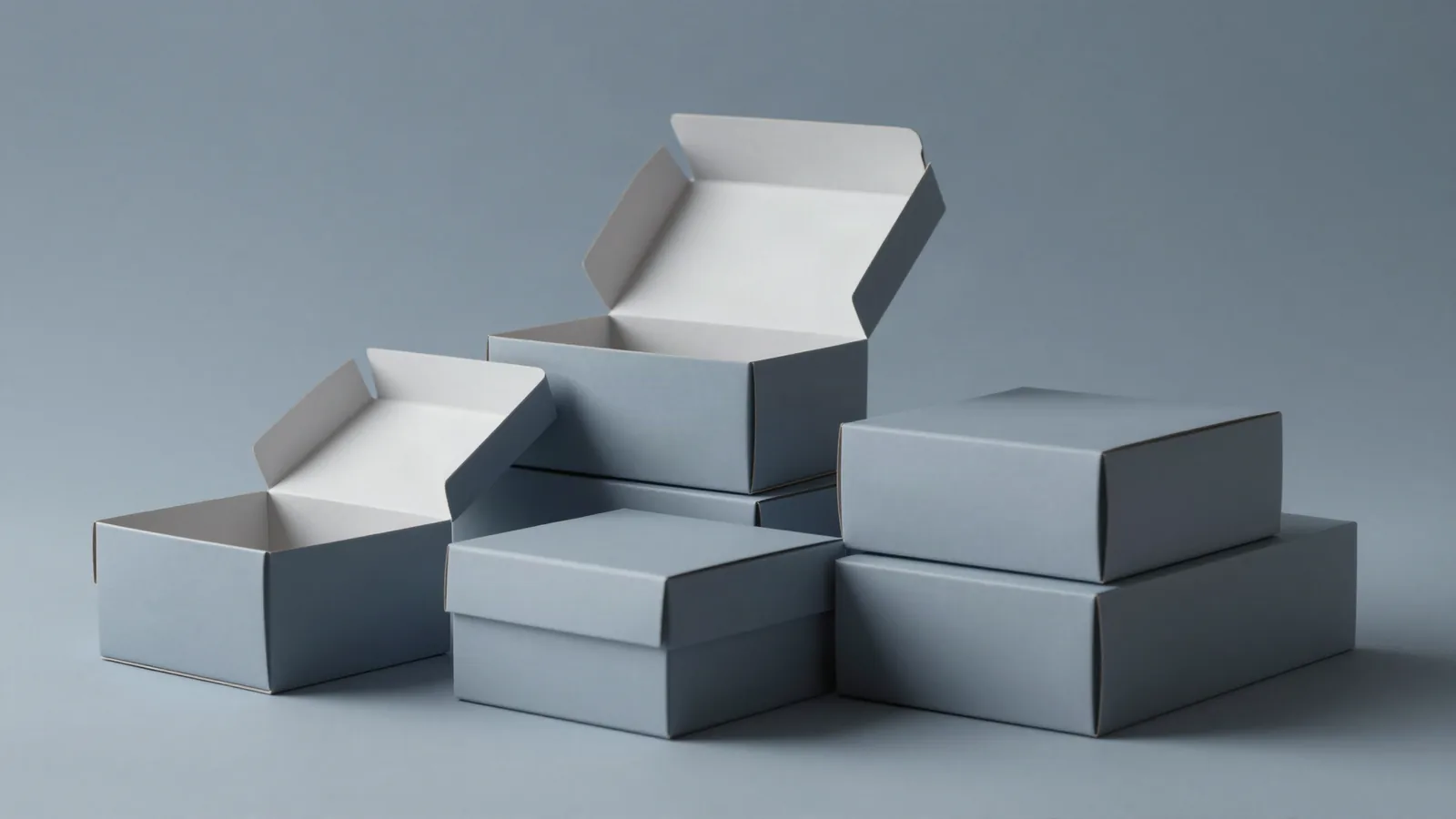




















































A diaper box has to hold the packed product, keep the panels readable, and open without a confusing packout. The box shape follows the product and the way it will be stored or shipped. Start with the packed item, including its inner bag or set, before choosing the carton. That order prevents a familiar structure from dictating the fit.
How should a diaper box fit the packed product?
Use inside length x width x depth for the fit brief, with the packed item in its actual loading position. About 1/16 inch, or 1.5 mm, is a common packaging tolerance convention, but the loaded fit still needs a physical check. Measure the packed product, not only the loose diapers. Mark the top, front, back, opening direction, and any space needed for folds, glue areas, inserts, or a window on the dieline.
- Identify whether the box holds one pack, a set, or a product inside an inner bag.
- Keep the presentation carton separate from the outer shipping container.
- Show the loading direction and the panel that must remain the front after folding.
- Check the closed box with the actual packed product inside.
Which box structure suits a diaper package?
Straight tuck end and reverse tuck end cartons are common starting points for a retail diaper package. An auto-lock bottom forms its base during setup, while a mailer with a roll end tuck top can combine presentation and delivery. The roll end tuck top format is commonly identified as FEFCO 0427. Choose from the opening sequence, product weight, and shipping handoff before placing artwork.
| Structure | How it is built | What to confirm |
|---|---|---|
| Straight tuck end | Folding carton with a familiar tuck opening | Front panel, tuck direction, and loading path |
| Reverse tuck end | Folding carton with the tuck direction reversed | Opening seam and brand panel placement |
| Auto-lock bottom | Carton with a formed base during setup | Base support and loading sequence |
| Mailer | Outer format that can present and travel | Roll end tuck top and closure behavior |
What board and surface options work for a diaper box?
SBS, C1S, or C2S paperboard in the 12 to 24 pt range is a common folding-carton reference. SBS means solid bleached sulfate, C1S means coated on one side, and C2S means coated on two sides. Kraft board in the 18 to 24 pt range gives the surface a different look and feel. A rigid option uses 1.5 to 3 mm chipboard wrapped in 100 to 157 gsm art paper. A separate shipper can use E, B, or C flute corrugated board, with 32 ECT as a common strength reference.
Print and finish should follow the panel hierarchy. Offset CMYK suits detailed paperboard graphics, digital printing can suit a short run or changing artwork, and flexo is common for corrugated surfaces. Matte or gloss lamination changes the surface. Soft-touch changes the hand feel. Spot UV, foil stamping, embossing, and debossing need clearance from folds, scores, and seams.
Should a diaper box use a window or insert?
Choose a window when showing part of the product or interior arrangement helps the package explain itself. PET window material commonly falls in the 0.2 to 0.3 mm range. Map the cut line, patch area, glue zone, and artwork together. An insert makes sense when it separates an accessory, creates a presentation layer, or limits movement, but it also consumes interior space and changes the loading sequence.
Specify the insert's job in plain language, then check the cavity with the packed contents. An empty box can close correctly while a loaded box pinches an insert or pushes a panel out of alignment. That check belongs in the proof review.
How should the outer box be planned for delivery?
Separate the retail carton, inner pack, and outer shipper in the quote request. Give the destination and outside carton dimensions because US ground dimensional weight commonly uses L x W x H divided by 139. Record how the retail cartons will be packed, stored, labeled, and handed to a carrier. A small retail carton can still need a different outer shipper than the box a buyer sees.
Which catalog pages can guide a diaper box brief?
Use diaper boxes as the closest catalog reference. custom foam box inserts can prompt questions about cavity fit and organized interiors. shoe box packaging can help compare proportions, opening direction, and panel placement for a different product shape. The custom packaging solutions hub is the next stop when the structure is not settled.
We quote diaper boxes to spec from a 100-unit minimum, with pricing from $0.49 per unit at volume. Production is typically 8 to 10 business days after proof approval, plus delivery. Free US shipping and free design support are included. The $19.99 sample kit is credited to the first order. Send the packed measurements and approve the loaded proof before production.
Frequently Asked Questions
What measurements should I provide for a diaper box?
A diaper box brief should provide the packed product's inside length, width, and depth, plus the loading direction and any inner bag, set, accessory, insert, or closure. About 1/16 inch, or 1.5 mm, is a common packaging tolerance convention. The actual packed product still needs a fit check because the loose diaper dimensions do not describe the space the carton must hold.
Which diaper box structure is a good starting point?
Straight tuck end and reverse tuck end cartons are common starting points for retail diaper packaging. An auto-lock bottom forms a base during setup, while a mailer can combine presentation and delivery. A roll end tuck top mailer is commonly identified as FEFCO 0427. Choose by loading direction, opening sequence, panel order, and shipping handoff, not by structure name alone.
When would a diaper box need an insert?
A diaper box needs an insert when the package must separate items, organize a set, create a presentation layer, or limit movement inside the carton. The insert also takes up interior space and changes packout. Describe the cavity and clearance with the packed contents, then check the loaded box. A cavity that fits an empty sample can behave differently after loading.
Can a diaper box include a window?
A diaper box can include a window when showing part of the product or an interior arrangement helps identification. PET window material commonly falls in the 0.2 to 0.3 mm range. The cut line, patch area, glue zone, artwork, and sightline should be reviewed together with the packed contents inside the closed box.
How should a diaper carton be prepared for shipping?
A diaper carton should be separated from any outer shipper in the brief, with the destination and outside carton dimensions listed. US ground dimensional weight commonly uses L x W x H divided by 139. Also state how cartons will be packed, stored, labeled, and handed to a carrier, then check the loaded shipper rather than an empty carton alone.












