






























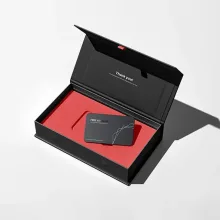














































How thick is cardboard? It depends on the board system. Cardboard is a broad everyday term that can mean paperboard, corrugated board, or rigid stock. A caliper is the measured thickness of a board, usually recorded in millimeters, points, or inches. The useful number is the caliper of the named construction, not a loose average copied from another box.
How thick is cardboard in inches?
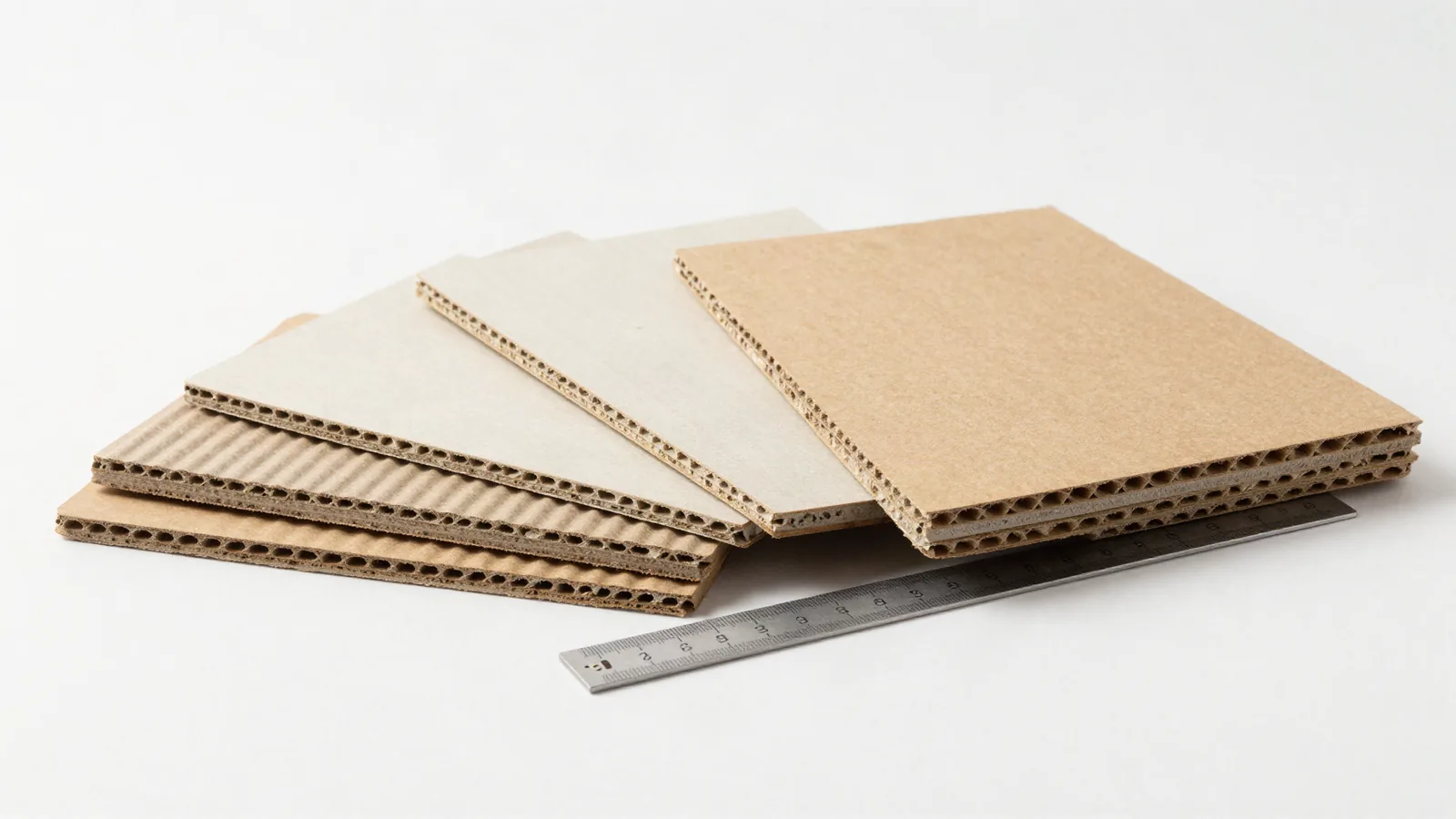
Typical industry calipers for common corrugated constructions run from about 0.047 to 0.157 inches for single wall, and about 0.236 to 0.276 inches for a BC double wall. Mills, liners, flute profiles, adhesive, and converting change the finished measurement, so treat these ranges as reference values, not a promise for a custom order.
| Construction | Typical industry caliper | Inches | Common use direction |
|---|---|---|---|
| E flute single wall | 1.2 to 1.8 mm | 0.047 to 0.071 in | Fine print and lighter cartons |
| B flute single wall | 2.5 to 3.2 mm | 0.098 to 0.126 in | General retail and shipping cartons |
| C flute single wall | 3.5 to 4.0 mm | 0.138 to 0.157 in | Cushioning and stacking support |
| BC double wall | 6.0 to 7.0 mm | 0.236 to 0.276 in | Thicker shipping construction |
| Rigid chipboard | 1.2 to 3.0 mm | 0.047 to 0.118 in | Stiff presentation packaging |
These are typical industry ranges, not a CPL quote. The mill, liner paper, flute combination, wrap paper, adhesive, and converting process can move the finished value. Ask for the production measurement in inches when the fit depends on it, and state whether the measurement applies to flat board, a wrapped panel, or an assembled part.
What is the difference between single wall and double wall cardboard?
Single wall corrugated has one fluted medium between two liner layers. Double wall corrugated has two fluted layers with a liner between them. The extra layer generally adds thickness and stiffness, but the final value still depends on the flute profiles, liner papers, adhesive, and converting. Compare the actual board construction rather than choosing from the words single wall or double wall alone.
The outside box and an interior insert do not automatically share one caliper. If an insert, divider, or pad controls product fit, request its material description separately. Type close to a score, a fold over a flute, or a tight insert cut can create a packaging problem even when the outer board is suitable.
How is rigid cardboard thickness measured?
Rigid stock is measured by the core board or by the finished wrapped panel, so the requested layer must be named. Chipboard is a dense paperboard core used to give a rigid package its shape. The printed wrap changes the finished surface and assembly, but it is not the same measurement as the core. Compare rigid stock with rigid stock, and corrugated constructions with the matching corrugated construction.
Which box type needs which thickness question?
Start with the package family, then ask for its matching board description. Kraft cardboard boxes point to a paperboard box direction. Custom cardboard jewelry boxes and custom cardboard gift boxes show presentation formats where fold, wrap, and fit matter. Cardboard tube packaging is a separate rolled structure and should not be forced into a flat box comparison. Cardboard boxes with inserts need a separate material question for the insert.
What should you request from CPL?
Ask for the package format, product dimensions, opening, insert, handling path, named construction, and finished caliper. State whether the value should describe a flat sheet, wrapped panel, or assembled part. Free design support can connect the product dimensions to the dieline, and a digital proof is sent before printing. The MOQ is 100 units. Pricing is from $0.49 per unit at volume, quoted to spec. Production is typically 8 to 10 business days after proof approval, plus delivery. Free US shipping is available. Order the $19.99 sample kit to compare physical board directions, then use custom packaging design to organize the specification.
Can you print directly on thick cardboard?
Folding paperboard can be printed as a flat sheet, while corrugated board can take direct flexo print from flexible relief plates. Heavy paperboard is normally printed before cutting and scoring. C1S and C2S paperboard surfaces commonly accept offset CMYK or digital print. The print route must account for the board surface, ink coverage, fold positions, and required quantity.
| Board format | Common print route | Converting sequence | Press concern |
|---|---|---|---|
| C1S or C2S paperboard | Offset CMYK or digital | Print, die-cut, score, fold, glue | Ink cracking at scores |
| Corrugated board | Flexo or an offset-printed top sheet bonded to corrugated | Print liner or top sheet, convert, fold | Flute crush and washboarding |
| Kraft paperboard | Offset or digital | Print, die-cut, score, fold, glue | Color shift on the brown surface |
Litho-laminated board bonds an offset-printed top sheet to corrugated material. It can give a smoother graphic face than direct flexo, but the added sheet and adhesive become part of the finished construction. See cardboard display boxes and cardboard shoe boxes for printed-cardboard formats, then specify the stock and print route for the intended job.
Why does printed cardboard crack along a fold?
Paper fibers resist a tight bend when the grain direction, score width, and board caliper are poorly matched. Running the main fold parallel to the grain usually gives a cleaner bend, while a heavy solid ink film, cold board, or narrow scoring channel can make surface cracking more visible.
A straight tuck end, reverse tuck end, and auto-lock bottom place stress on different folds and glue tabs. The die maker should select the crease rule and channel for the named stock, then the converted sample should be opened and closed. Inspect both printed and unprinted faces because a fold can look clean outside while the inner layer splits.
How does board caliper change the dieline?
Thicker stock requires the cutting template to account for panel offsets, bend allowance, slot width, dust flaps, and internal clearance. One point equals 0.001 inch, but nominal stock points are not a substitute for measuring the converted sample. If thicker stock is substituted into artwork built for a thinner sheet, opposing flaps can bind and an insert can become too tight.
Write finished box dimensions as inside length x width x depth. Build the custom packaging design around the product's maximum measured profile, not an assumed wall thickness. For a folding carton, keep flat-sheet caliper, score allowance, and finished inside dimensions as separate fields so the die maker and packer are discussing the same geometry.
What does a press check look for on heavy board?
The operator checks color against the approved target, alignment between colors, solid-ink coverage, small light type reversed from dark ink, coating alignment, and movement at the sheet edge. On corrugated work, the inspection also looks for flute impression and print variation across high and low areas. Kraft stock needs an additional check because the board color influences unprinted areas and lighter inks.
After printing, inspect foil, embossing, debossing, spot UV, matte lamination, or gloss lamination against the score and cut map. A digital proof confirms content and position, but it does not reproduce board stiffness or converting pressure. Record the chosen sample kit reference in the press notes, then approve a converted sample when fold behavior or panel fit controls the job.
Frequently Asked Questions
Can cardboard thickness be stated in inches?
Cardboard thickness can be stated in inches when the measurement is tied to a named construction and material layer. Ask whether the value describes flat board, a wrapped panel, or an assembled package. That distinction prevents a measurement from one box style being presented as the answer for every cardboard format.
Does double wall cardboard have one fixed thickness?
Double wall cardboard does not have one fixed thickness. Double wall identifies two fluted layers, but the finished result changes with flute profiles, liner papers, adhesive, and converting. Typical BC double wall caliper is about 0.236 to 0.276 inches, but the production spec for the proposed board should control the final value.
Is rigid board the same as corrugated cardboard?
Rigid board is not the same as corrugated cardboard. Rigid packaging uses a dense core board and an outer wrap, while corrugated packaging uses fluted medium between liner layers. When thickness matters, identify whether the measurement applies to the rigid core, wrapped panel, corrugated board, or another defined part.
What should a cardboard thickness request include?
A cardboard thickness request should include the package style, product dimensions, opening, inserts, handling path, named construction, and exact layer that needs measurement. Also state whether the value is needed for a flat sheet or finished part. Those details give the quote team a useful material question to answer.
Can a sample help with a cardboard thickness decision?
A $19.99 sample kit can help compare board stiffness, surface feel, folds, and product fit, but it does not replace the written production specification. Use the physical reference with the named construction and caliper so the approved package has both a tactile reference and a clear measurement record.