










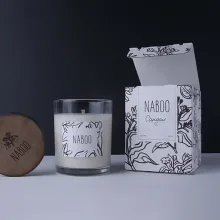
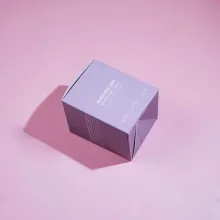
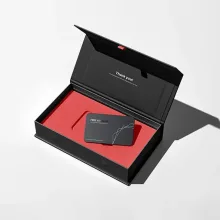
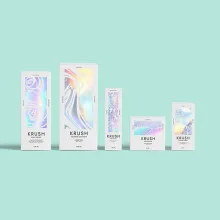
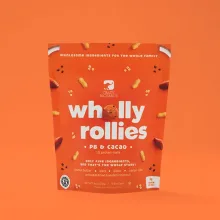
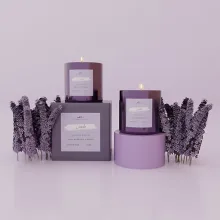
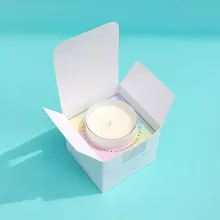
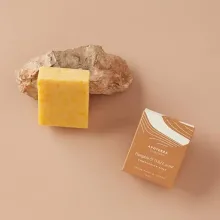


























To get custom boxes made, start with the product, its packed dimensions, and the job the package must do. The first request can be rough. Say whether the product needs a snug cavity, a folded presentation, a mail-ready structure, or a retail box. A photo and approximate measurements are more useful than a product category alone.
A format reference keeps the conversation concrete. Review shoe box packaging, wine box packaging, or perforated packaging. A shoe box usually needs lid clearance, a perforated package needs a clean tear path, and wine packaging needs the product position stated before the structure is drawn. These are package decisions, not decoration choices.
What should you send for a custom packaging quote?
Send the product dimensions, quantity, US destination, artwork status, and preferred format in one brief. Add the opening style, insert, sleeve, window, closure, or perforation if any of those change the pack-out. Say which decisions are fixed and which are open. That distinction keeps the quote from being built on a guess.
| Input | State this | Why it matters |
|---|---|---|
| Product | Packed dimensions and orientation | Sets the cavity and opening direction |
| Format | Box, mailer, perforated structure, or reference product | Sets panels, scores, and closure |
| Artwork | Logo, copy, images, or design support request | Sets the proof work |
| Order | Quantity and US destination | Sets quote and delivery planning |
If the dimensions are not final, send the largest packed condition you expect and mark the numbers as approximate. It is easier to correct an assumption in the quote than to discover after approval that a lid, cap, folded edge, or insert was left out.
How does the dieline and digital proof stage work?
A dieline is the flat cutting template for a package. It shows panels, cut lines, scores, glue tabs, and the way the blank folds into the finished box. Free design support can turn product dimensions into that structure. A digital proof places your artwork on the dieline before anything prints.
Read the proof as a physical object, not only as a screen image. Check that type is not too close to a score, the opening panel is where you expect it, the barcode has clear space, and bleed extends past the cut line as standard print files require. RGB artwork can shift when converted for press. Catch those issues before approval.
When does production start after proof approval?
Production starts after proof approval, not when the first request or quote is sent. CPL's production window is typically 8 to 10 business days after proof approval, plus delivery. The window is a planning reference, not a guarantee. Delivery follows production, so put the receiving location and the person who will approve the proof in the first brief.
Keep the approval date, quantity, and delivery destination together in your order notes. If the package has several versions, make sure the proof identifies each version before production begins. The clock starts at proof approval.
What quantity and price should you plan for?
The minimum order is 100 units. Pricing is from $0.49 per unit at volume, quoted to spec. The quote changes with the package structure, dimensions, material, finish, artwork, quantity, and delivery details. Free US shipping and free design support are available. The sample kit costs $19.99 and is credited toward the first order.
Which package format fits the product?
Choose the format from the product's shape, pack-out, and opening sequence. Wax packaging can frame a compact product presentation. Towel packaging can show how a soft product is folded or held. Private-label packaging gives a useful starting point when the package must carry product information and brand artwork. These references help describe a package; they do not replace the product dimensions that set the dieline.
What should you check before approving the proof?
Check product fit, panel order, scores, glue tabs, opening sequence, copy, color, finish, quantity, and destination. If an insert is part of the job, check the product inside it. An insert cut to the product's exact shape can hold it in place, but a cap, label, or folded edge left out of the measurement can make the fit wrong. Approve only when the proof matches the package you intend to order.
Start with one request that states the product, packed size, format, artwork status, quantity, and destination. For a broader format list, use the custom packaging solutions page, then send the brief for a dieline and digital proof.
Frequently Asked Questions
Can I get custom boxes made without finished artwork?
Yes. Custom Packaging Lane can start a custom box request from product details, approximate dimensions, quantity, and a rough visual direction. Free design support can turn that information into a dieline, which is the flat cutting template for the box. You receive a digital proof before anything prints, so artwork and structure can be checked before production.
What does a packaging dieline show?
A packaging dieline is the flat template that maps the panels, cut lines, scores, glue tabs, and folds of a package. Custom Packaging Lane uses the dieline to place artwork on the proposed structure before printing. Check the opening direction, copy, barcode space, and product fit while the file is still at the proof stage.
What is the minimum quantity for custom packaging?
The minimum quantity for a Custom Packaging Lane order is 100 units. Pricing is from $0.49 per unit at volume, quoted to spec. The quote uses the selected structure, dimensions, material, finish, artwork, quantity, and delivery details, so the starting price is not a flat price for every custom package.
When does the production clock start for a custom box?
Custom Packaging Lane production starts after proof approval. Production is typically 8 to 10 business days after proof approval, plus delivery. The timing is a typical planning window, not a guarantee. Artwork, structure, quantity, and the receiving destination should be settled before the proof is approved.
Can I order a physical sample before a custom packaging run?
Yes. Custom Packaging Lane offers a sample kit for $19.99, credited toward the first order. A physical sample can answer questions about structure, surface, opening behavior, and product position that a screen proof cannot answer. Use it as an early reference before the final dieline and proof are approved.