











































































Box length is the first value in the common length x width x depth format. A box dimension is useful only when the orientation and measurement type are named. Inside length describes the product cavity. Outside length describes the formed package footprint. Use product formats such as wine box packaging, shoe box packaging, and custom foam box inserts as catalog references, then set the dimensions from the item that will actually be packed. For a small-business request, the custom packaging for small business guide keeps the quote focused.
What is box length in a packaging specification?
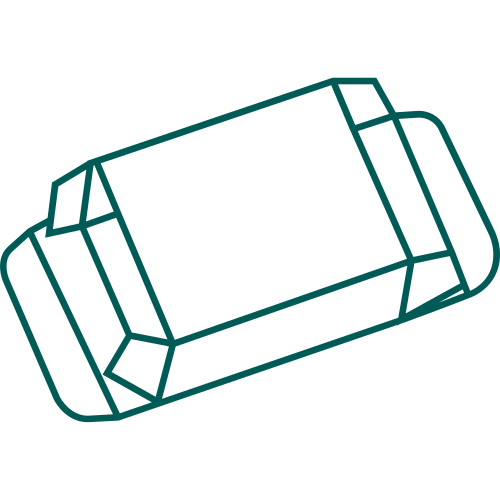
In a standard packaging quote, length runs along the first base direction before width and depth are recorded. For many cartons, that is the longer side of the base. For a folding carton, length may follow the main product-facing panel or the longest base direction. For a drawer, mailer, or rigid box, tie the orientation to the opening and the way the product is placed inside. A dieline is the flat cutting template that shows the panels, scores, cuts, glue tabs, and finished dimensions. The quote should identify inside or outside values.
How do length, width, and depth differ?
A quote becomes production-ready when one orientation is used for the product, dieline, insert, and shipping carton.
| Dimension | Common reference | Confirm before approval |
|---|---|---|
| Length | First value, often the longest base direction | Which side faces the product or opening? |
| Width | Second value across the base | Is it the side-to-side cavity or outer panel? |
| Depth | Third value from base toward the top or opening | Does it include insert, lid, or closure clearance? |
Should dimensions be inside or outside?
Fit requests start with the cavity; transport requests start with the formed footprint. Use inside length when the box must hold a product, bundle, divider, or foam insert. Use outside length when the request concerns the formed package or the shipping carton around it. Label the measurement type every time. A rigid box wrapped in art paper, a folding carton, and a corrugated mailer use different board systems, so check the finished interior after forming rather than inferring it from flat artwork.
What tolerance should a box-length request allow?
A common verification reference is about 1/16 in, or 1.5 mm. That reference does not settle every fit. Board thickness, wrap, product shape, fold lines, lid clearance, and the movement needed for packing or removal all affect the usable cavity. Keep the tolerance note beside the inside dimensions, then verify the assembled box with the product in place.
How does board choice change usable length?
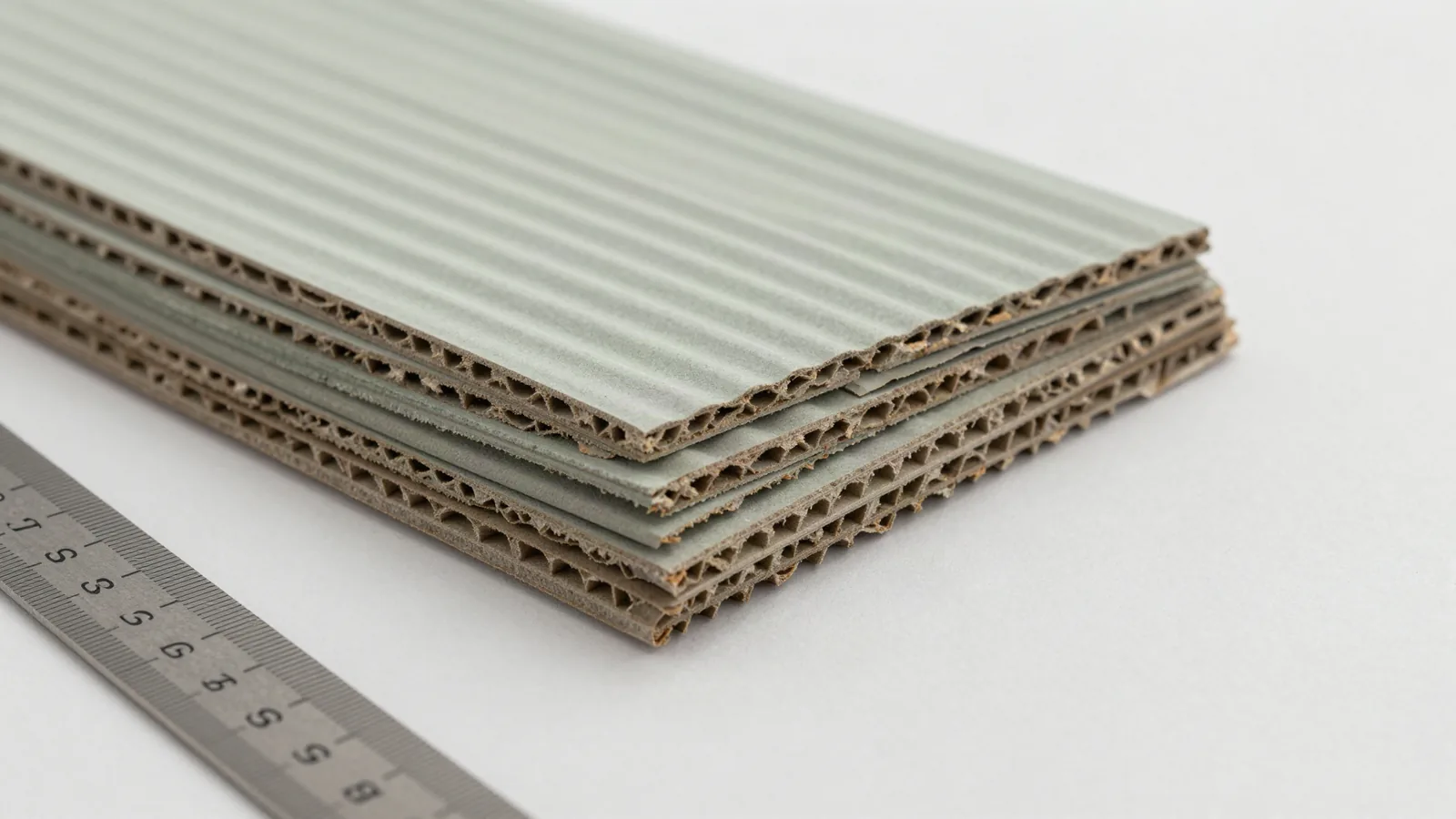
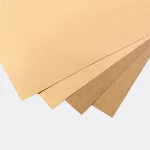
Board thickness reduces the cavity even when the flat artwork keeps the same panel length. A longer base can change how the package folds, closes, stacks, or carries the product. Caliper is the thickness of the board. SBS, C1S, and C2S paperboard are commonly discussed around 12 to 24 pt, while kraft board is commonly around 18 to 24 pt. Corrugated projects compare E, B, and C flutes, with 32 ECT, edge crush test, used as a common strength reference. The product, structure, insert, and handling path still decide the final board choice. If foam fills the interior, reserve that space before fixing length. A sleeve, drawer, or two-piece rigid format needs a closed-position check so the parts meet as intended.
Does box length affect shipping calculations?
For US ground shipments, carrier dimensional weight commonly uses L x W x H / 139. The formula uses the outer packed length, width, and height, not the inside product cavity. Keep finished box dimensions separate from the outer shipping carton dimensions on the quote. A longer packed carton can change the shipping calculation even when the product and its cavity remain unchanged.
What should a box-length quote request say?
A production request needs the product dimensions before it needs an outer footprint. Send:
- the desired inside length x width x depth and the product measurements;
- the front, base, opening direction, and closure style;
- the board or flute preference and any insert, divider, sleeve, or foam requirement;
- the print process and finish;
- the quantity, destination, and sample questions.
Send those details to Custom Packaging Lane. A 100-unit minimum applies, with pricing from $0.49 per unit at volume, quoted to spec. Production is typically 8 to 10 business days after proof approval, plus delivery. Free US shipping, free design support, and a free dieline are included. The $19.99 sample kit is credited to the first order. Use the sample kit before committing to a board or finish.
Frequently Asked Questions
Which dimension comes first on a box quote?
The first dimension in a box quote is usually length, followed by width and depth. The order is only useful when the quote states the front, opening, and base orientation. A folding carton, drawer, mailer, or rigid box can present those axes differently, so attach a dieline or simple sketch to the dimensional note.
Can I use outside length to order a fitted box?
Outside length is not enough for a fitted box because board, wrap, folds, lids, and closures reduce the inside cavity. Use inside length x width x depth for product fit, then record outside dimensions for shelf and shipping planning. The finished package should be checked after forming with the actual product in place.
How do I label a square box?
A square box still needs one consistent length x width x depth convention. Choose the orientation from the front panel, opening, product placement, or artwork direction, then keep it on the quote, dieline, insert, and sample. If two base sides are equal, state that clearly so the structure is not reoriented during production.
Why does board thickness change the inside length?
Board thickness takes space from the cavity on every panel, fold, lid, or divider. A flat drawing can keep the same panel length while the formed interior becomes smaller after a thicker board or paper wrap is selected. Use the board specification with the inside dimensions, then verify the assembled package rather than relying on artwork alone.
What should a dieline note show?
A dieline note should identify the front, base, opening direction, length x width x depth order, and whether each value is inside or outside. It should also mark scores, cuts, glue tabs, inserts, lids, and closure clearance. That information gives the printer and packaging reviewer one shared orientation before artwork and sampling begin.