




























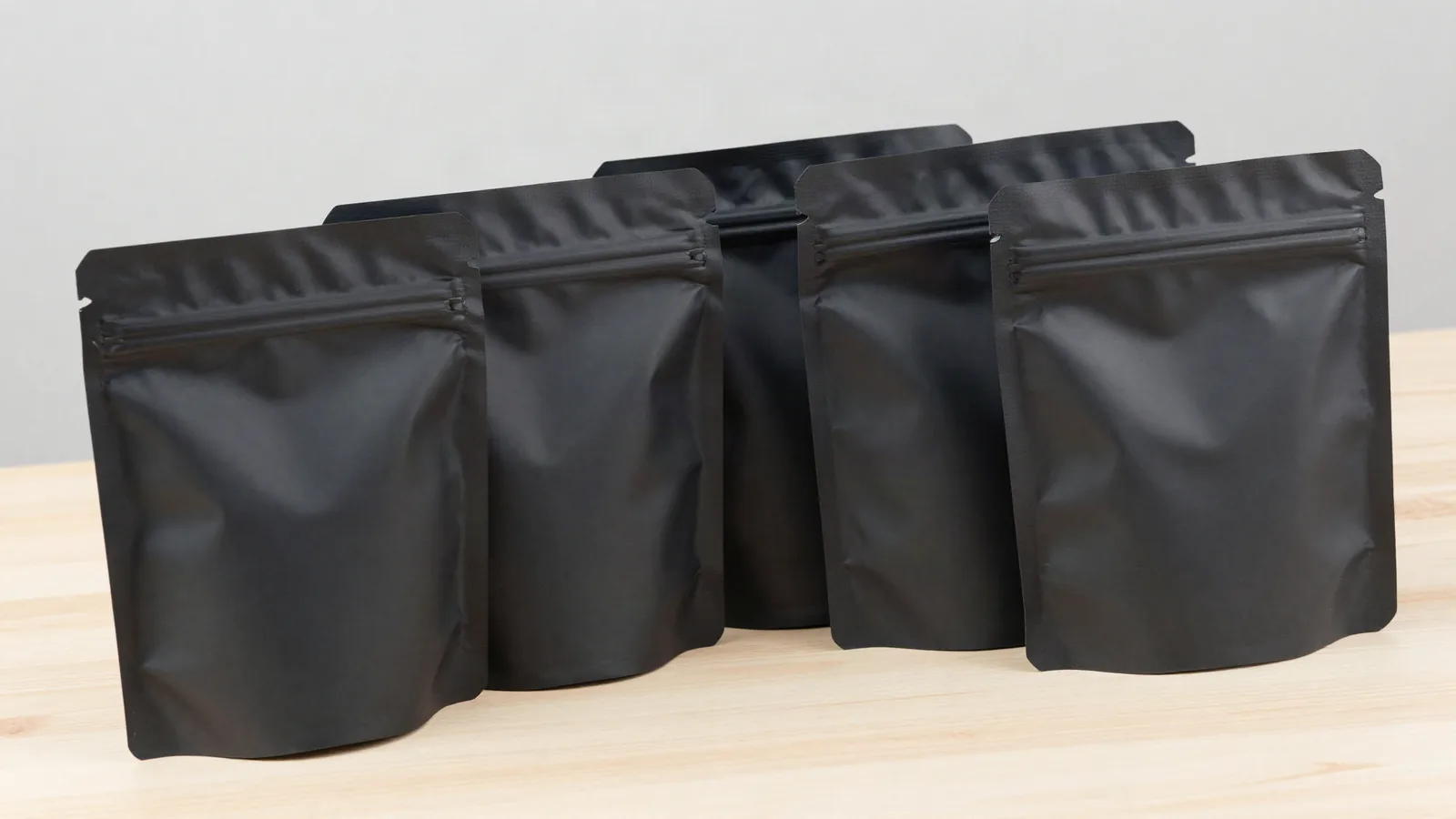




















































Food storage in Mylar bags is a packaging construction question: the bag needs a suitable thickness, barrier layer, closure, seal, and enough room for the product, headspace, or air space left above the product, and seal area. Mylar is a flexible film structure used here as a starting point for dry foods such as rice, beans, and freeze-dried products. Custom Packaging Lane is a US-based packaging supplier. Its public guidance gives thickness bands, and its catalog includes custom food-storage, freeze-drying, large, heat-seal, and printed formats. Ask us about food-contact options for your product before final approval.
What Mylar thickness should you use for long-term food storage?
Mylar thickness is measured in mils, or thousandths of an inch, and a thicker film can provide more puncture resistance while changing how the bag folds and seals. These are typical industry starting ranges, not shelf-life promises. Match the range to product weight, filled size, handling, storage conditions, closure, and seal method.
| Typical thickness range | Starting discussion | Buyer checks |
|---|---|---|
| 3.5 to 4.5 mil | Smaller bags and lighter dry products | Product weight, puncture risk, bag size, and seal width |
| 4.5 to 6.5 mil | Medium to larger bags and heavier contents | Filled dimensions, handling path, closure, and storage location |
| 7 mil | Common discussion point for food-storage bags | Product type, pack size, oxygen plan, and sealing method |
| 10 mil or higher | Heavier-duty storage discussions | Whether added puncture resistance is needed for the actual use |
Thicker film does not automatically create longer storage life. Moisture, oxygen exposure, light, temperature, absorber selection, seal quality, punctures, and storage conditions also affect the result.
Do oxygen absorbers go inside Mylar bags?
An oxygen absorber is a packet that removes oxygen from sealed headspace. Oxygen absorbers are used with dry foods to reduce oxygen in the sealed headspace. Choose the absorber for the bag volume, product, and remaining air, then place it in the bag close to the sealing step.
An absorber cannot dry wet food, repair a puncture, fix a weak seal, or remove every uncertainty from a large empty space. Keep the product dry, leave a workable seal area, and confirm the heat-seal method for the selected bag construction.
Are Mylar bags suitable for rice and beans?
Mylar bags for rice and beans should be planned around product dryness, bag capacity, absorber placement, seal width, and whether the package will be opened repeatedly. Rice and beans are dry goods, but the filled profile and headspace still affect the bag size and sealing plan.
A heat seal creates the storage closure step. A zipper can support repeated access, but it does not replace a clear sealing plan when the package needs to be closed after filling. Ask us about food-contact options for your product and state whether the bag is for household storage, a retail product, or a branded food line.
Which CPL products fit food-storage projects?
Custom Mylar food storage bags are the direct catalog starting point for a bag planned around dry-food storage. Mylar bags for freeze drying fit projects where the product, fill method, seal, absorber plan, and artwork need to be discussed together. Large Mylar bags belong in the comparison when the filled product or bundle needs more room.
Use these product pages to define the format, then confirm the thickness, barrier construction, closure, dimensions, artwork, and seal details in the quote. A catalog label does not establish the correct food-contact option for a specific product.
Does a thicker Mylar bag give food a longer shelf life?
No. A thicker Mylar bag may improve puncture resistance, but shelf life also depends on product moisture, oxygen exposure, light, temperature, absorber selection, seal quality, handling, and storage conditions.
Use the thickness range to narrow the construction discussion. Then send the food type, filled volume, bag dimensions, absorber plan, closure, seal method, and storage setting so the quote addresses the actual package rather than a thickness number alone.
What should you include in a food-storage bag quote?
A food-storage quote should include the food type, dry-product condition, target fill, bag dimensions, thickness direction, absorber plan, closure, seal method, artwork, quantity, and storage setting.
- State whether the bag is for rice, beans, freeze-dried food, or another dry product.
- Describe the filled profile, headspace, opening routine, and storage location.
- Choose plain or printed packaging and identify any zipper or heat-seal requirement.
- Ask us about food-contact options for your product before selecting the final construction.
Custom Packaging Lane uses a 100-unit MOQ. Pricing is from $0.49 per unit at volume, quoted to spec. Production is typically 8 to 10 business days after proof approval, plus delivery. Free US shipping and free design support are available. Order the $19.99 sample kit to compare film and finish direction, then use custom packaging solutions for broader format planning.
Frequently Asked Questions
Can you store rice and beans in Mylar bags?
Mylar bags for rice and beans can be considered when the contents are dry and the bag capacity, thickness, absorber plan, seal width, and storage conditions are matched to the product. A zipper can support repeated access, while a heat seal creates the storage closure step. Ask us about food-contact options for your product before ordering.
How do oxygen absorbers work in Mylar food bags?
Oxygen absorbers go inside Mylar bags with dry foods when the absorber size matches the bag volume, product, and remaining air. Place the absorber close to the sealing step. An absorber cannot fix wet food, a puncture, or a weak seal, so the product condition and heat-seal method must be checked separately.
Which Mylar thickness should you choose for long-term food storage?
Typical industry starting ranges for long-term food storage include 3.5 to 4.5 mil for smaller lighter bags, 4.5 to 6.5 mil for medium to larger bags, 7 mil as a common discussion point, and 10 mil or higher for heavier-duty use. The right choice depends on product weight, handling, puncture risk, closure, and storage conditions.
Can resealable Mylar bags be used for food storage?
Resealable Mylar bags can support repeated access, but a zipper does not replace a separate sealing plan when the package needs a storage closure after filling. Choose the format around access frequency, product type, bag size, seal area, and storage conditions. Ask us about food-contact options for your product.
How do I choose Mylar bags for freeze-dried food?
Mylar bags for freeze-dried food should be chosen around the product profile, filled volume, bag dimensions, thickness, absorber plan, seal method, artwork, and storage conditions. Custom Packaging Lane lists a freeze-drying format as a starting point. Ask us about food-contact options for your product before approving the finished construction.












