




























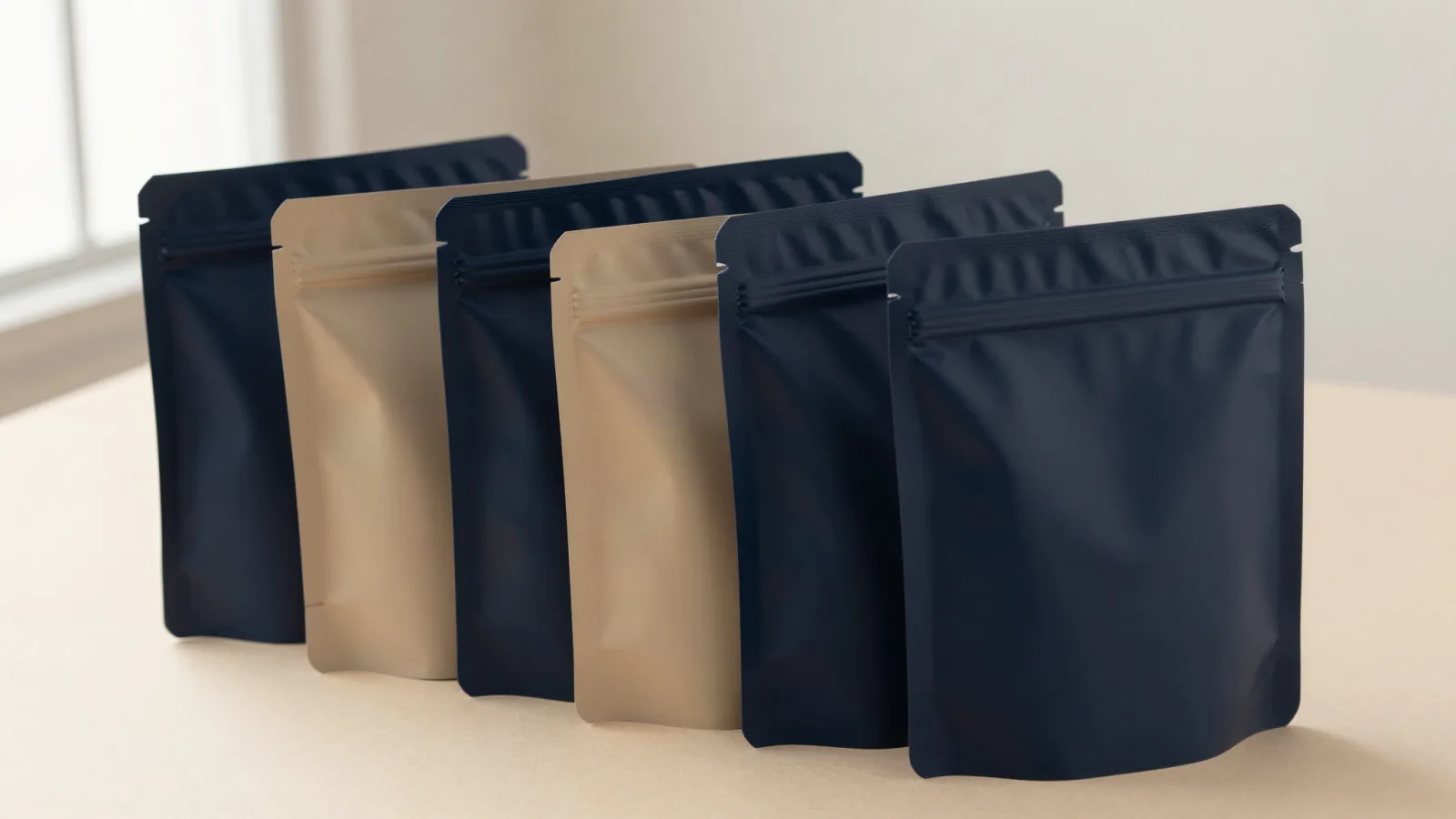




















































A vacuum-sealable Mylar bag pairs a selected barrier-film construction with a seal specification that fits the vacuum-sealing process. The bag format, film thickness, seal line, product profile, and artwork clearance belong in the same record. That keeps a material choice attached to the actual pouch instead of a generic film name.
What makes a Mylar bag suitable for vacuum sealing?
A Mylar bag is suitable for vacuum sealing when its film construction and closure area are selected for the intended sealing method. In a metallized construction, a thin metal layer blocks light and reduces transmission of moisture and odor. The exact result still depends on the complete film structure, seal, fill, handling, and storage conditions.
| Term | What it describes | Detail to provide |
|---|---|---|
| Barrier film | Film construction that limits transmission | Product profile and storage setting |
| Film thickness | Selected thickness entry for the construction | Bag format and quoted seal |
| Seal specification | Closure area and seal direction | Filling method and opening treatment |
| Bag format | Panel and outline arrangement | Flat, large, irregular, or die-cut shape |
| Headspace | Air volume left above the product | Fill level and closure clearance |
What should a vacuum bag material record include?
A vacuum bag material record should name the barrier direction, film thickness entry, seal specification, bag format, filled profile, headspace, opening, and print region. Headspace is the air volume left above the product before closure. That space affects where the seal sits and how much artwork can remain above the closure.
Include the product dimensions after filling, not only the empty pouch dimensions. A large panel, shaped edge, resealable mouth, or different packout can change the material and seal discussion. The catalog value has to stay tied to the selected format.
How do barrier film and seal construction work together?
Barrier film describes what the flexible structure is intended to limit, such as oxygen, moisture, light, or odor transmission. The seal specification describes where and how the package closes. Those fields work together, but a barrier description does not replace a seal check.
A seal line needs clear film, enough room for the closure, and artwork kept away from the area being joined. State how the bag will be filled, evacuated, closed, opened, and stored. That gives the quote a usable operating context.
Which Mylar bag formats should I compare?
Start with custom Mylar vacuum seal bags for the closest catalog direction. Compare Mylar bags for freeze drying when the barrier discussion is tied to that format. large Mylar bags address a larger panel, while irregular shape Mylar bags and die-cut Mylar bags show how a shaped outline changes the construction discussion.
Each page is a format reference. The selected film thickness, barrier construction, seal specification, artwork, and quantity still need to be quoted to the project.
How should artwork avoid the seal area?
Keep important copy, barcodes, and fine detail outside the seal line and any fold or cut area. A dieline is the flat cutting template that shows the pouch panels, edges, and closure position. Free design support can draw the dieline and place supplied artwork against it before proof approval.
Check the filled pouch, not only the flat file. A product that reaches the seal or pushes into a shaped corner can cover copy after filling. If the product relates to food, ask us about food-contact options for your product.
What are CPL's terms for vacuum-sealed Mylar bags?
The MOQ is 100 units. Pricing is from $0.49 per unit at volume, quoted to spec. Production is typically 8 to 10 business days after proof approval, plus delivery. Free US shipping and free design support are available. The $19.99 sample kit is credited toward the first order. The custom packaging solutions hub can support a wider package brief when the bag is part of a larger system.
Frequently Asked Questions
What are vacuum-sealed Mylar bags made from?
Vacuum-sealed Mylar bags use a selected flexible film construction with barrier-film and seal specifications quoted for the intended vacuum-sealing method. The exact construction depends on the bag format, thickness entry, seal direction, product profile, and handling conditions. Custom Packaging Lane should confirm those fields in the project quote.
Does film thickness determine vacuum bag performance?
Film thickness is one part of a vacuum-sealed Mylar bag construction, not the whole package specification. Bag format, barrier direction, seal area, fill method, handling, and storage conditions also matter. Custom Packaging Lane can quote the current thickness and seal specifications for the selected Mylar format.
What seal information should a Mylar bag quote include?
A Mylar bag quote should connect the seal direction to the selected film, bag format, opening treatment, artwork clearance, filling method, and product profile. State how the bag will be filled and closed so the film and closure are discussed together. Do not assume every Mylar bag uses the same seal construction.
Can CPL provide different vacuum-sealable Mylar formats?
Custom Packaging Lane's catalog includes custom Mylar vacuum seal bags, freeze-drying bags, large Mylar bags, irregular shape bags, and die-cut bags. These pages show different format directions. The selected film thickness, barrier construction, seal specification, artwork, quantity, and destination still need to be quoted to the project.
What is the MOQ and production timing for vacuum-sealed Mylar bags?
The MOQ for vacuum-sealed Mylar bags is 100 units, and pricing is from $0.49 per unit at volume, quoted to spec. Free design support and free US shipping are available. Production is typically 8 to 10 business days after proof approval, plus delivery. The $19.99 sample kit is credited toward the first order.












