




























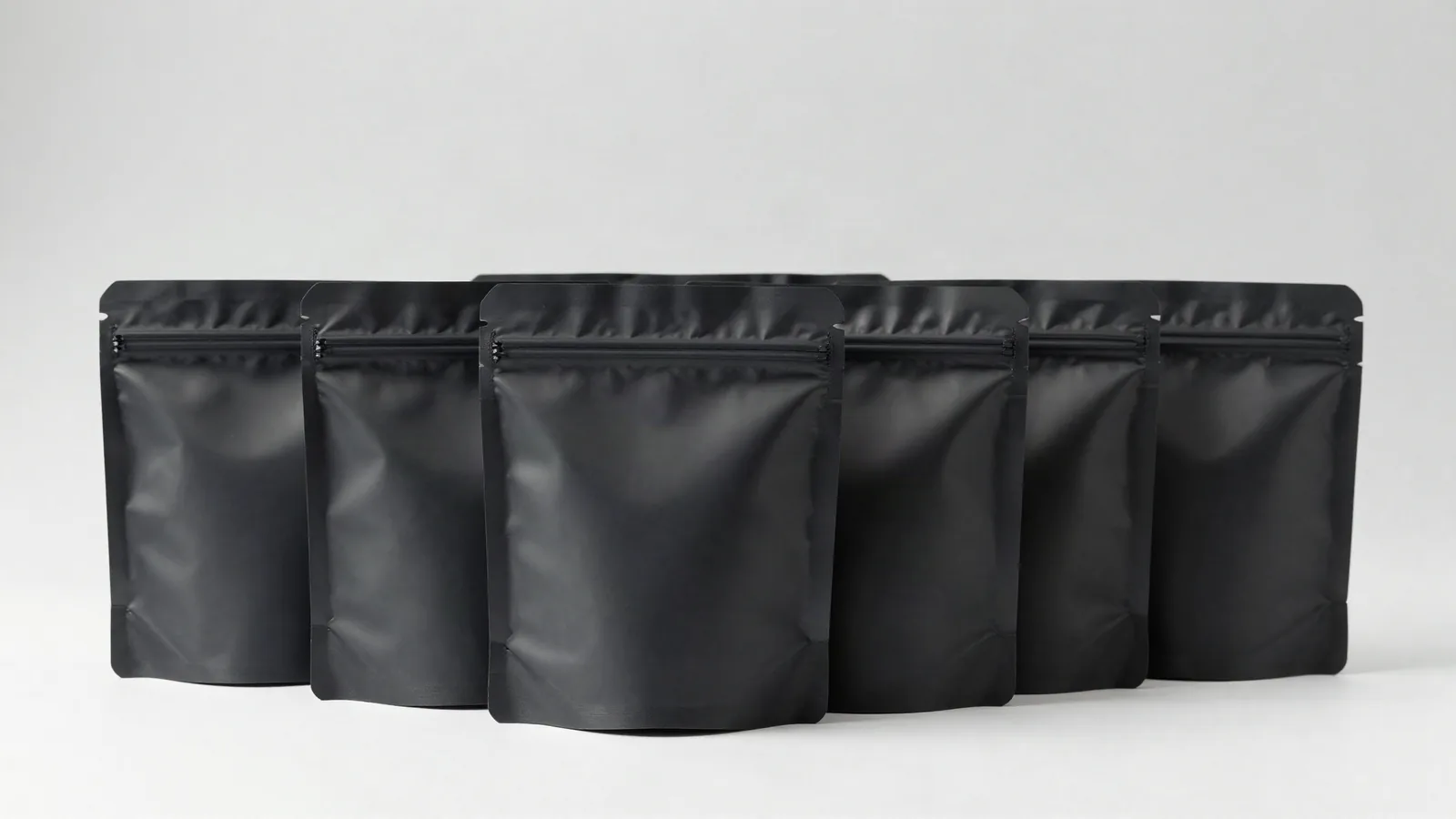




















































Mylar pouch shapes make sense when the outer form, filled profile, and opening method stay in the same specification. A pouch is a flexible package made from layered film. Its catalog record should identify whether it is flat, stand-up, gusseted, die-cut, or irregular before dimensions are compared. That is the practical answer behind searches for mylar pouch styles, stand up mylar pouch, and mylar bag shapes.
What Mylar pouch shapes are available?
The catalog groups Mylar pouches into flat, stand-up, gusseted, die-cut, and irregular formats. A flat pouch has two flexible faces without a standing base. A stand-up pouch uses a formed bottom area so it can sit upright when filled. A gusseted pouch has a folded panel that expands in a specified direction. A die-cut pouch follows a defined cutting path. An irregular pouch uses a nonstandard outer profile.
| Shape | What defines it | Record with the size |
|---|---|---|
| Flat pouch | Two flexible faces without a standing base | Width, height, closure, and seal area |
| Stand-up pouch | Bottom construction for upright display | Face width, body height, base behavior, and closure |
| Gusseted pouch | Folded expansion panel | Face dimensions, gusset direction, and filled profile |
| Die-cut pouch | Defined custom cut path | Outer cut, usable panel, seal zone, and finished size |
| Irregular pouch | Nonstandard silhouette | Outline, fill route, closure, and artwork area |
Keep each width and height with the pouch shape it describes. A flat pouch dimension cannot move into a stand-up or die-cut row because the base, fold, or cut path changes the usable package.
How should you size a stand-up or gusseted Mylar pouch?
Measure the filled package by width and body height, then record the base behavior, gusset direction, closure, and seal area. The standing base changes the package footprint after filling, so an empty flat outline does not describe the space on a shelf or in a master carton.
For a gusseted pouch, name the fold direction beside the face dimensions. The gusset is the folded expansion area, not a replacement for width or height. The filled profile tells the designer how far the package opens and where the artwork may sit once the product is inside.
When does a die-cut shape need a different dieline?
A dieline is the flat cutting template used to print, cut, and seal a pouch. A die-cut or irregular pouch needs a dieline that follows the final outer outline, seal zone, closure, and usable artwork panel. The cutting path should be reviewed with the filled product, not only with an empty silhouette on screen.
Keep type away from the cut and seal areas. Leave bleed beyond the cut line. Low-resolution artwork can look soft, and RGB artwork can shift when it is converted for press. A digital proof gives you a chance to catch those problems before the run reaches production.
Which CPL products show different Mylar pouch styles?
Irregular shape Mylar bags and die-cut Mylar bags are the direct references for custom silhouettes. Mylar bags for freeze drying show a product-specific format. Large Mylar bags frame a broader flexible package, while a kraft paper zipper pouch gives you a different face material and closure direction to compare.
What should you send before ordering a pouch shape?
Send the packed product length, width, and height, desired shape, gusset direction, closure, seal area, artwork status, finish, quantity, and destination. Custom Packaging Lane has a 100-unit MOQ. Pricing is from $0.49 per unit at volume, quoted to spec. Production is typically 8 to 10 business days after proof approval, plus delivery.
Free US shipping and free design support are available. The $19.99 sample kit can help you compare material and finish direction before proof approval. Use custom packaging design when the packed dimensions and artwork need to stay aligned with the selected shape.
Frequently Asked Questions
What Mylar pouch shapes can Custom Packaging Lane quote?
Custom Packaging Lane can quote flat, stand-up, gusseted, die-cut, and irregular Mylar pouch shapes. Flat pouches have no standing base, stand-up pouches use a bottom structure, and gusseted pouches expand through a folded panel. Die-cut and irregular pouches need the outer outline, closure, seal zone, and packed-product dimensions before the shape is finalized.
How do I measure a stand-up Mylar pouch?
Measure a stand-up Mylar pouch by its filled width and body height, then describe the base behavior, closure, and seal area. The bottom structure changes the filled footprint, so an empty flat outline is not enough. Send the packed product dimensions with the quantity and artwork status for a quote.
What is the difference between a gusseted and flat Mylar pouch?
A flat Mylar pouch has two flexible faces without an expanding folded panel. A gusseted Mylar pouch has a folded section that opens in a specified direction and changes the filled profile. Record the gusset direction beside the width and height so the pouch shape and usable space stay tied to one catalog row.
When should I choose a die-cut or irregular Mylar pouch?
Choose a die-cut Mylar pouch when the package needs a defined custom cutting path. Choose an irregular Mylar pouch when the outer silhouette or fill route does not fit a standard shape. Both formats need a clear outline, seal zone, closure, artwork panel, and packed-product profile before proof approval.
What are the order terms for custom Mylar pouch shapes?
Custom Mylar pouch shapes have a 100-unit MOQ. Pricing is from $0.49 per unit at volume, quoted to spec, and production is typically 8 to 10 business days after proof approval, plus delivery. Free US shipping and free design support are available. The sample kit costs $19.99.












