




























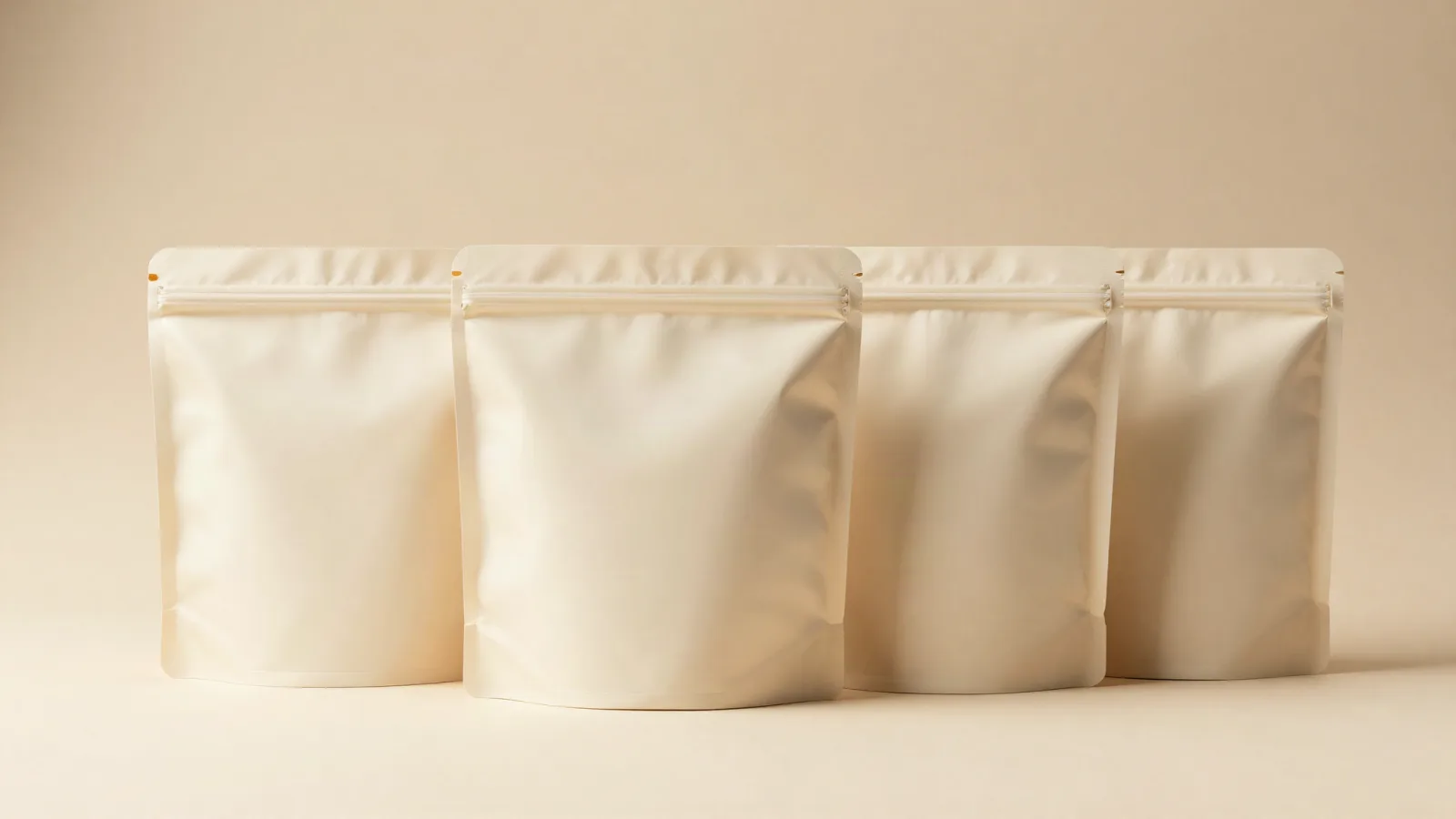




















































Vacuum-sealable Mylar bags are flexible barrier pouches that remove air before the mouth is sealed. Mylar is a flexible film structure; its barrier layer helps limit light, moisture, and odor transfer, while the seal area keeps the closure closed. A vacuum seal bag is therefore a package plus a sealing process. The product profile, film construction, opening, seal zone, and equipment belong in one record.
Which mil thickness actually holds a vacuum seal?
No single mil thickness creates a universal vacuum-seal result, because the seal also depends on the film layers, seal area, machine settings, product shape, contamination at the seal, and handling after closure. A mil is one-thousandth of an inch. CPL's Mylar guidance uses the following thickness bands as planning points, not as a replacement for the selected value in the quote.
| Thickness band | Planning direction | What the quote must confirm |
|---|---|---|
| 3.5 to 4.5 mil | Smaller bags and lighter contents | Product weight, puncture risk, bag size, and seal width. |
| 4.5 to 6.5 mil | Medium to larger bags and heavier contents | Filled dimensions, handling path, closure, and storage. |
| 7 mil | Middle planning point for many bag discussions | Product type, pack size, seal method, and equipment. |
| 10 mil or higher | Heavier-duty handling discussions | Whether added puncture resistance is needed for the actual use. |
The selected mil value should travel with the barrier construction, bag dimensions, seal area, and equipment notes in the production record. A thicker film can change folding, feel, fit, and seal behavior. It should not be copied from one bag size to another without checking the full construction.
What does the barrier film change?
The barrier layer and inner seal layer do different jobs. The barrier layer limits the movement of light, moisture, and odor through the film structure. The inner seal layer joins at the bag mouth when the sealing equipment applies the required heat, pressure, or combination. A laminate is a bonded stack of film layers, so the layer order matters to both printing and sealing.
Keep the printed face, barrier layer, and seal surface identified in the quote. If the bag will sit inside a carton or another pouch, include that relationship in the product profile. The outer package can change how the filled bag is loaded and handled, even when the bag itself stays the same.
How should the bag and sealer be matched?
The bag and sealer should be specified together. State whether the process uses a chamber sealer, an external vacuum sealer, a separate heat sealer, or a combined workflow. The equipment must fit the bag opening and create a continuous seal on the selected material.
Keep the top edge flat and clean, leave enough clearance above the contents, and keep product particles out of the seal area. After air removal, inspect the seam for gaps, channels, wrinkles, and incomplete closure. If the product has sharp edges or an irregular profile, record that before the bag shape and mil value are approved.
What should the proof show before production?
The proof should show the flat dimensions, formed bag profile, layer description, selected mil value, seal location, artwork area, opening direction, and any tear notch, zipper, hang hole, or shaped edge. A seal zone is the strip kept clear so the equipment can form the closure. Keep that zone free of product, essential copy, and artwork that would be hidden after filling.
Artwork checks belong here too. RGB art can shift when converted for press. Type too close to a seal or trim line can become difficult to read. Bleed should extend beyond the cut line. Compare the flat artwork with the filled bag view before approving the digital proof, and ask us about food-contact options for your product when that use applies.
Which CPL Mylar formats should you compare?
Custom Mylar vacuum seal bags are the direct catalog reference for a vacuum-led project. Custom printed Mylar bags keep artwork coverage in the same discussion as film and finish. Die-cut Mylar bags are relevant when the outer outline is part of the presentation. Large Mylar bags fit projects with a larger packed profile, while Mylar bags for freeze drying provide a related storage reference.
These pages are format references, not interchangeable seal specifications. Confirm the exact product profile, dimensions, material, mil value, seal area, artwork, finish, quantity, and equipment before the final proof.
What should go in the quote and order plan?
The quote should carry the product profile, bag dimensions, barrier construction, selected mil thickness, seal area, opening, artwork, finish, quantity, and delivery destination. Custom Packaging Lane uses a 100-unit MOQ. Pricing is from $0.49 per unit at volume, quoted to spec. Production is typically 8 to 10 business days after proof approval, plus delivery. Free US shipping and free design support are available.
The $19.99 sample kit can provide a physical reference for film feel, printed surfaces, and format before the custom specification is approved. For a wider purchasing route, use wholesale custom packaging after the vacuum bag record is complete.
Frequently Asked Questions
How many mils should a vacuum-sealable Mylar bag be?
There is no single mil value for every vacuum-sealable Mylar bag. CPL guidance uses 3.5 to 4.5 mil for smaller or lighter bags, 4.5 to 6.5 mil for medium or larger contents, 7 mil as a middle planning point, and 10 mil or higher for heavier-duty discussions. The quote must confirm the actual film, size, seal, and equipment.
Can any Mylar bag be vacuum sealed?
A Mylar bag needs a compatible film construction, opening, seal area, and sealing process. Product shape, fill level, seal contamination, equipment, and handling also affect the result. Confirm the bag and sealer together, then inspect the finished seam for gaps, channels, wrinkles, or incomplete closure before relying on the package.
What should a vacuum bag quote include?
A vacuum bag quote should include the packed product profile, finished dimensions, barrier construction, selected mil thickness, seal area, opening, artwork, finish, quantity, equipment context, and delivery destination. Keeping those fields together prevents a thickness value from being separated from the bag format and sealing method it belongs to.
Which CPL product is closest to a custom vacuum bag project?
Custom Mylar vacuum seal bags are the closest CPL catalog reference. Custom printed Mylar bags, die-cut Mylar bags, large Mylar bags, and Mylar bags for freeze drying can help compare artwork, outline, size, or use direction. They are reference formats, so the final seal and mil specification still needs project approval.
What are the starting terms for custom vacuum-sealable Mylar bags?
Custom Packaging Lane uses a 100-unit MOQ. Pricing is from $0.49 per unit at volume, quoted to spec. Production is typically 8 to 10 business days after proof approval, plus delivery. Free US shipping and free design support are available, and the sample kit is $19.99.












