




























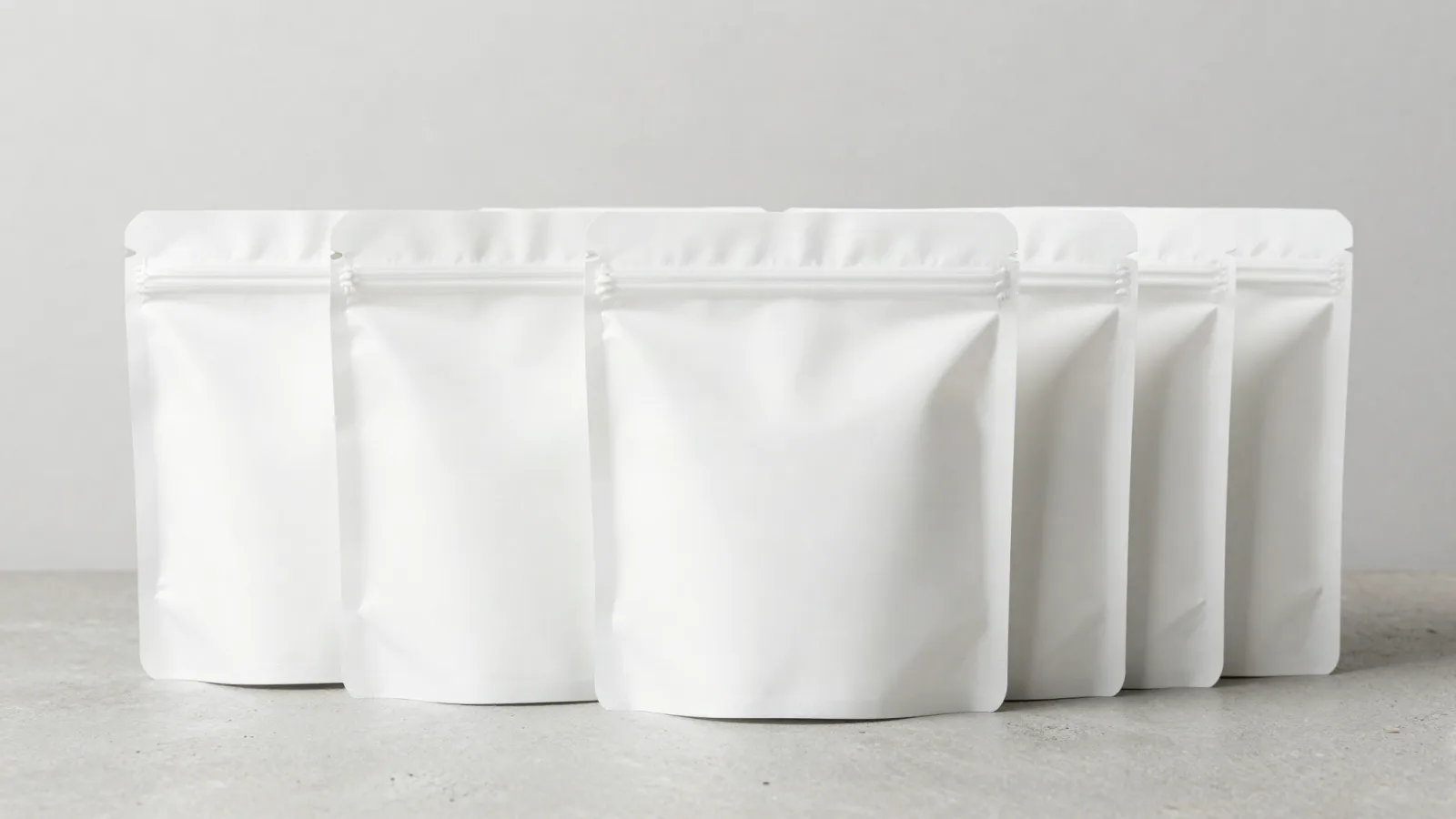




















































Packaging zippers are closure tracks integrated into flexible pouches and bags. CPL's stand-up pouch and Mylar bag catalog lists zipper closure as a standard finish option alongside other seal types. The zipper belongs in the pouch specification because its track uses space near the top seal and changes the way the customer opens the package. Start the brief with the pouch form, product, and opening route.
What does a packaging zipper change on a pouch?
A packaging zipper adds a defined opening track above the filled product and gives the pouch a repeat opening path. The track must sit inside the top construction without crowding the seal, artwork, tear feature, window, or hanging area. A zipper is a closure component, not a replacement for specifying the pouch material, shape, print surface, and fill method.
Where should the zipper sit on the dieline?
The zipper should be placed on the dieline before final artwork is completed. A dieline is the flat template used to map panels, seals, folds, cuts, and print areas before a flexible package is assembled. Mark the zipper track, top seal, clear space, opening direction, and any gusset in the same view. The assembled proof should show how those parts meet.
How does the fill route affect zipper placement?
The fill route affects zipper placement because the package needs room above the product before the top seal closes. Headspace is the empty area between the filled product and the top closure. Describe the loading direction, product profile, desired headspace, and whether the package stands upright, lies flat, or sits inside an outer carton. If the project concerns food or a contact question, ask us about food-contact options for your product.
Which artwork areas need zipper clearance?
Artwork needs clear space around the zipper track, top seal, tear feature, window, and any gusset that changes the visible panel. Keep the logo and essential product wording on stable areas, then review the assembled pouch rather than the flat file alone. Matte, gloss, kraft appearance, and other quoted finishes should be reviewed with zipper placement because the opening track can interrupt a printed surface.
What belongs in a packaging zipper quote?
A packaging zipper quote should name the pouch geometry, closure position, fill route, artwork zone, and opening use. Put these fields in the brief:
| Quote field | What it defines | Detail to send |
|---|---|---|
| Pouch format | The package shape around the closure | Stand-up, flat, gusseted, or another requested form |
| Zipper position | The opening track and top panel | Placement, orientation, and clear space |
| Fill route | How product enters the pouch | Loading direction and headspace |
| Artwork zone | Where print must stay readable | Logo, window, product copy, and safe areas |
| Opening use | How the customer reaches the product | First opening, repeat opening, or tear access |
Which catalog pages help frame a zipper project?
Private label packaging helps organize a pouch brief when the zipper sits inside a wider product line. Perforated packaging is a reference when the project also needs a defined tear or access feature. Seed packaging gives you a compact product-led format to discuss with the pouch shape, fill route, and opening path. These catalog pages do not mean every format uses the same closure construction.
How do quantity, pricing, and proof timing work?
The MOQ is 100 units. Pricing is from $0.49 per unit at volume, quoted to spec, with the final quote tied to the pouch structure, zipper, dimensions, artwork, finish, and quantity. Production is typically 8 to 10 business days after proof approval, plus delivery. Free US shipping and free design support are available. A $19.99 sample kit lets you compare flexible packaging directions before approving the final proof.
What should you send before ordering a zippered pouch?
Send the product profile, pouch form, material direction, zipper position, seal area, fill route, artwork, finish, quantity, and destination. Add any window, gusset, tear feature, required headspace, or opening instruction. For artwork and dieline planning, use custom packaging design and keep the closure marks in the same file as the printed panels.
Frequently Asked Questions
What is the zipper on a custom pouch called?
The zipper on a custom pouch is a closure track integrated into the flexible package. It creates a defined opening path and must be specified with pouch shape, material direction, seal area, artwork, fill route, and intended handling. The word zipper alone does not describe its position or the rest of the package.
Should the zipper appear in the first artwork file?
The zipper should appear in the first artwork file as a marked closure zone on the dieline. Show the track with the top seal, panels, gusset, window, tear feature, and artwork clear space. An assembled digital proof then shows whether the closure interrupts the logo or product information.
Can a packaging zipper change the usable fill area?
A packaging zipper can change the usable fill area because the track and top seal occupy space above the product. Describe the product profile, loading direction, desired headspace, and pouch orientation before the zipper is placed. The filled package, not the flat artwork alone, should guide the opening position.
What information should accompany a zipper request?
A zipper request should include the product profile, pouch form, zipper location, seal area, fill route, artwork, finish, quantity, and destination. Mention any window, gusset, tear feature, or food-contact question at the start. CPL can then review the closure as part of the complete pouch specification.
What are CPL's packaging zipper terms?
CPL uses a 100-unit MOQ for packaging zipper projects. Pricing is from $0.49 per unit at volume, quoted to spec. Production is typically 8 to 10 business days after proof approval, plus delivery. Free US shipping, free design support, and a $19.99 sample kit are available.












