

































































What should a printed shopper bag carry?
Packed product and weight set the bag's first dimensions. A shopper bag is a carrier, so its width, gusset, height, opening, handle drop, handle width, and reinforcement area need to work together before the logo is placed.
Paper bags, reusable textile bags, and flexible pouches do different jobs during packing, carrying, storage, and display. Compare printed paper bags, shopping bags, and retail paper bags. The custom packaging design hub covers artwork and structure together. For a sealed inner package, compare custom printed Mylar bags. Take-out bags suit a different handoff question. Ask us about food-contact options for the product, rather than assuming the outer carrier is the food package.
Which material is right for a shopper bag?
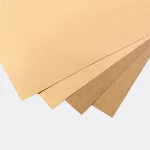
Paper shoppers commonly use SBS, C1S, or C2S paperboard in the 12 to 24 pt range. Kraft board commonly falls around 18 to 24 pt and keeps more of its natural surface tone. Reusable formats may use non-woven polypropylene around 80 to 120 gsm or cotton canvas around 8 to 12 oz. The material changes stiffness, ink contrast, fold behavior, handle reinforcement, and hand feel.
A wide bag holding light goods loads differently from a narrow bag with a concentrated load. Confirm whether the bag is only carrying a sealed product or also needs to hold shape, show the product, or protect it. If it will touch food, ask us about food-contact options.
| Shopper format | Typical material reference | Practical choice |
|---|---|---|
| Printed paper bag | SBS, C1S, or C2S, 12 to 24 pt | Stiffness and broad print face |
| Kraft shopper | Kraft board, commonly 18 to 24 pt | Natural tone and ink contrast |
| Reusable shopper | Non-woven polypropylene, 80 to 120 gsm | Handle reinforcement and repeat carrying |
| Reusable textile option | Cotton canvas, 8 to 12 oz | Handle construction and packed weight |
| Flexible inner package | PET / AL / PE laminate | Sealed barrier format inside the carrier |
What dimensions should I give for a shopper bag?
The bag brief needs width, gusset, and height, with each measurement labelled flat or filled. Add the opening, handle drop, handle width, reinforcement area, and any internal insert. Filled shape changes how the bag stands and where the front artwork sits, so review the actual product inside it.
If a box goes inside, provide its length x width x depth and identify inside measurements. About 1/16 inch, or 1.5 mm, is a common planning tolerance for box dimensions. That tolerance does not replace a filled-bag review, handle-attachment check, or fold check. Mark which face should point toward the customer during carry and whether side panels repeat the design.
Which print and finish choices suit shopper-bag artwork?
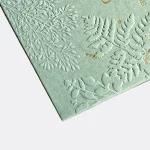
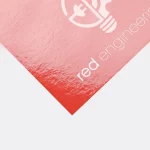
Offset CMYK is common for detailed paper graphics. Digital printing suits short runs, changing versions, or artwork tests. Flexo is commonly associated with corrugated surfaces and simpler repeat graphics. Matte or gloss lamination changes sheen. Soft-touch changes surface feel. Spot UV, foil stamping, embossing, and debossing add selective contrast or relief when the bag construction supports them.
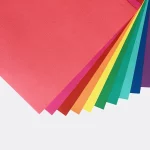
Keep small type, marks, and solid color blocks away from seams, gussets, handle reinforcements, folds, and glue zones. Aqueous coating dries fast, is water-based, and takes glue and ink well on flaps. UV coating cures hard and glossy, resists scuffing better than aqueous, and can crack along score and fold lines. Kraft board, coated paperboard, and flexible laminates render the same color differently, so check the selected substrate in the proof.
What should I compare in a printed shopper quote?
A useful quote puts the bag's physical build beside its artwork and finishing inputs. Compare the bag width, gusset, height, handle construction, decorated panels, material, print coverage, finish, tooling, quantity, and shipping zone. Real pricing is tied to the final bag specification, not the logo alone. We quote from a 100-unit minimum, with pricing from $0.49 per unit at volume, quoted to spec.
Production is typically 8 to 10 business days after proof approval, plus delivery. Free US shipping, free design support, and a free dieline are available. The sample kit is $19.99 and is credited toward the first order. Send the filled dimensions and handle requirements with the artwork so the proof shows a bag you can actually pack and carry.
Frequently Asked Questions
What are printed shopper bags used for?
Printed shopper bags are used for retail handoff, events, gifting, and branded carryout. The correct format depends on packed weight, filled dimensions, handle construction, storage, and expected reuse. A paper shopper may carry a boxed purchase, while a reusable textile bag or flexible inner package addresses a different handling job.
What paperboard thickness is common for printed shopper bags?
SBS, C1S, and C2S paperboard commonly fall in the 12 to 24 pt range, while kraft board commonly falls around 18 to 24 pt. The choice affects stiffness, fold behavior, print contrast, and handle reinforcement. Review the filled bag with the packed product, because a board reference alone does not show how the carrier will handle its load.
Which printing methods work for shopper bags?
Offset CMYK is common for detailed paper artwork, digital printing suits short runs or changing versions, and flexo is commonly associated with corrugated applications. Matte or gloss lamination changes sheen, while soft-touch changes hand feel. Spot UV, foil, embossing, and debossing need a proof that maps their exact areas on the chosen bag material.
What measurements are needed for a shopper-bag quote?
A shopper-bag quote needs width, gusset, height, opening, handle drop, handle width, reinforcement area, and any insert, with dimensions labelled flat or filled. If a box goes inside, provide its length x width x depth and identify inside measurements. The filled product should be part of the fit review.
How do I keep a logo clear around shopper-bag folds?
Keep the logo and small type away from seams, gussets, handle reinforcements, folds, and glue zones. Mark the front, back, side panels, finish areas, and repeat pattern on the dieline. Review the assembled bag on the selected substrate, because kraft board, coated paperboard, and flexible laminate can change color contrast and visual spacing.