




























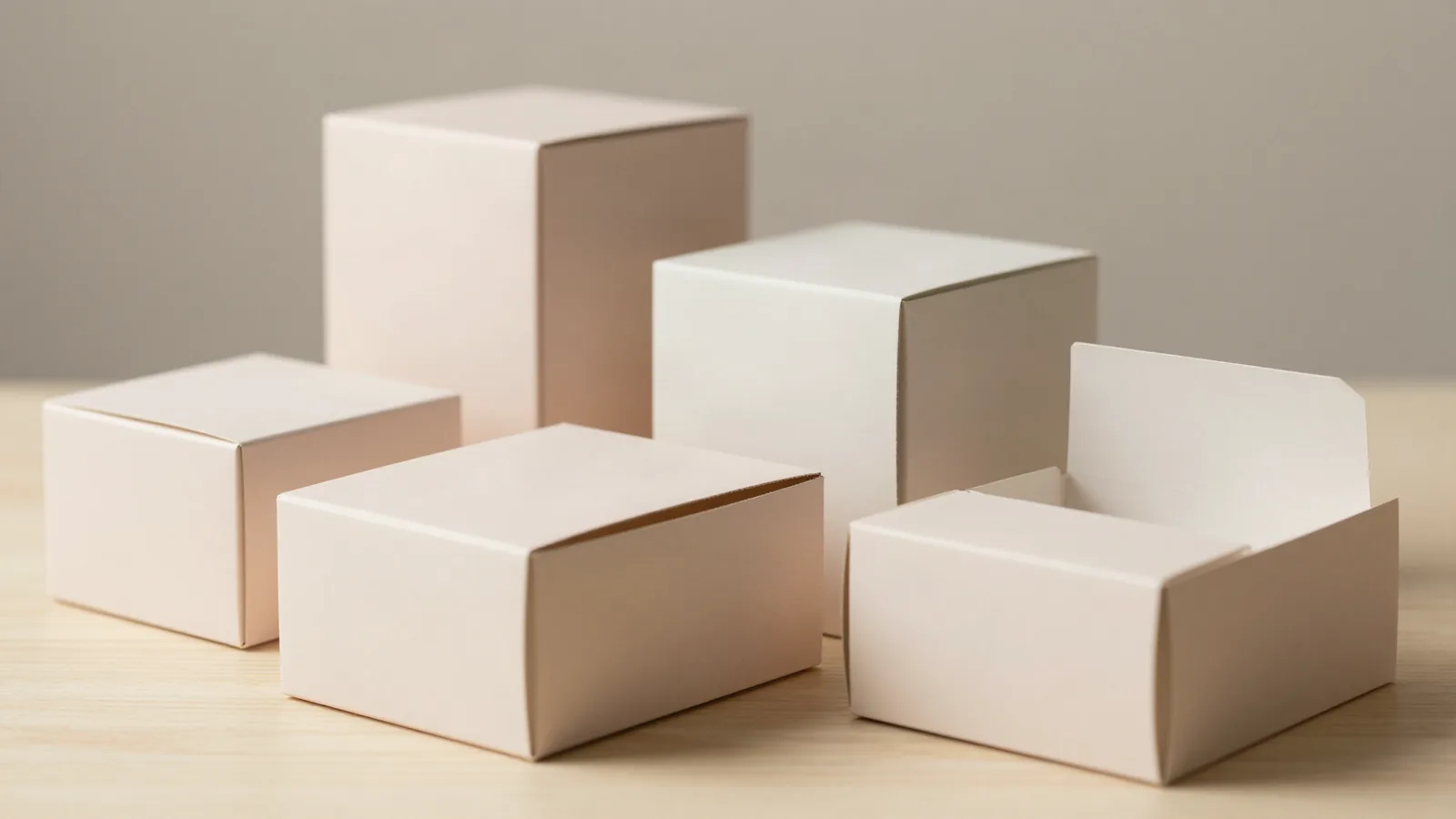




















































A Southwest wax box is a visual direction, not a fixed structural format. Start with the filled wax product, its jar or tin wall, lid or cap profile, and whether the package holds one item, a set, or a gift presentation. Measure the space the product occupies, then choose the box. A box that looks right on a flat file can still bind at the lid or let a tin rattle inside. For a broader identity route, compare custom boxes with logo.
What should a Southwest wax box say?
Regional color, geometry, texture, and controlled surface detail can carry the Southwest direction without making an unsupported origin claim. Set the logo position, product name, contents line, opening cue, and repeat pattern before choosing the structure. A quiet side panel can keep the front readable, while a rigid format gives the opening more visual weight. The pattern should support the wax product rather than compete with its label.
Which materials fit a wax product box?
The product's weight and surface decide whether folding board or rigid chipboard makes sense. Folding cartons commonly use SBS, C1S, or C2S paperboard in the typical 12 to 24 pt range. Kraft board around 18 to 24 pt can support a natural surface. Rigid chipboard commonly ranges from 1.5 to 3 mm and may be wrapped in 100 to 157 gsm art paper. These are typical industry ranges. The final choice follows product weight, box size, shelf handling, print surface, rigidity, and insert needs.
| Structure | Common use | Branding opportunity |
|---|---|---|
| Straight tuck end | Folding carton with a familiar tuck closure | Front, side, and top-panel artwork |
| Sleeve | Outer wrap over an inner tray or box | Large uninterrupted graphic surface |
| Two-piece rigid | Separate lid and base | Material contrast and tactile reveal |
| Drawer or slide | Inner tray pulled from an outer sleeve | Layered opening and repeat-use feel |
How much clearance does a wax box need?
The inside cavity should be drawn around the filled wax item, including its lid, jar wall, wrap, or protective insert. Write inside length x width x depth, then use about 1/16 in, or 1.5 mm, as a common planning tolerance reference. The correct clearance depends on the material, product variation, and packing method. If the wax can soften or shift with temperature, check the inner surface, closure security, upright orientation, and removal path.
Paperboard inserts can organize several pieces with less bulk. Custom foam can create more controlled cavities when each item needs a defined position. Relevant catalog references include wax packaging, custom foam box inserts, and embossed tin boxes. Compare them by rigidity, reuse, tactile finish, and the way the wax item is held.
Which visual details should repeat across sizes?
Keep the logo position and information order fixed across a family of sizes, then let the pattern scale with the panel. Decide which colors, line weights, product names, and opening cues remain constant. Mark the parts that change with each product. This prevents a label from landing across a score or a product name from shrinking when the box footprint changes.
Which finishes suit the artwork?
Matte lamination quiets a dense pattern, while gloss lamination adds a harder surface sheen and stronger contrast. Soft-touch changes hand feel. Foil stamping can pick out a sun, border, or wordmark. Embossing and debossing can create raised or recessed geometry, and spot UV can isolate a small mark. Keep detail away from folds, glue areas, and high-wear edges, then check how the finish reads on kraft versus coated stock.
What should the final proof show?
The proof has to show the package as a folded object, not only as a flat artwork file. The dieline, the flat cutting template used to print and cut the box, should show:
- Product dimensions, interior clearance, closure direction, and insert geometry.
- Material caliper or chipboard thickness and the intended wrapped paper.
- CMYK artwork, finish callouts, foil or embossing registration, and barcode contrast.
- Panel orientation, logo scale, copy hierarchy, and safe areas around folds.
- Shipping-packed dimensions and whether the box arrives flat or assembled.
Check the filled wax product against the folded proof. A lid that binds or an insert that grips too tightly should be fixed before approval.
Custom Packaging Lane can quote a Southwest wax box to spec from a 100-unit minimum. Pricing is from $0.49 per unit at volume, quoted to spec. Production is typically 8 to 10 business days after proof approval, plus delivery. Free US shipping, free design support, and a free dieline are available. The $19.99 sample kit is credited to the first order. Check the filled wax product against the approved dieline before the run.
Frequently Asked Questions
How do I turn a Southwest style into box artwork?
A Southwest wax box can use regional color, geometry, texture, and controlled surface detail without making an origin claim. Set the logo, product name, contents line, opening cue, and repeat pattern first. Then choose the structure and scale the artwork to the actual product dimensions, because a pattern that works on one panel may cross a score on another.
What board thickness works for a wax package?
Folding cartons commonly use SBS, C1S, or C2S paperboard in the 12 to 24 pt range. Kraft board around 18 to 24 pt supports a natural surface, while rigid chipboard commonly ranges from 1.5 to 3 mm and may be wrapped in 100 to 157 gsm art paper. Choose around product weight, handling, rigidity, and the desired opening.
Can a wax box use embossing or foil?
A wax box can use foil stamping for a reflective mark, while embossing or debossing can create raised or recessed geometry. Spot UV can isolate a small graphic. Keep decorative effects away from folds, glue zones, seams, and small copy. The proof should identify each finish and show how it sits on the chosen board surface.
Does a wax box need an insert?
An insert can hold a jar, tin, wrapped item, or multi-piece set in a defined position. Paperboard inserts organize several pieces with less bulk, while custom foam can create more controlled cavities. Check the product removal path, lid clearance, upright orientation, and added assembly. If the wax can soften or shift with temperature, include that condition in the packaging brief.
What should a proof show for a wax box?
A wax box proof should show the folded structure, interior length, width, and depth, product clearance, closure direction, panel order, artwork hierarchy, and finish registration. Include the board or wrapped-shell direction, insert geometry, logo position, and safe areas around folds. Separate fixed brand elements from artwork that scales with each carton size.












