




























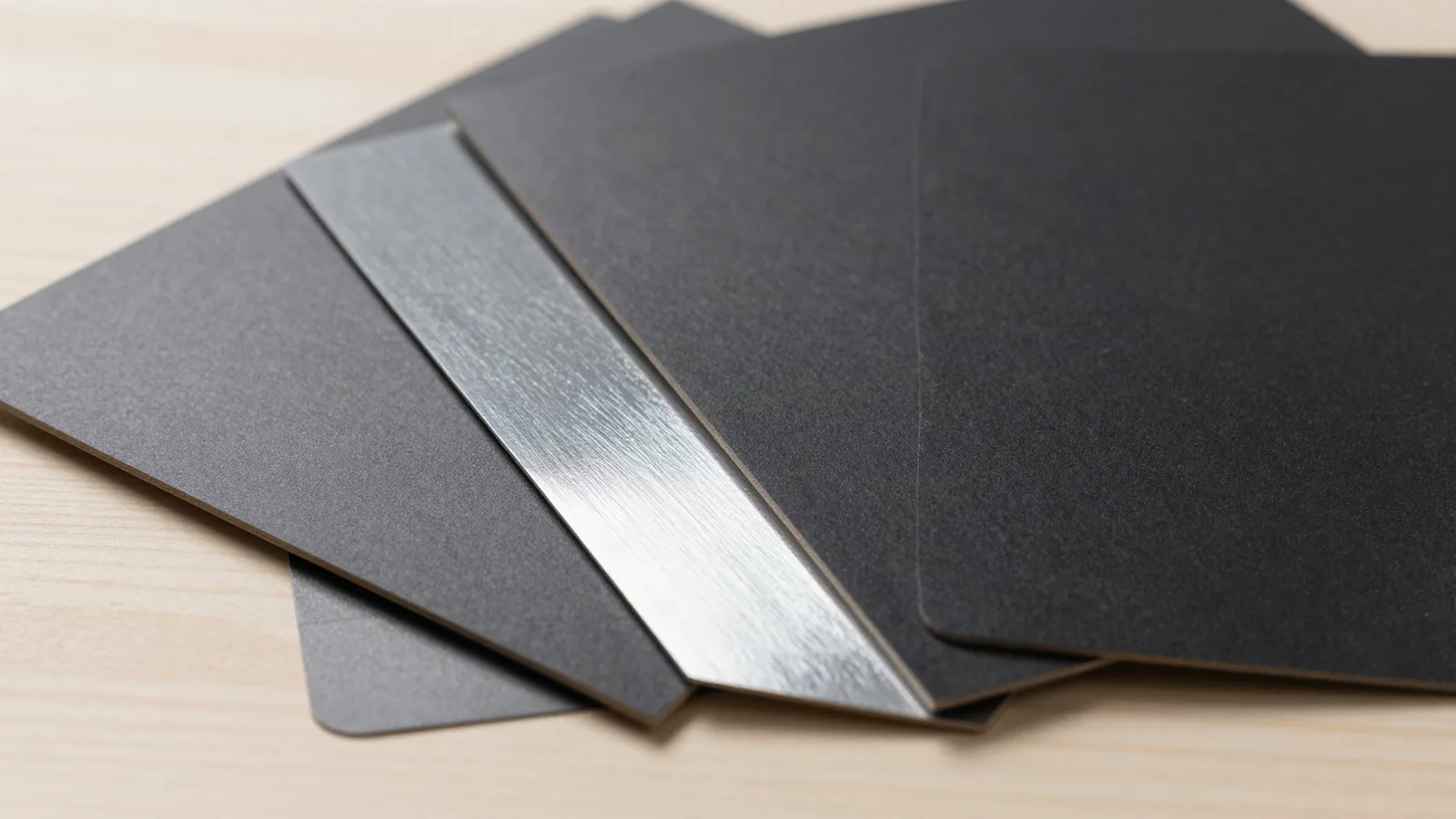




















































A wax coated box has a wax layer on part of its paperboard or corrugated surface. The layer can add resistance to moisture and surface rub, but it also changes how ink, glue, folds, and recycling instructions behave. Record the coated face as a construction choice, not as a substitute for the board or box style. Compare wax packaging for a material-led reference, wine box packaging for bottle-oriented structure, shoe box packaging for folding-carton planning, and embossed tin boxes for a different surface treatment.
What should a wax coated box communicate at shelf?
The front panel should make the brand mark, product name, main visual, and opening direction easy to read before the box is handled. Assign supporting copy to the reverse and side panels. Keep important type away from scores, seams, glue flaps, and closure edges. If the wax face changes glare or color density, show that surface in the proof rather than judging the print on an uncoated screen image.
How does wax coating change the outer surface?
Wax adds a moisture-resistant layer, but the same layer can reduce ink or glue adhesion where it crosses a fold or flap. A broad coated area can change the way a carton feels in the hand and can make handwriting difficult. Keep the wax face, uncoated face, print coverage, fold lines, and glue zones separate on the file. Check the assembled box for rub marks, cracked scores, open glue tabs, and scuffed corners.
| Package area | Common role | Proof item |
|---|---|---|
| Main front | Brand, product name, primary visual | Coated face, print coverage, first-read order |
| Reverse panel | Instructions, contact details, supporting copy | Legibility after folding |
| Side panels | Secondary graphics or product descriptors | Continuation before the seam |
| Closure area | Flap, seam, opening cue | Clear fold, glue area, and opening edge |
Which board references suit a wax coated folding carton?
SBS means solid bleached sulfate paperboard. C1S has one coated printable side, and C2S has coated surfaces on both sides. SBS, C1S, and C2S paperboard in the 12 to 24 pt range are common folding-carton references. Kraft board in the 18 to 24 pt range gives a natural base color. Rigid chipboard from 1.5 to 3 mm wrapped in 100 to 157 gsm art paper creates a stiffer presentation shell. Board caliper changes fold behavior, edge feel, coating coverage, and how the box holds its shape.
How should the opening and display geometry be recorded?
Straight tuck end and reverse tuck end describe common folding-carton directions. An auto-lock bottom forms from scored panels that lock during assembly, while a crash-lock base uses pre-glued folds that close as the carton is set up. A sleeve adds a printed wrap around an inner box or tray. Record the loading direction, front edge, flap overlap, fold direction, display orientation, and seam position on the dieline.
Which print and finish choices belong on the proof?
Offset CMYK suits detailed paperboard graphics. Digital printing can suit short runs or controlled version testing. Flexo is a common reference for corrugated surfaces. Matte or gloss lamination changes sheen and surface protection. Soft-touch changes the tactile feel. Spot UV, foil stamping, embossing, and debossing can emphasize selected graphics, but each effect should be shown as its own layer and kept clear of folds, seams, glue areas, and high-wear edges.
What should be checked before proof approval?
A dieline is the flat template that shows the cut, crease, fold, seam, and glue areas before the package is assembled. Check the flat file, closed package, coated face, uncoated areas, print coverage, folds, seams, glue flaps, closure, and finished measurements. Write dimensions as length x width x depth, then label inside measurements for product fit and outside measurements for display or shipping. About 1/16 in, or 1.5 mm, is a common packaging tolerance reference. Include any sleeve, insert, or inner package that changes the opening sequence.
What belongs in the final wax-box handoff?
- State the coated face, board reference, print coverage, and display orientation.
- Mark folds, seams, glue flaps, closure panels, sleeve edges, and insert locations.
- Separate base print, lamination, soft-touch, spot UV, foil, embossing, and debossing layers.
- Provide inside and outside measurements using length x width x depth.
- Identify copy and graphics that must stay clear during folding and opening.
How can I request a wax coated box quote?
Send the board reference, coated face, print coverage, finished dimensions, closure, finish layers, quantity, and destination. The custom packaging design page can organize the artwork and proof handoff. A wax coated box quote uses a 100-unit minimum and pricing from $0.49 per unit at volume, quoted to spec. Production typically runs 8 to 10 business days after proof approval, plus delivery. Free US shipping, free design support, and a free dieline are available. The $19.99 sample kit is credited toward the first order.
Request the sample kit to check the coated surface, fold behavior, glue areas, and finished opening before approving production artwork.
Frequently Asked Questions
Is wax coating the same as lamination?
Wax coating and lamination are different surface constructions. Wax places a wax layer on the board, while lamination bonds a film over the printed surface. Wax can change moisture resistance and glue behavior around flaps and scores. Lamination changes film feel, sheen, and scuff behavior. The proof should identify which surface treatment appears on each panel.
Can wax coating cover every panel of a folding carton?
Wax can be specified across broad panels, but the coated area should be checked against scores, folds, glue tabs, and closure edges. A coating that crosses a score can crack during folding, and a coated glue area can affect adhesion. Mark coated and uncoated areas separately so the assembled box matches the approved construction.
What is the difference between C1S and C2S board?
C1S paperboard has one coated printable side, while C2S paperboard has coated surfaces on both sides. A wax coated box brief should state which face receives the wax layer and which face carries the print. That distinction affects artwork placement, surface feel, folding, and the appearance of inside panels.
Can decorative finishes be used with a wax coated box?
A wax coated box can be planned with matte or gloss lamination, soft-touch, spot UV, foil stamping, embossing, or debossing. The proof should show each effect separately and keep it clear of folds, seams, glue areas, and high-wear edges. Check the assembled package because a finish can look different across a score or curved flap.
What should the wax-box proof show?
The wax-box proof should show the flat dieline, assembled package, coated face, uncoated areas, print coverage, folds, seams, glue flaps, closure, sleeve or insert, and finished measurements. Dimensions should use length x width x depth and distinguish inside from outside. About 1/16 in, or 1.5 mm, is a common tolerance reference.












