






































































What is the difference between an insert and a divider?
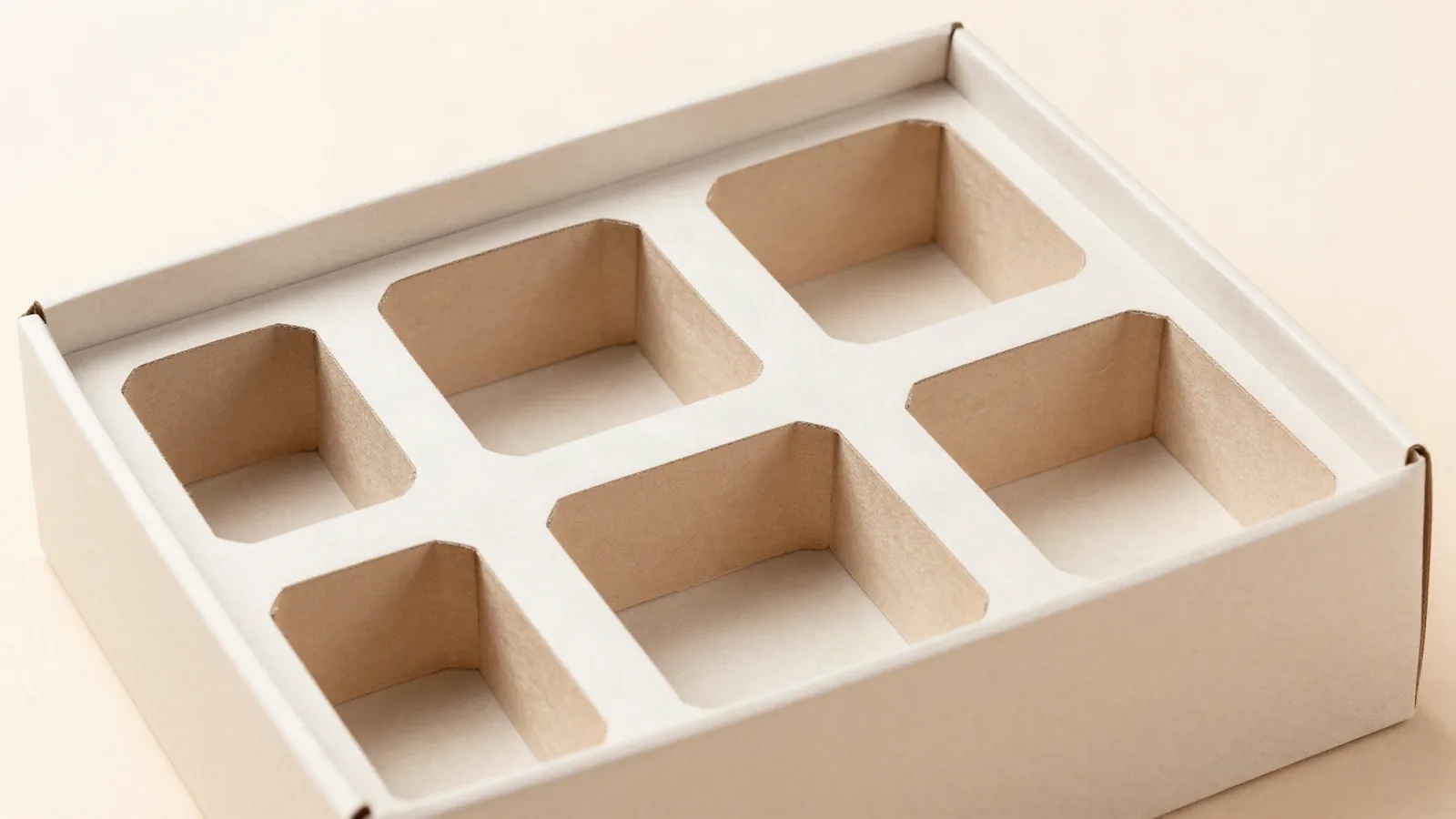
An insert positions or supports a product inside a box, while a divider creates separate cells or channels for multiple products. One package can use both. A folded insert can hold one item at defined contact points, and divider walls can keep several items apart during packing, opening, and handling.
Start with the product geometry. Note which surfaces can touch the insert, which areas need clearance, how the product is removed, and whether the customer should see one item or several items first. The box interior, insert, and closure need one coordinated drawing.
What are the main types of inserts and dividers?
The main types are paperboard inserts, multi-cell dividers, trays, and foam inserts. Each type controls the product in a different way.
| Type | Construction | Design focus |
|---|---|---|
| Paperboard insert | Folded sheet with tabs, slots, or walls | Contact points, print, folds, and removal |
| Divider | Walls or cells that separate multiple items | Cell layout, access, and packing sequence |
| Tray insert | Base with edges that holds the product presentation | Tray depth, lid clearance, and reveal |
| Foam insert | Shaped cutouts inside a foam sheet or block | Cavity geometry, contact surface, and removal |
For a rigid presentation, compare custom rigid boxes with inserts. For a sleeve and tray structure, see custom sleeve and tray boxes. These are different constructions, so the product dimensions still decide the insert.
When should you choose a tray or lid-and-tray structure?
Choose a lid-and-tray structure when the product needs a defined base and a separate closing component. The tray sets the presentation plane, while the lid controls the closed package and the amount of room above the product.
Check tray depth, edge clearance, lid fit, removal space, and any card or wrap before the box is drawn. For jewelry, compare jewelry boxes with inserts and jewelry boxes with lid and tray. For soap, see custom lid-and-tray soap boxes.
Are foam inserts better than paperboard inserts?
No material is always better. Paperboard inserts fold from a printed or unprinted sheet and can use tabs, slots, or folded walls. Foam inserts use shaped cutouts and a softer contact surface.
Paperboard suits a coordinated folded package. Foam suits a shaped cavity when the product surface and presentation call for it. A cavity that is too tight can trap the product, while a cavity that is too loose lets the product rattle. CPL also offers custom foam box inserts. Ask us about food-contact options for your product. Child-resistant can be a feature we build into the package design when the project calls for it.
How do you size an insert or divider?
Size an insert or divider from the actual product, box interior, packing method, and removal path. Do not start with a generic cavity name.
- Measure product length, width, height, and widest contact areas.
- Mark surfaces that can touch the insert and areas that must stay clear.
- Record how the product is placed, removed, wrapped, or closed.
- Share the box interior, quantity per box, and desired insert material.
Those details let the dieline place cavities, walls, tabs, and dividers around the real product. Free design support is available, and the digital proof should show the insert before production.
What does a rigid box with inserts change?
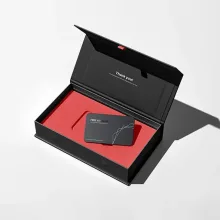
A rigid box is built from chipboard wrapped in printed paper, so it holds shape without a fold. Adding an insert brings the lid, tray depth, wrapper, cavity, and product removal into one fit problem.
Check the insert against the full box, not by itself. The lid needs room to close, the product needs room to come out, and any sleeve or tray needs clean edges. The custom rigid boxes with inserts format is a useful starting point when the interior and exterior need to be planned together.
What are CPL's order, price, and timing details?
Custom Packaging Lane is a US-based packaging supplier. The minimum order quantity is 100 units. Pricing is from $0.49 per unit at volume, quoted to spec. Production is typically 8 to 10 business days after proof approval, plus delivery. Free US shipping and free design support are available. The $19.99 sample kit is credited toward the first order. See wholesale custom packaging for the broader packaging path.
What should go on the proof?
The proof should show cavity positions, divider walls, cutouts, tabs, scores, glue areas, closure clearances, and the opening direction.
- Product dimensions and every surface that contacts the insert.
- Insert material, finish, print coverage, and any food-contact question.
- Box interior dimensions, lid or sleeve fit, and removal space.
- Quantity per box and the order quantity for the custom run.
Approve the insert only after the box, product, closure, and removal path make sense together.
Frequently Asked Questions
How does a divider keep products apart?
A divider creates walls or cells inside a box, so multiple products stay in separate positions instead of sharing one open cavity. The cell layout should match the product dimensions, contact surfaces, packing sequence, and removal method. A divider can be part of a paperboard insert, tray, or rigid box construction.
Which insert material should you choose?
Paperboard inserts fold from a printed or unprinted sheet and can use tabs, slots, or folded walls. Foam inserts use shaped cutouts and a softer contact surface. Paperboard suits a coordinated folded package; foam suits a shaped cavity. Choose after checking product surfaces, removal, presentation, and the full box construction.
Can CPL build child-resistant packaging inserts?
Child-resistant can be a feature CPL builds into a package design when the project calls for it. Discuss the opening interaction, product, insert, and box structure before the proof is prepared. The feature must be specified for the actual package.
How much clearance should an insert leave?
Insert clearance should be set from the actual product, wrap, closure, and removal method. A cavity that is too tight can trap the product, while a cavity that is too loose lets the product rattle. Share the box interior dimensions and contact points so CPL can draw the insert around the real packing job.
What is the minimum order for inserts and dividers?
The minimum order quantity for inserts and dividers is 100 units. Pricing is from $0.49 per unit at volume, quoted to spec. Production is typically 8 to 10 business days after proof approval, plus delivery. Free US shipping, free design support, and the $19.99 sample kit are available.