




























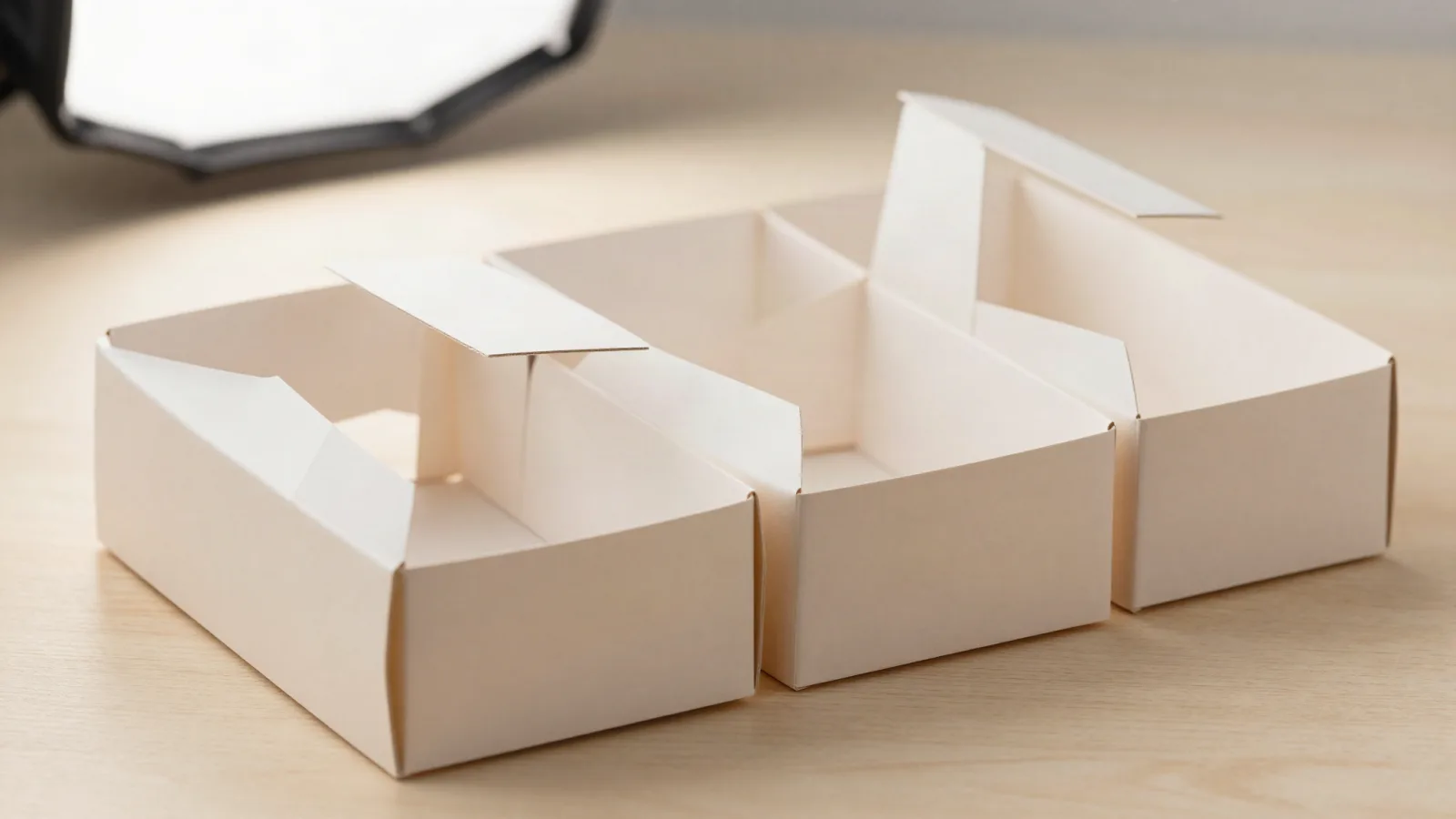




















































A cardboard drawer box has an outer sleeve and a sliding inner drawer. Cardboard is a broad buyer term for a paperboard or board-based package, while drawer names the opening method. The board, sleeve, drawer, print, and finish each need a place in the specification.
Drawer boxes also make small surface choices visible. The drawer face is the first panel in hand, while the sleeve edge frames it when closed. A coated stock reflects light differently from an uncoated kraft face. If foil or embossing crosses a fold, check the artwork against that fold before the proof is approved.
CPL's rigid box catalog includes the drawer style, with cardboard, kraft, rigid board, print, and finish directions to discuss in a quote. A style name does not settle thickness, wrap, tray fit, or artwork placement.
What does cardboard mean in a drawer box?
Cardboard does not identify one universal stock or surface. The final brief still needs a selected paperboard or rigid-board direction, thickness, print method, finish, sleeve, and drawer construction.
| Material direction | What it is | What to specify |
|---|---|---|
| SBS cardstock, 16 to 24 pt, typical stock range | Smooth paperboard for printed panels and folds | Stock, drawer shape, sleeve, print, and finish |
| Kraft board | Paperboard with a natural brown paper tone | Print contrast, coverage, and opening detail |
| Rigid board | Dense board wrapped with printed paper | Board thickness, wrap, tray relationship, and edges |
| Corrugated board | Fluted material between liner sheets | Flute, panels, closure, and handling context |
SBS, or solid bleached sulfate, is a smooth paperboard term used for printed packaging. Kraft starts with its own paper tone, so the same ink can look different from a white board surface. Rigid board holds a box shape without the same folding pattern as paperboard. Those differences belong in the drawer-box brief.
How should the sleeve and drawer be briefed?
Record the outer sleeve and moving drawer as separate package components. The sleeve is the fixed outside section that frames the opening. The drawer is the section that slides out and carries the product or an interior support piece.
For folding paperboard, note score lines, glue tabs, panel order, and the direction of the folds. For rigid construction, note the wrapped board, sleeve fit, drawer wrap, and edge treatment instead. The word cardboard cannot answer those structural questions by itself.
Measure the packed product before the drawer is sized. Include clearance for removal and any insert that changes the usable space. A drawer that looks right from the front can still bind if the sleeve is tight or the inner support reaches the wrong edge.
Which printed surfaces should you name?
Map every visible panel before the finish is chosen. Name the front, sides, back, top edge, sleeve edge, drawer face, and any interior panel that the buyer will see.
Matte lamination reduces surface reflection. Gloss lamination increases sheen. Foil and spot UV draw attention to selected areas, while embossing and debossing change the surface height. Tie each treatment to a panel and an artwork layer so the printer can read the request without guessing.
A press check looks at ink coverage, registration, cut lines, scores, and fold lines. Keep type away from a score and add bleed where artwork runs to a cut edge. RGB art can shift when it is converted for press, and low-resolution art can look soft on a wide drawer face.
Can one drawer style carry several product variants?
One drawer construction can carry several variants when the packed products use the same sleeve, drawer, and interior fit. Keep the fixed structure in one brief, then change the product name, color, image, or other supplied artwork in the variant file.
If a product changes the drawer dimensions or needs a different support piece, treat it as a separate package version. That small distinction keeps the dieline, tray, and print file tied to the correct product.
How do material and finish choices change the drawer style?
Material and finish choices change the drawer's touch and the way it reads under store light. Coated paperboard carries small type cleanly; kraft paper makes the base tone part of the artwork; wrapped rigid board keeps the drawer face flat. A glossy film catches overhead light, while a matte film softens glare. Use foil for a marked area, not as a substitute for a clear panel map.
Which CPL pages help compare drawer-box directions?
Use custom cardboard drawer boxes for the direct style reference. kraft cardboard boxes frame the natural paperboard direction. custom drawer rigid boxes show the related wrapped-board construction, and custom foam box inserts help when the drawer needs dedicated interior support.
How do samples and proof approval settle the choice?
A sample lets you compare board feel, print appearance, and surface reflection before the drawer box proof is approved. The $19.99 sample kit is useful when the words cardboard, kraft, matte, or gloss do not settle the choice.
Free design support covers the dieline conversation, and CPL sends a digital proof before anything prints. The MOQ is 100 units. Pricing is from $0.49 per unit at volume, quoted to spec. Production typically takes 8 to 10 business days after proof approval, plus delivery. Free US shipping and free design support are available. Use custom packaging design to organize the material language and visual system.
Frequently Asked Questions
What does cardboard mean for a drawer box?
Cardboard is a broad paper-based packaging term, not one fixed stock or surface. A drawer box record should identify the paperboard or rigid-board direction, sleeve, drawer, print coverage, finish, and interior support. Kraft and corrugated directions need their own material notes.
Is a drawer box paperboard or rigid board?
A cardboard drawer box can be discussed as a folding paperboard package or as a rigid-board drawer construction, depending on the requested style. Paperboard uses folds, scores, and tabs, while rigid board uses a wrapped structure. CPL can check the sleeve, drawer, board, and finish as one quote.
Can a cardboard drawer box use matte, gloss, or foil?
A cardboard drawer box can use matte, gloss, foil, embossing, debossing, or spot treatments on selected surfaces. The artwork should identify the sleeve, drawer face, and interior panels that receive each finish. The board and handling context also belong in the proof.
Can several variants share one drawer-box system?
Several product variants can share a drawer-box system when the sleeve, drawer, and interior fit stay the same. Product names, colors, and supplied images can change in the artwork. A different product fit or support piece needs a separate package version.
What are the terms for custom cardboard drawer boxes?
The MOQ for custom cardboard drawer boxes is 100 units, with pricing from $0.49 per unit at volume, quoted to spec. Production typically takes 8 to 10 business days after proof approval, plus delivery. Free US shipping and free design support are available, and the sample kit costs $19.99.












