




























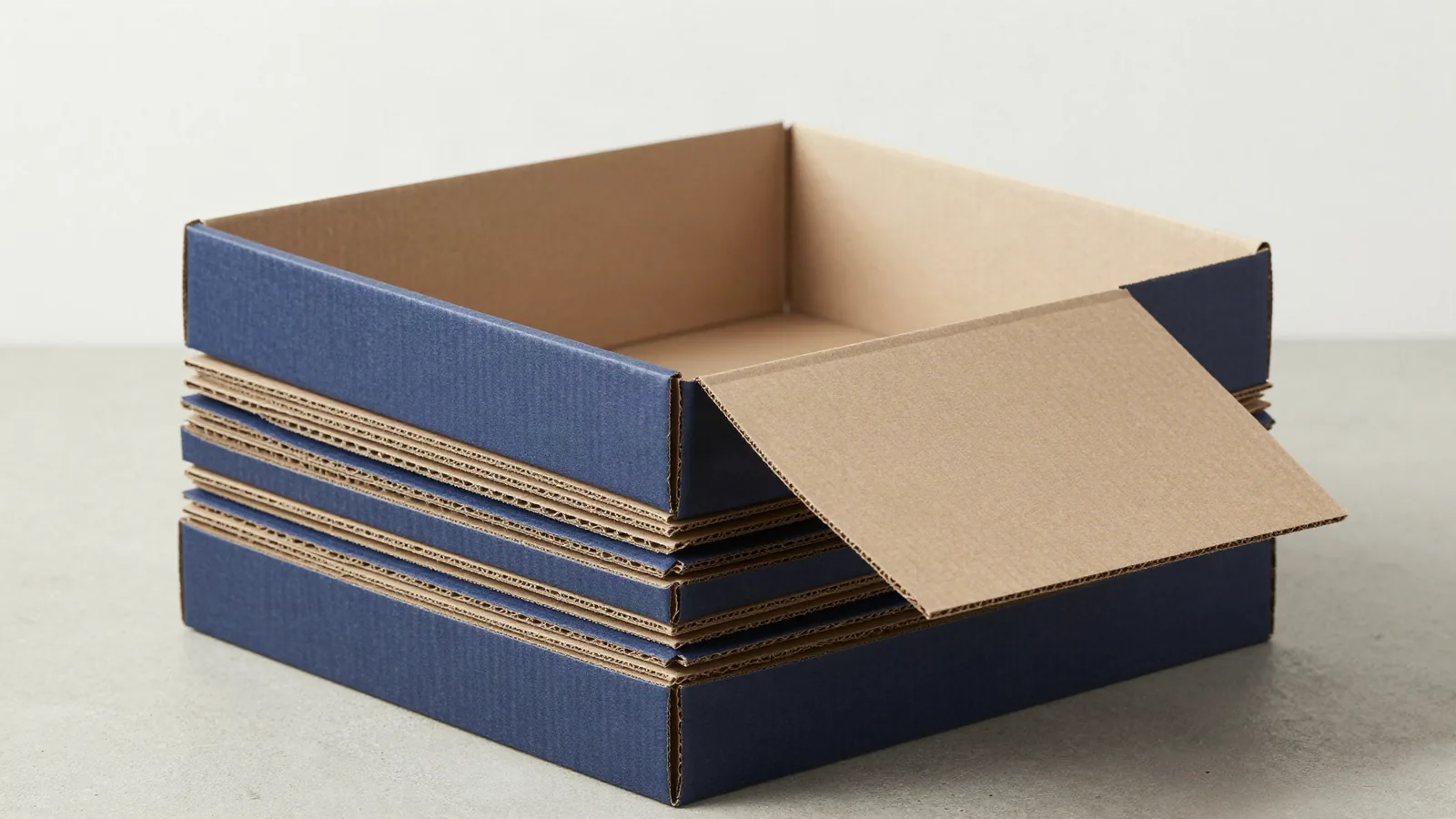




















































A corrugated void filler is a shaped board component that occupies open space, limits product movement, or separates items inside a shipping carton. The useful design starts with the product and outer carton together. A filler may be a divider, blocking panel, top pad, bottom pad, wraparound insert, or folded spacer, and each form controls a different contact point. The custom packaging solutions route can turn product measurements, shipping orientation, and packing order into an insert brief.
What should a corrugated void filler stop?
A filler should stop sliding or contact with the carton wall before you decide how it will be cut. A vertical divider controls side travel. A cross partition creates cells. Corner blocks keep edges away from the wall. A top pad limits upward movement, while a bottom pad supports the product against the carton floor.
Start by naming the movement that causes trouble. A product that rattles needs a different layout from one that tips when the carton is turned on its side.
Which flute works inside a carton?
E flute takes less interior room, B flute adds more panel stiffness, and C flute adds thickness and a longer compression path. Typical industry caliper references are shown below. They vary by mill and board construction.
| Board reference | Typical industry caliper reference | Common insert use |
|---|---|---|
| E flute | About 1/16 in (1.5 mm) | Compact cavities, small folds, finer printed surfaces |
| B flute | About 1/8 in (3.2 mm) | General dividers, partitions, and protective spacing |
| C flute | About 3/16 in (4.8 mm) | Thicker separation and compression paths |
| 32 ECT board | Edge crush test reference | Compare with carton size, stacking, and load direction |
For the outer package, compare custom corrugated mailer boxes and corrugated boxes. A presentation use case can be checked through cake corrugated boxes, where the folded form is shaped around the product.
How should the filler be shaped around the product?
Contact points decide the die-cut openings, slots, and folds. Measure the packed product at its widest and tallest points, then note handles, caps, corners, protrusions, removable parts, and surfaces that should not receive pressure.
Slotted cells organize several pieces. Die-cut pads spread contact. Folded wings create stops without a separate part. A wraparound insert can hold a product against one panel while leaving the opening clear. The packing sequence should be tested with every sleeve, lid, wrap, and accessory in place.
How much clearance should the insert leave?
Inside length x width x depth sets the available space, not the carton's outside size. A common packaging convention allows about 1/16 in, or 1.5 mm, tolerance when the product and filler move into a carton layout, subject to the structure and product.
Too much clearance leaves movement. Too little clearance creates pressure points, slows hand packing, or keeps the carton from closing. Check the assembled carton while tilted, closed, opened, and packed in the intended orientation.
Should a void filler be printed?
For a hidden filler, geometry usually matters before ink coverage. A visible filler may justify a mark, instruction, or color block on the reading side. Flexo is commonly used for direct corrugated printing. Digital printing can suit a short run or variable artwork, while offset CMYK is more often used for a separate paperboard or printed liner component.
Matte or gloss lamination, soft-touch, spot UV, foil stamping, embossing, and debossing belong on a surface that can accept them without interfering with folds or slots. Review scores, cut edges, glue zones, and graphic readability after die-cutting.
How do I check a filler before production?
A flat drawing cannot show whether the product can be inserted without scraping a cavity wall. Check the assembled filler for insertion speed, product removal, carton closure, tilt behavior, pressure points, and whether the filler stays in position.
For multiple products, load the carton in the real order and check whether one item blocks the next. The insert should hold the contents without turning the packing station into a wrestling match.
What should buyers send for a filler quote?
A quote request needs the outer carton inside dimensions, packed product measurements, product count, fragile contact points, expected movement, insert style, flute preference, packing sequence, storage orientation, visibility, artwork, and destination.
- State whether the part is a pad, divider, partition, folded spacer, blocking panel, or combination.
- List the product position and direction of movement inside the carton.
- Include sleeves, wraps, lids, accessories, and any separate retail package.
- Explain whether printing is functional, visible on opening, or unnecessary.
CPL quotes to spec from a 100-unit minimum. Pricing is from $0.49 per unit at volume, quoted to spec. Production is typically 8 to 10 business days after proof approval, plus delivery. Free US shipping, free design support, and a free dieline are available. The $19.99 sample kit is credited to the first order.
Frequently Asked Questions
What is a corrugated void filler?
A corrugated void filler is a shaped board component placed inside a shipping carton to occupy open space or separate products. It can be a pad, divider, partition, folded spacer, blocking panel, or die-cut insert. Its job is to control movement or contact, so the layout should follow the carton, packed product, and packing sequence.
Should I use E flute, B flute, or C flute?
E flute is commonly considered for compact inserts and finer folds, B flute for general dividers and protective spacing, and C flute for thicker separation or compression paths. These are starting references. Check carton clearance, load direction, product fragility, packing speed, and whether the filler needs to fold or slot into place.
How do I measure for a corrugated filler?
Measure the product as it will ship, including sleeves, wraps, lids, and accessories. Record the carton inside length x width x depth, then identify contact points and movement directions. Check the layout with the packed product because a flat measurement cannot show insertion resistance, pressure points, or closure interference.
Can a void filler be printed?
A void filler can be printed with flexo when direct corrugated coverage is needed, and digital printing can suit short runs or variable artwork. If the filler is hidden, printing may add little functional value. If it is visible on opening, confirm the reading side, ink coverage, fold direction, cut edges, and graphic readability.
What information should go into a filler quote?
Send the carton inside dimensions, packed product measurements, product count, fragile contact points, expected movement, desired flute if known, insert style, packing sequence, and destination. Mention whether the filler is visible or hidden and whether it must stay in place during packing, storage, tilting, and product removal.












