




























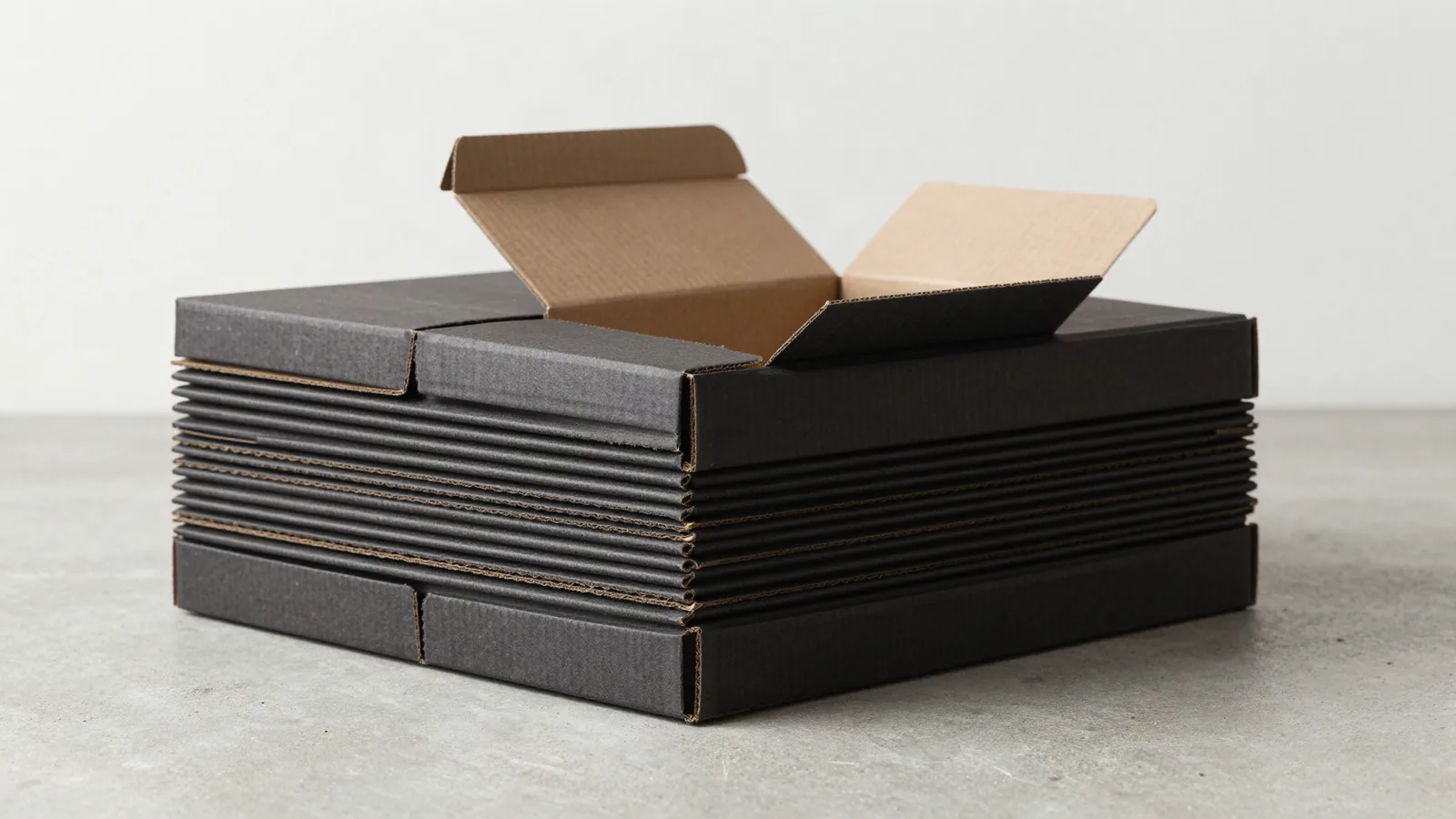




















































When does a wax coating make sense on a corrugated box?
Moisture exposure is the reason to consider it, but the route matters more than the label. Wax coating is a wax layer applied to a liner or board surface. It can add resistance at that surface, but it does not turn every seam, flap, edge, or opening into a sealed barrier.
Start with the product condition and the route. Note whether moisture comes from the contents, refrigeration, outside handling, or a brief contact event. Then specify the box footprint, closure, board, coated panels, and expected stacking. The coating decision follows the job the corrugated box has to do.
Which flute should I compare for a wax-coated box?
A flute is the shaped corrugated layer between liner faces. E flute has a finer profile and smoother print surface, B flute balances board thickness with handling, and C flute gives more thickness and cushioning. A common strength reference is 32 ECT, but the board choice still belongs beside the footprint, closure, and distribution route.
| Flute or board reference | Common packaging direction | What to check |
|---|---|---|
| E flute | Fine corrugation and printed presentation | Fold detail, surface appearance, and light product protection |
| B flute | General shipping and retail packaging | Compression, handling, and print balance |
| C flute | More cushioning and board thickness | Stacking, product clearance, and package size |
| 32 ECT | Common edge crush strength reference | Actual board specification for the distribution conditions |
Flute changes usable cavity, crease behavior, print surface, and shipping cube. Write dimensions as length x width x depth, and say that they are inside measurements. About 1/16 in, or 1.5 mm, is a common planning tolerance. Outside dimensions are the ones to use for a parcel estimate. A common US ground planning convention is L x W x H / 139, then check the carrier's current rules.
What does wax coating change besides moisture handling?
Surface treatment changes ink holdout, folding behavior, and how exposed edges perform. Coverage matters. A coated outside face does not solve moisture entering through an uncoated edge or an open top, and excess coating at a fold can change how the box closes.
Flexographic printing is common on corrugated packaging. Digital or lithographic printing may fit a different board or presentation requirement. Keep copy away from scores, glue areas, and high-wear edges, then show the coated panels and ink coverage on the digital proof. Coating can also affect folding, storage, odor, recycling discussions, and disposal, so those questions belong in the material brief.
Which corrugated products should I compare?
The product shape determines which catalog structure deserves a closer look. Custom corrugated mailer boxes fit a self-closing shipping format. Corrugated boxes cover broader shipping structures. Cake corrugated boxes suit a presentation-led food shape. Window display boxes put product visibility into the layout. These examples separate a moisture question from a structure question.
What should I send for a wax-coated box quote?
The brief should start with the packed item and the moisture source. Send the product dimensions, requested inside dimensions, exposure duration, flute preference, board strength target, coating coverage, print coverage, closure, stacking conditions, delivery route, and packing method.
- State whether condensation, damp contents, refrigeration, or outside handling creates the moisture exposure.
- Separate inside fit from outside storage and carrier dimensions.
- Mark scores, glue areas, seams, flaps, and copy that must remain readable.
- Include a product sample or dependable measurements when the cavity is tight.
Custom Packaging Lane is a US-based packaging supplier. Wax-coated corrugated boxes are quoted from a 100-unit minimum, with pricing from $0.49 per unit at volume, quoted to spec. Production is typically 8 to 10 business days after proof approval, plus delivery. Free US shipping, free design support, and a free dieline are included in the planning conversation. The $19.99 sample kit is credited to the first order. For volume work, visit wholesale custom packaging and request a digital proof.
Frequently Asked Questions
Are wax-coated corrugated boxes waterproof?
Wax-coated corrugated boxes are not automatically waterproof. Wax adds resistance at the treated surface, while an uncoated edge, seam, flap, or open top can still admit moisture. Performance also depends on exposure duration, board construction, coating coverage, closure, and handling. Describe the actual moisture source before selecting the coating.
How do E, B, and C flute compare in a wax-coated box?
E flute has a fine profile and smoother print surface, B flute balances profile and handling, and C flute gives more board thickness and cushioning. A flute choice changes inside clearance, crease behavior, outside dimensions, and shipping cube. Compare the packed product and distribution route with the flute, rather than choosing from the letter alone.
What does 32 ECT mean for corrugated packaging?
32 ECT is a common edge crush strength reference for corrugated board. It gives a shared way to discuss resistance at the board edge, but it does not select the whole box. Footprint, flute, closure, stacking pattern, moisture exposure, and outside dimensions still affect the package. Confirm the board specification against the actual route.
Should corrugated box dimensions use inside or outside measurements?
Use inside measurements for product fit, written as length x width x depth. About 1/16 in, or 1.5 mm, is a common planning tolerance, while outside dimensions matter for storage and parcel calculations. For US ground planning, L x W x H / 139 is a common convention. Check the carrier's current billable-weight rules before shipping.
How is artwork printed on a wax-coated corrugated box?
Flexographic printing is common for direct corrugated artwork, while digital or lithographic printing may fit a different board or presentation requirement. The proof should show ink coverage, coated panels, scores, glue areas, and flap folds. Keep small type away from high-wear edges, since the surface and fold pattern both affect what remains readable after assembly.












