




























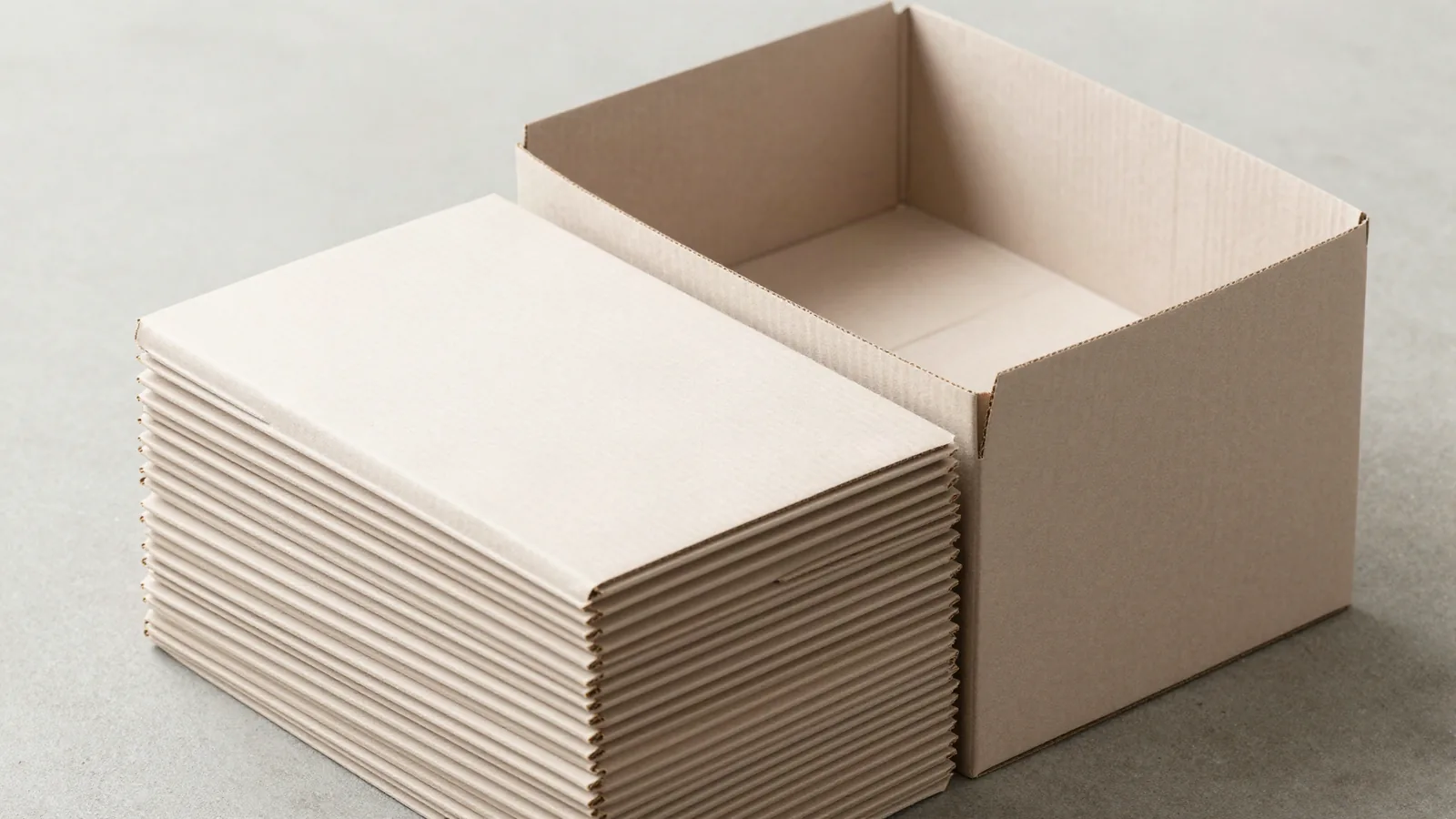




















































A flat corrugated part earns its place when a package needs separation, support, or a protective layer without a pre-formed box. Corrugated board is a fluted paper layer glued between liner sheets. The request should identify sheet length and width, flute profile, liner direction, cut pattern, print coverage, and any score or fold. It should also say what the panel does inside the package. A pad under a product, a divider between products, and a die-cut support are different jobs, even when the raw material starts as one sheet.
What are custom flat corrugated sheets used for?
Layer pads keep stacked goods apart, dividers create separate compartments, slip sheets sit between surfaces, and die-cut panels can follow a product outline. A scored panel can fold into a simple support after it leaves the flat state. Describe the handling step that matters: separating items, reducing movement, protecting an edge, or creating a cleaner presentation. If the part sits inside a shipping carton, give the product arrangement and the point where the panel touches it.
Which corrugated grades should I compare?
Flute profile controls sheet thickness, panel behavior, and surface detail, while ECT describes a separate strength reference. E flute has a finer profile that can suit compact presentations and printed surfaces. B flute has a medium profile for general support. C flute has a larger profile often considered for shipping-oriented protection. 32 ECT is a common compression-strength convention in corrugated specifications; it does not select the sheet without the product, cut pattern, and stacking context.
| Reference | Common planning use | What to confirm |
|---|---|---|
| E flute | Compact pads, dividers, and printed surfaces | Profile, liner direction, cut pattern |
| B flute | General internal protection and support | Fold lines, score depth, sheet orientation |
| C flute | More substantial shipping-oriented support | Container fit, board strength |
| 32 ECT | Strength convention for planning | Whether the requested board uses that convention |
Which structures can a flat sheet support?
Scoring and die cutting turn a panel into a divider, wrap, partition, or insert. A bottle pack may need separated cells, while a flat retail item may need a backing pad. A sheet intended for a mailer should be checked against the outer carton, opening direction, and available inside space. Put the cut layout, glue points, and fold lines in the same drawing so the assembled part can be inspected before print.
How should I write sheet dimensions?
The dimension line must say whether it describes the sheet, the finished folded part, or usable inside space. Write a flat component as length x width. For an insert or formed support, add the relevant depth and use inside measurements for the fit reference. A common packaging convention allows about 1/16 in, or 1.5 mm, tolerance, subject to the product, board construction, cut method, and fit requirement. Mark notches, slots, scores, corner relief, and clearance zones on the drawing.
Can flat corrugated sheets carry print and finish?
Flexo usually fits visible corrugated components, while offset CMYK is more often used on a separate paperboard surface. Digital printing can suit short runs or a test direction when the selected board and process support it. Identify the printed side, color areas, ink coverage, and any cut that needs registration. Matte or gloss lamination, spot UV, foil stamping, embossing, and debossing belong on compatible outer packaging rather than on every corrugated component by default.
Which products should I compare with a flat sheet?
A mailer, display box, vial carton, and bottle carton show four different jobs for an internal panel. Review custom corrugated mailer boxes when the sheet sits inside a shipping structure. Compare a formed presentation with custom flat tuck display boxes. For separated contents, custom vial boxes show why cavity layout and inside measurements matter. A bottle-focused request can also reference custom Woozy bottle boxes.
What should I include in a quote request?
A useful request starts with the part's job and a drawing, not an unlabeled rectangle. State length, width, inside or outside convention, flute or strength direction, folds, scores, slots, die cuts, product contact areas, print coverage, finish, quantity, and delivery location. Name the part as a pad, divider, partition, slip sheet, or insert. A physical reference is useful when the sheet must create cavities or protect a shaped item.
How do I plan the order?
The order brief is ready when the board, cut pattern, quantity, destination, and proof status are explicit. Custom Packaging Lane quotes to spec from a 100-unit minimum, with pricing from $0.49 per unit at volume, quoted to spec. Production is typically 8 to 10 business days after proof approval, plus delivery. Free US shipping, free design support, and a free dieline are available. Order the $19.99 sample kit, which is credited toward the first order, then request a specification review through custom packaging solutions.
Frequently Asked Questions
What is a flat corrugated sheet used for?
A flat corrugated sheet can work as a layer pad, divider, slip sheet, protective panel, partition, or die-cut internal support. The right form depends on where it sits and what it touches. State whether the panel goes below, between, beside, or around the product so the cut pattern and board direction match the packing task.
Is 32 ECT a flute choice?
32 ECT is a corrugated board compression-strength reference, not a flute profile. E flute, B flute, and C flute describe different corrugated profiles, while ECT describes a separate board-performance convention. A useful request names both the flute or board profile and the strength reference, then adds sheet size, cut pattern, product arrangement, and stacking context.
Can a flat corrugated panel be scored or die cut?
A flat corrugated panel can be scored, folded, slotted, notched, or die cut into a divider, wrap, partition, insert, or support. The drawing should show fold lines, glue points, cut boundaries, product contact areas, and clearance zones. Check the assembled part against the outer carton before print panels are finalized.
Should a printed corrugated panel use flexo or digital printing?
Flexo is a common method for corrugated graphics, brand panels, and handling marks. Digital printing can suit a short run or test direction when the selected board and process support it. State the printed side, color coverage, cut boundaries, folds, scores, and areas that must stay clear of product contact.
Which dimensions belong in a flat sheet quote?
A flat sheet quote needs length x width, the inside or outside measurement convention, flute or strength direction, and any finished folded dimensions. Add scores, slots, notches, die cuts, product contact areas, tolerance, print coverage, quantity, and delivery location. A drawing should identify whether each measurement belongs to the raw sheet or assembled part.












