














































































How do you size a custom product box?
Inside dimensions set the fit. They are the usable cavity measured as length x width x depth, not the outside of the box. Measure the product, cap, wrap, accessory, and insert in the condition they will ship. About 1/16 in, or 1.5 mm, is a common planning tolerance, but the packed product still needs a physical check. A custom box for a product starts with the product itself, not a stock cavity.
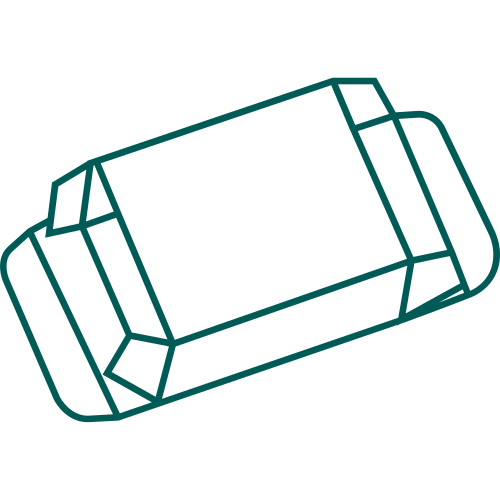
A dieline is the flat cutting template that shows panels, scores, cuts, glue tabs, tuck tabs, and bleed. It starts with the product dimensions, then the structure adds fold allowance and closure geometry. Keep type away from scores and trim. RGB artwork can shift when converted for press, low-resolution art can soften on a panel, and missing bleed leaves a white edge after trimming.
Which structure fits the way the box will be used?
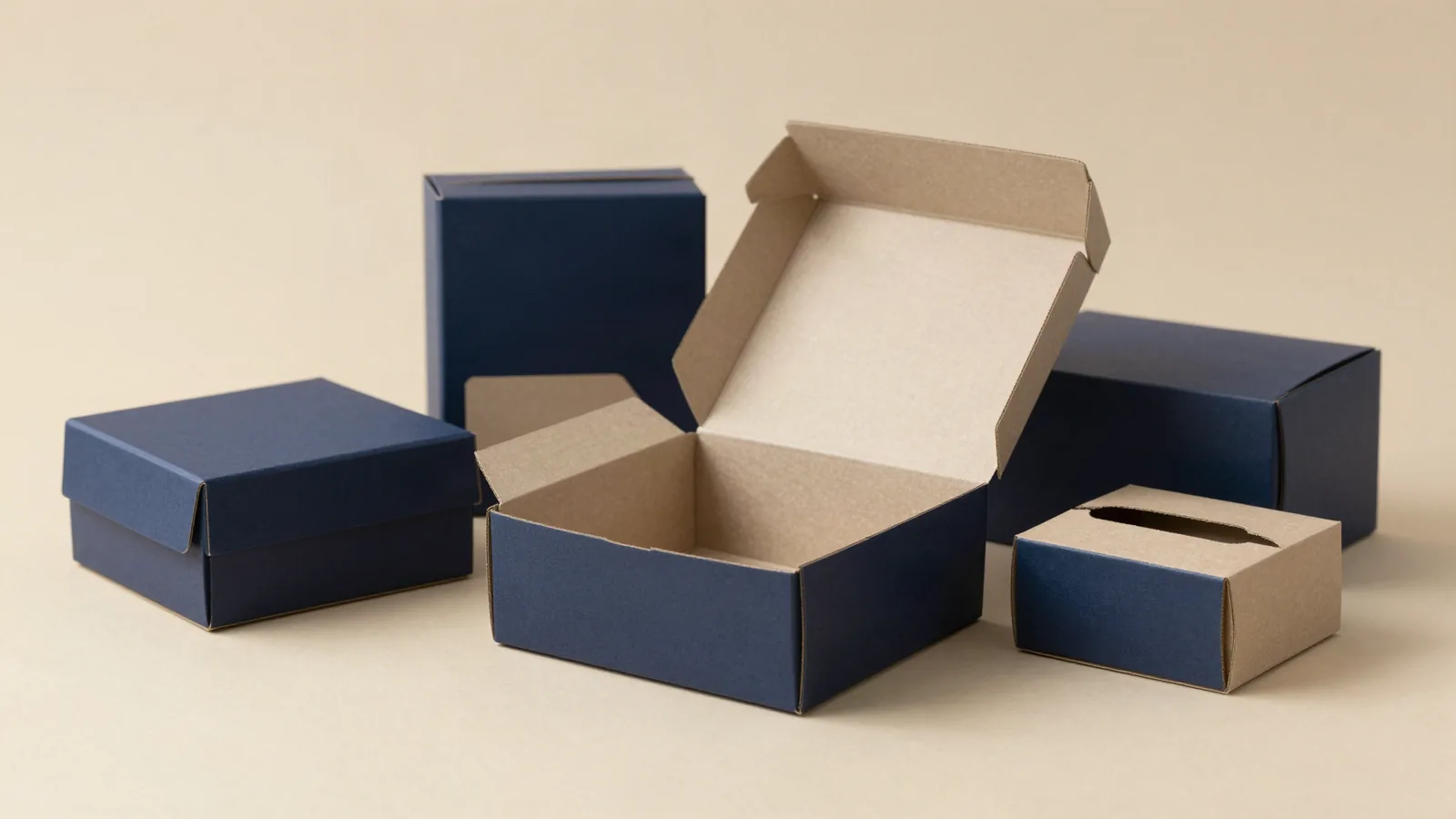
A folding carton suits shelf panels and a controlled opening, while a mailer has to close securely after packing. FEFCO 0427 is an industry code used to identify a roll-end tuck-top mailer style, so it gives a printer a shared structural reference. Choose the opening and base before artwork is laid out.
| Structure | Common role | Buyer checkpoint |
|---|---|---|
| Straight tuck end | Folding carton with tuck closure | Check top-panel orientation and access |
| Reverse tuck end | Folding carton with opposing tuck flaps | Confirm front panel and opening order |
| Auto-lock or crash-lock bottom | Formed base for setup and load support | Test the base with the packed product |
| Mailer, FEFCO 0427 | Delivery-oriented carton with integrated closure | Check lid engagement and edge coverage |
| Two-piece rigid | Separate lid and base around the product | Check lid fit and insert retention |
| Drawer or slide with sleeve | Inner tray inside an outer sleeve | Set pull clearance and sleeve depth |
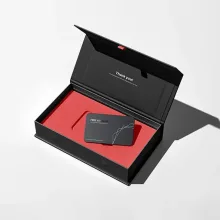
Straight tuck end and reverse tuck end are folding-carton starting points. Auto-lock and crash-lock bottoms change how the packer sets up the base. Two-piece rigid, magnetic flap, drawer or slide, and sleeve structures add separate decisions about lid fit, pull friction, and reveal order. A product that goes into a parcel needs a closure that stays shut when the carton is turned, not only a front panel that looks good in a mockup.
Which board should hold the product?
SBS, C1S, and C2S paperboard are common folding-carton references in the 12 to 24 pt range. SBS means solid bleached sulfate board; C1S and C2S describe one coated side or two. Kraft board in the 18 to 24 pt range gives the surface a natural paper look. Rigid packaging uses chipboard in the 1.5 to 3 mm range, often wrapped in 100 to 157 gsm art paper. These are typical industry ranges, and the product weight and fold pattern decide where the specification lands.
Corrugated E, B, and C flutes change thickness, cushioning, stacking behavior, and print surface. E-flute has a finer profile for detailed graphics, while B-flute and C-flute provide thicker board construction for shipping protection. 32 ECT is a common corrugated strength reference. A retail carton and a parcel mailer should not be assigned the same board by habit.
Which print and finish choices fit the package?
Offset CMYK handles detailed paperboard artwork, digital printing fits short runs or variable files, and flexo is common on corrugated. Matte or gloss lamination changes reflection and surface feel. Soft-touch adds a low-friction hand feel, while spot UV, foil stamping, embossing, and debossing change selected areas instead of the whole sheet. PET window patching in the typical 0.2 to 0.3 mm range adds a clear viewing panel, but the window needs room around folds and glue.
Build the file from the approved dieline. A press check looks at color conversion, ink coverage, score placement, glue tabs, and the assembled box. Keep a barcode off a score and away from a curved panel. Check the printed panel after folding, because an image can be centered on the flat sheet and still land crooked on the finished box.
How should an insert hold the product?
An insert should hold stable contact points without squeezing fragile surfaces. Foam inserts suit shaped products, while folded paperboard or corrugated dividers can separate parts and use less interior space. The removal path matters: if fingers cannot reach the product, the pack-out becomes slow and the first opening feels stuck.
Compare custom foam box inserts when the cavity needs shaped support. Product display boxes are a useful reference when the product must face forward before purchase, and custom Woozy bottle boxes show why neck clearance and base support follow the product shape. For a broader structure reference, start with custom product boxes.
What should a product box quote include?
A usable quote lists the product dimensions, inside clearance, structure, board, print coverage, finish, insert, window, tooling, quantity, packed dimensions, and destination. Board caliper changes the fold and the outside size. Heavy ink coverage can change how a matte or gloss surface reads. A window or insert adds another drawing and assembly check. Send the actual pack-out sequence, not only a logo file. This gives a product box manufacturer enough detail to price the job honestly.
Custom Packaging Lane quotes custom product boxes from a 100-unit minimum, with pricing from $0.49 per unit at volume, quoted to spec. Production is typically 8 to 10 business days after proof approval, plus delivery. Free US shipping, free design support, and a free dieline are available. The $19.99 sample kit is credited to the first order. Send the product dimensions and artwork status through wholesale custom packaging.
Frequently Asked Questions
What makes a box a custom product box?
A custom product box is drawn around a specific product, so the cavity, closure, artwork panels, and insert follow the item instead of a generic stock shape. The structure can be a folding carton, mailer, rigid box, sleeve, drawer, or slide. The right choice starts with the packed product and the way a customer or packer will open it.
Why do inside dimensions matter more than outside dimensions?
Inside box dimensions describe the usable cavity as length x width x depth. Outside dimensions include the board, folds, and any fit around the closure. About 1/16 in, or 1.5 mm, is a common planning tolerance, but the actual product, wrap, and insert need a physical fit check before the dieline is approved.
What is the difference between E-flute and B-flute?
E-flute has a finer corrugated profile and a relatively smooth print surface, while B-flute and C-flute use thicker profiles for different cushioning and stacking behavior. 32 ECT is a common board-strength reference. The product's weight, outer footprint, and handling path matter more than choosing a flute by name alone.
When does a window make sense on product packaging?
A window makes sense when the buyer needs to see the product before opening the box. PET windows around 0.2 to 0.3 mm are a common reference. Place the window away from scores, glue areas, and insert contact points, then check the assembled box because a clear panel can shift when the carton folds.
What should a packaging proof be checked for?
A packaging proof should be checked flat and assembled. Look for low-resolution art, RGB color shifts after press conversion, missing bleed, copy too close to a score, barcode placement, glue tabs, and fold direction. Put the real product in the box before approval, since the filled package can reveal a blocked opening or a crooked panel.