




























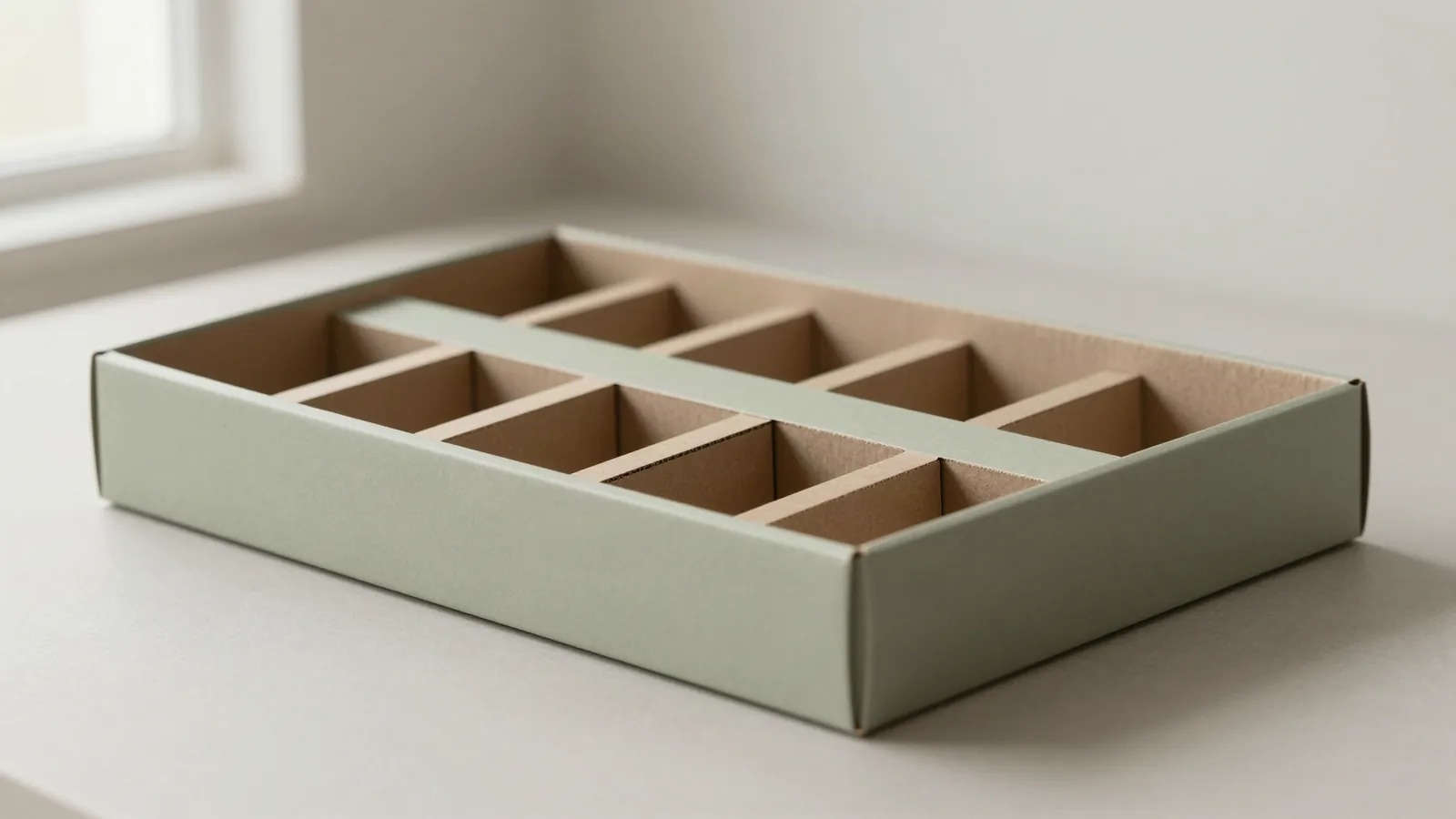




















































What is a foam in place packaging system?
A foam in place packaging system forms its cushion during packing, inside a defined film bag, liner, or prepared carton space. The phrase describes a pack-out method, not one universal machine or formulation. An expanding material is dispensed into the containment area, the product is placed in the intended orientation, and the carton closes around the formed cushion. The useful brief says where support belongs and which faces need separation.
What does the pack-out sequence need to show?
The operator's motion decides whether the cushion lands where the drawing says it should. Show the dispense location, containment area, product placement, carton closure, and inspection point. If the product must stay upright or clear of a seam, mark that on the drawing. A system can read clearly on paper and still fail at the closing motion if the product, film, and carton compete for the same space.
Which inputs belong in the system brief?
| System input | Write down | Effect on the pack |
|---|---|---|
| Product geometry | Length, width, depth, curves, edges, surfaces | Sets cushion location and clear faces |
| Cushion placement | Base, sides, corners, top, separated zones | Defines support around the product |
| Containment | Film bag, liner, or prepared cavity | Holds the expanding material in place |
| Outer carton | Structure, board direction, opening, inside space | Sets the package boundary |
| Pack-out sequence | Dispense, place, close, inspect | Shows the actual handling motion |
Product geometry comes first because the cushion cannot be placed correctly from a carton name alone. Mark fragile areas, protrusions, and faces that need separation. The brief should also identify the opening direction and the point where a packer checks the finished carton.
When should I compare foam in place with pre-cut foam?
A pre-cut foam insert fixes a cavity before packing. Foam in place forms protective space during pack-out. Pre-cut foam fits repeated geometry and a clean removable presentation. Foam in place is worth comparing when the outline is irregular or the cushion must form around different faces. Compare product variation, pack-out motion, storage, access, and the outer carton. One method does not answer every product shape.
Which carton details change the protective space?
Flute is the corrugated wave inside a board sheet. E-flute is thinner and prints finer detail than B-flute; C-flute gives a thicker profile. 32 ECT, edge crush test, is a common strength reference. A roll end tuck top mailer is commonly referenced as FEFCO 0427. Auto-lock bottom and crash-lock structures change base support, assembly, and closure. Size the outer carton around the product, cushion, closure, and handling path.
How do I describe an irregular product?
Length x width x depth is only the start when the product has curves, handles, caps, corners, or protrusions. Separate carton inside measurements from outside measurements. Mark fragile surfaces and faces that should not be compressed. A common packaging reference allows about 1/16 in, or 1.5 mm, tolerance, but the useful allowance depends on the product, carton, containment, cushion formation, and closing sequence. Add a dependable drawing or physical reference when three dimensions cannot show the shape.
Which product formats can I use as carton references?
Use wine box packaging for a bottle-oriented outer structure, wax packaging for a compact product format, and towel packaging for a softer packed shape. perforated packaging adds an opening and access reference. These pages compare carton decisions; they do not imply a foam in place process for every product.
What should I inspect before the carton closes?
Close the carton with the real product reference inside. Check product orientation, cushion placement, containment position, opening direction, and contact with surfaces that should stay clear. Compare the finished arrangement with the drawing and dieline. Note any shift, pressure, forced closure, unsupported corner, or blocked opening. A pack-out review should record the change needed, such as more clearance or a different support location.
What belongs in a foam in place quote?
Send product dimensions, shape details, surface concerns, handling orientation, cushion zones, containment method, outer carton structure, flute direction, board reference, inside measurements, and every pack-out step.
- Show dispense, placement, closure, and inspection.
- Mark faces that need support or separation.
- List quantity, delivery location, artwork needs, and sample request.
- State the intended opening and handling path.
Custom Packaging Lane quotes foam in place packaging systems from a 100-unit minimum. Pricing is from $0.49 per unit at volume, quoted to spec. Production is typically 8 to 10 business days after proof approval, plus delivery. Free US shipping, free design support, and a free dieline are available. The $19.99 sample kit is credited toward the first order. Start through wholesale custom packaging with the carton and pack-out details together.
Frequently Asked Questions
How is foam in place different from pre-cut foam?
A pre-cut foam insert has a defined cavity prepared before packing. Foam in place packaging forms protective space during pack-out, which can suit an irregular product outline or support that must form around several faces. Compare product variation, operator motion, storage, access, and carton structure before choosing the method.
What information does a foam in place quote need?
A foam in place quote needs product geometry, cushion zones, containment method, outer carton structure, flute direction, board reference, inside measurements, and the complete handling sequence. Include the dispense location, placement direction, closure motion, and inspection point so the requested package matches the way the carton will be packed.
What do E-flute, B-flute, C-flute, and 32 ECT mean?
E-flute, B-flute, and C-flute describe corrugated profiles, with E-flute thinner than B-flute and C-flute thicker. 32 ECT means edge crush test, a common strength reference for corrugated board. FEFCO 0427 is a common reference for a roll end tuck top mailer. These terms describe carton construction, not a foam formulation.
How should an irregular product be shown on a packaging drawing?
An irregular product drawing should show length, width, depth, curves, handles, caps, corners, protrusions, orientation, and surfaces that should not be compressed. Label carton inside measurements separately from outside measurements. Add a physical reference when three dimensions cannot show the shape, then mark where the cushion must support or clear the item.
What does a foam in place pack-out inspection check?
A foam in place pack-out inspection checks product orientation, cushion placement, containment position, carton closure, opening direction, and clear surfaces. Compare the packed carton with the drawing and dieline. Record product shift, forced closure, unsupported corners, blocked openings, pressure points, or any change needed before the packaging request is finalized.












