




























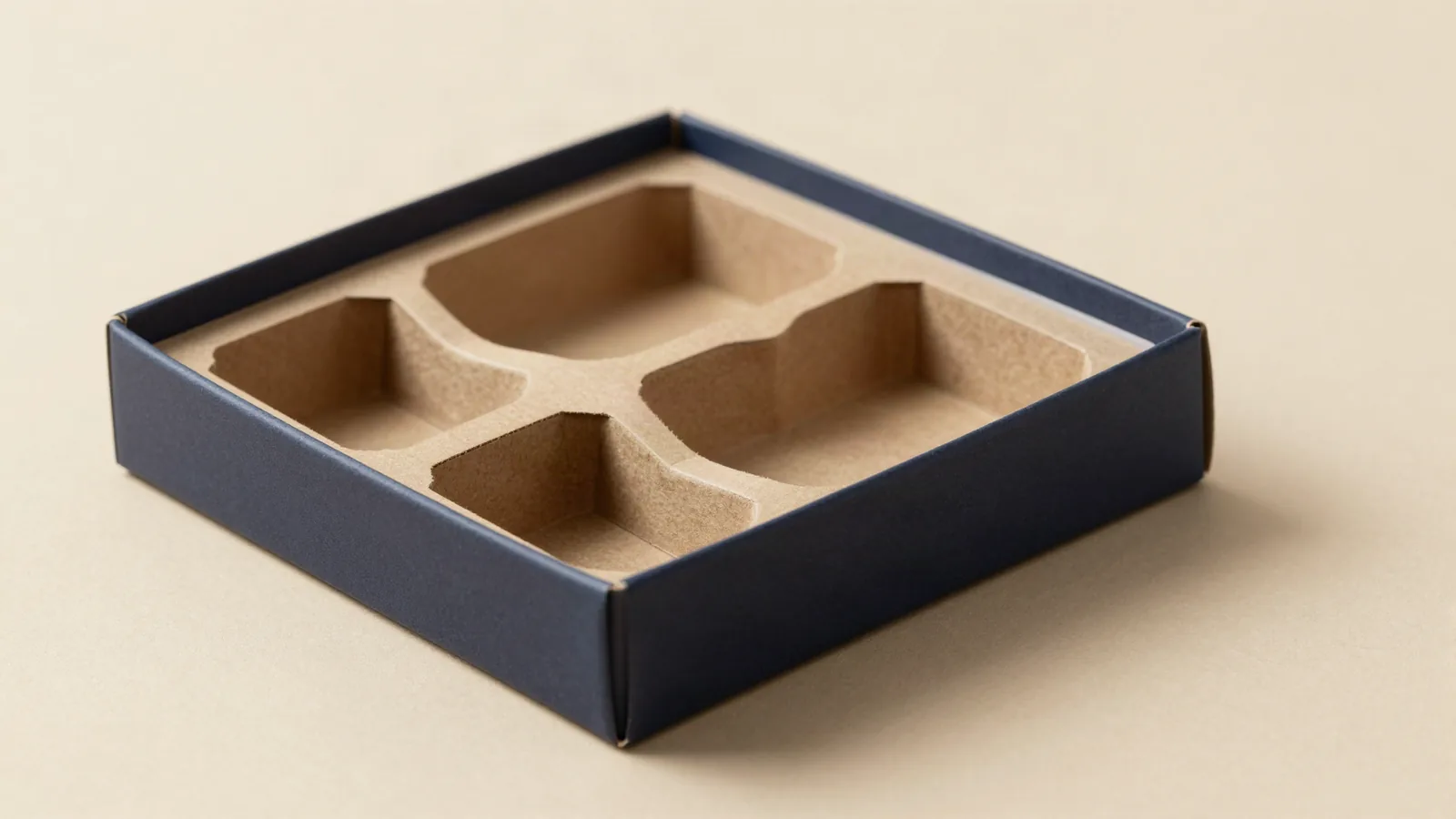




















































Custom foam converting supplies are the foam materials and processing choices used to turn sheets, rolls, or blocks into packaging parts. Converting can include die cutting, CNC routing, slitting, splitting, laminating, scoring, and adhesive application. The finished part may be a pad, shaped cavity, layered insert, or support inside a carton. A dieline is the flat cutting template for the outer package, and it shows panels, folds, glue areas, and the footprint the foam must occupy. The brief works best when it connects the foam operation to the product shape, retention need, box structure, and handling path.
What does foam converting include?
A converter changes stock foam into a usable part by cutting, splitting, joining, or applying adhesive. Die cutting is commonly used for repeatable profiles and openings. CNC routing can suit shaped cavities, prototypes, or layouts that need controlled tool paths. Slitting and splitting change sheet width or layer thickness. Laminating joins foam layers or adds a facing material. State whether the part needs a clean perimeter, deep cavity, channel, finger access, or several pieces held in one layout.
Which converting method fits the part?
The cut edge, cavity geometry, and repeatability requirement usually narrow the process choice before the quote is finalized. Use this table to describe the work in terms a converter can check.
| Converting method | Common application | Questions to answer |
|---|---|---|
| Die cutting | Repeatable profiles, pads, and openings | What shape, edge, and cavity pattern is required? |
| CNC routing | Shaped cavities and detailed layouts | Which surfaces need controlled tool paths? |
| Slitting or splitting | Changing sheet width or layer thickness | Where should the foam separate? |
| Laminating | Joining foam layers or a facing material | Which surfaces stay exposed? |
How should the foam work with the outer box?
A foam insert has to fit the box after board, wrap, lid clearance, and closure consume space. Folding cartons may use SBS, C1S, or C2S paperboard in a common 12 to 24 pt range. Kraft board is often discussed in an 18 to 24 pt range. A rigid option may use 1.5 to 3 mm chipboard wrapped in 100 to 157 gsm art paper. Mailers, two-piece rigid boxes, sleeves, drawer formats, and straight tuck structures each create different access, compression, and presentation conditions for the foam.
How do I specify cavity fit and retention?
Retention is the amount of grip the cavity needs to keep the product seated without blocking removal. List product length, width, depth, round sections, fragile surfaces, controls, caps, handles, and areas that must remain visible. Box dimensions are commonly written as length x width x depth, with inside measurements called out separately from outside measurements. A common packaging reference allows about 1/16 in, or 1.5 mm, tolerance, but the working fit depends on product variation, foam behavior, cut method, and the way the package closes.
Mark the points that may touch and the points that must not. A cavity cut to the exact product size can hold tightly, but it can also trap a cap or make a user pull against a fragile part. A channel, notch, or finger access point changes the removal force. Those details belong in the cut drawing, not in a note added after the outer box is approved.
Which products need a converting-led approach?
Round bottles, small vials, and separated candles expose different cavity problems. The custom foam box inserts page is the closest product reference for shaped foam components. A bottle project can compare custom Woozy bottle boxes, where round walls and closures affect cavity planning. A candle project can review custom votive candle boxes for separated product positions. When contents need clear identification and controlled placement, custom vial boxes provide another carton context.
How should print and finish be planned?
Artwork belongs on the outer package, but its folds, glue areas, seams, and openings must line up with the foam footprint. Offset CMYK is commonly used for detailed paperboard artwork, while digital printing can suit short runs or artwork testing. Matte or gloss lamination changes the outer surface, and soft-touch creates a different tactile direction. Spot UV, foil stamping, embossing, and debossing can mark selected panels. Show the foam footprint on the dieline so graphics do not land across a cavity opening or glue area.
What should I send to a foam converter?
A photograph cannot show cavity depth, removal access, or the pressure a closing lid will apply. Provide the product, drawing, or physical reference used for fit. Identify the foam type, layer direction, surface-contact concerns, cavity shape, depth, finger access, channels, retention areas, outer box structure, board direction, print coverage, finish, quantity, delivery location, and assembly requirement.
- Product dimensions and the reference used for fit
- Fragile surfaces, no-contact areas, and visible components
- Cavity depth, access points, channels, and retention goal
- Outer box opening, closure, print coverage, and finish
How do I plan the order?
The quote can move when the converter has the product, cut pattern, box structure, quantity, and destination. Custom Packaging Lane quotes to spec from a 100-unit minimum, with pricing from $0.49 per unit at volume, quoted to spec. Production is typically 8 to 10 business days after proof approval, plus delivery. Free US shipping, free design support, and a free dieline are available. Order the $19.99 sample kit, which is credited toward the first order, then start with custom packaging design.
Frequently Asked Questions
What are custom foam converting supplies?
Custom foam converting supplies are foam materials and processing choices used to make pads, cavities, channels, layered inserts, and shaped supports. Converting can include die cutting, CNC routing, slitting, splitting, laminating, scoring, or adhesive application. The right process depends on product geometry, cavity detail, retention, repeatability, outer package, and the amount of adjustment needed.
When is CNC routing better than die cutting for foam?
CNC routing can suit shaped cavities, detailed tool paths, prototypes, or layouts that need adjustment during development. Die cutting is commonly used for repeatable profiles and openings. The choice depends on geometry, edge detail, cavity depth, quantity, and required consistency. Send the product drawing and desired cavity layout before selecting a process.
What fit data does a foam converter need?
A foam converter needs product length, width, depth, round sections, closures, handles, fragile surfaces, and areas that must remain visible or accessible. State whether dimensions describe the product or box interior. Add the outer structure, foam position, cavity depth, retention goal, removal access, and tolerance convention so the insert fits the complete package.
Which box structures work with foam inserts?
Foam inserts can fit folding cartons, mailers, two-piece rigid boxes, sleeves, and drawer or slide formats. Each structure changes access, opening direction, cavity arrangement, lid clearance, and available support. A straight tuck end may fit a compact carton, while a rigid or drawer format creates a different removal path. Review the box and insert together.
How should printed artwork be coordinated with a foam insert?
Show the foam footprint on the dieline before artwork is finalized. Mark cavity openings, folds, glue areas, seams, and panels that remain visible. Offset CMYK, digital printing, lamination, soft-touch, spot UV, foil stamping, embossing, and debossing are outer-package options. Match each treatment to the selected board and structure so graphics do not cross functional areas.












