




























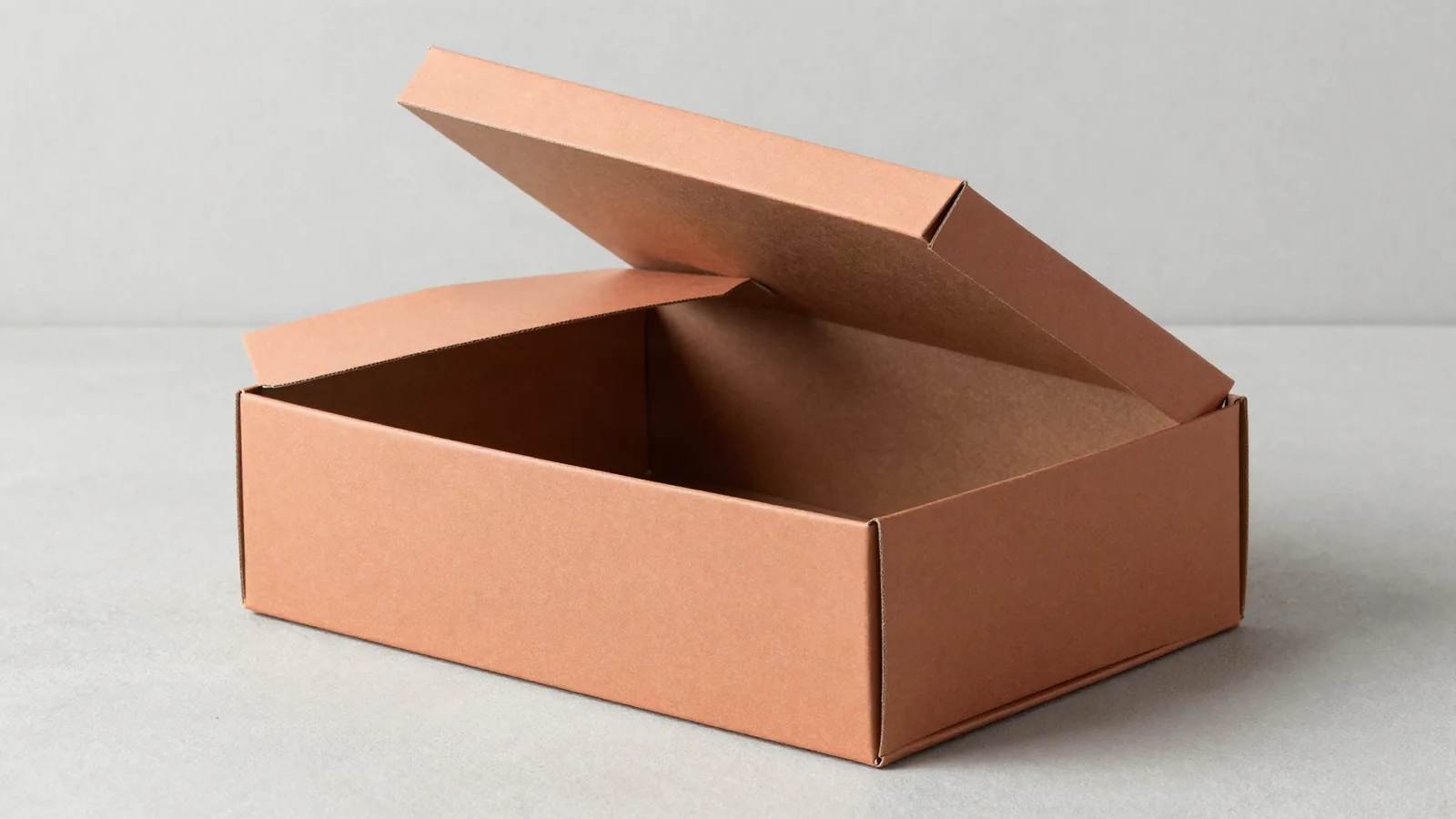




















































Rigid packaging material is a build list, not a single sheet. A rigid box usually has a chipboard core, wrap paper, and a defined opening; it may also include a magnetic closure, sleeve, tray, insert, or finish. The chipboard gives panels their body. The wrap covers the visible faces and edges. The other parts change how the product enters, sits, and leaves the box.
Start with the product, not the material name. Send the footprint, weight, opening path, and packout. A dieline is the flat cutting template for the box parts. It shows the panel layout, cut edges, scores, bleed, and glue areas, so the material list stays tied to the construction.
Which components belong in a rigid packaging material brief?
A complete rigid packaging material brief names each component and its job. Keep the board, wrap, closure, and interior parts separate in the specification.
| Component | Physical job | Detail for the brief |
|---|---|---|
| Chipboard core | Forms the rigid panel body | Product footprint, box style, and grade direction |
| Wrap paper | Covers panel faces, corners, and edges | Paper base, artwork, and surface treatment |
| Magnetic closure | Holds the lid closed | Location, lid movement, and clearance |
| Sleeve | Covers or releases an inner tray | Opening clearance and tray relationship |
| Tray or insert | Positions the product inside the box | Product outline, retention, and access |
| Finish | Changes the surface appearance or touch | Matte, gloss, foil, or spot UV direction |
How does the chipboard core affect the build?
Chipboard is the board core that gives a rigid box its panel body and wall thickness. The selected grade direction belongs with the box size, lid construction, product weight, and interior fit. A narrow wrap edge, deep lid, or fitted tray can change the useful board choice, so the core should be selected with the finished construction in view.
Do not quote the core alone. A chipboard panel still needs the wrap, corner coverage, adhesive areas, and opening parts around it. CPL's rigid boxes with sleeve and tray show how the outer and inner pieces can form one package, while the exact component list stays project-specific.
What does wrap paper change on the finished box?
Wrap paper is the visible layer that carries print, color, texture, and finish. It also has to turn over edges and corners without covering a score, closure, or opening. Put the visible panels and overlap areas into the artwork plan before the dieline is approved.
Use rigid printed boxes as a reference when exterior artwork is the main priority. Check low-resolution images, RGB art, bleed, and type near scores in the proof. The proof is where you catch a panel or barcode problem.
Where does a magnetic closure fit in the material choice?
A magnetic closure changes the lid path and the point where the lid meets the base. It sits inside the box construction, so the magnet location affects the panel layout, wrap coverage, artwork, and product clearance. The closure must be drawn into the structure, not added after the box is decorated.
A sleeve and tray format changes the opening again: the sleeve covers the tray until the user pulls it out, and the tray needs room for the product and any retention feature. Ask for closure, sleeve, tray, and interior fit to appear in the same digital proof.
How do catalog formats show different material priorities?
Product context changes the material question. Wine box packaging gives a bottle-focused reference; wax packaging gives a product reference for surface and footprint. These catalog formats do not mean every box uses the same chipboard, wrap, or closure. The selected material list belongs to the product and format in the quote.
What should I send for a rigid material quote?
Send product dimensions, product weight, desired box style, artwork status, board direction, wrap preference, finish, insert plan, and destination. State whether the box opens once, closes again, sits on display, or ships inside another carton. That handling detail affects the component list.
- Describe the product footprint and how it sits inside the box.
- Name the rigid format and any sleeve, tray, insert, or magnetic closure.
- Identify the board direction, wrap paper, artwork status, and finish preference.
- Explain how the box will be opened, handled, displayed, or carried.
- State the quantity, destination, and need for physical material references.
Use custom packaging design for the initial structure and artwork brief. CPL uses a 100-unit MOQ. Pricing is from $0.49 per unit at volume, quoted to spec. Production is typically 8 to 10 business days after proof approval, plus delivery. Free US shipping and free design support are available. Order the $19.99 sample kit to compare material and finish directions; the kit is credited toward the first order.
Frequently Asked Questions
Is chipboard the same as wrap paper?
No. Chipboard is the board core that forms the rigid panels and contributes to wall thickness. Wrap paper covers the panel faces, corners, and edges, and it carries print, color, texture, or finish. A rigid box needs the core and the wrap to be specified together because they do different jobs.
Does every rigid box need a magnetic closure?
No. A magnetic closure is an optional opening feature, not the definition of rigid packaging. It affects the lid path, closure position, artwork, wrap coverage, and product clearance. If the box uses a magnet, put its location and movement in the structural proof with the chipboard, wrap, and interior fit.
What does a tray do inside a rigid box?
A tray holds the product inside a defined cavity or opening path. It can work with a sleeve, lid, insert, or other interior component, but its dimensions must match the product and the way the packout is handled. A tray that lacks retention can let the product move inside the box.
What should a rigid material proof show?
A rigid material proof should show the box format, chipboard direction, wrap paper, finish, closure, sleeve or tray, artwork panels, bleed, scores, and interior fit. The proof is the point to catch type near a score, an RGB color conversion issue, or an insert that leaves too much movement before anything prints.
What are CPL's rigid box terms?
CPL uses a 100-unit MOQ, with pricing from $0.49 per unit at volume, quoted to spec. Production is typically 8 to 10 business days after proof approval, plus delivery. Free US shipping and free design support are available. The $19.99 sample kit is credited toward the first order.












