




























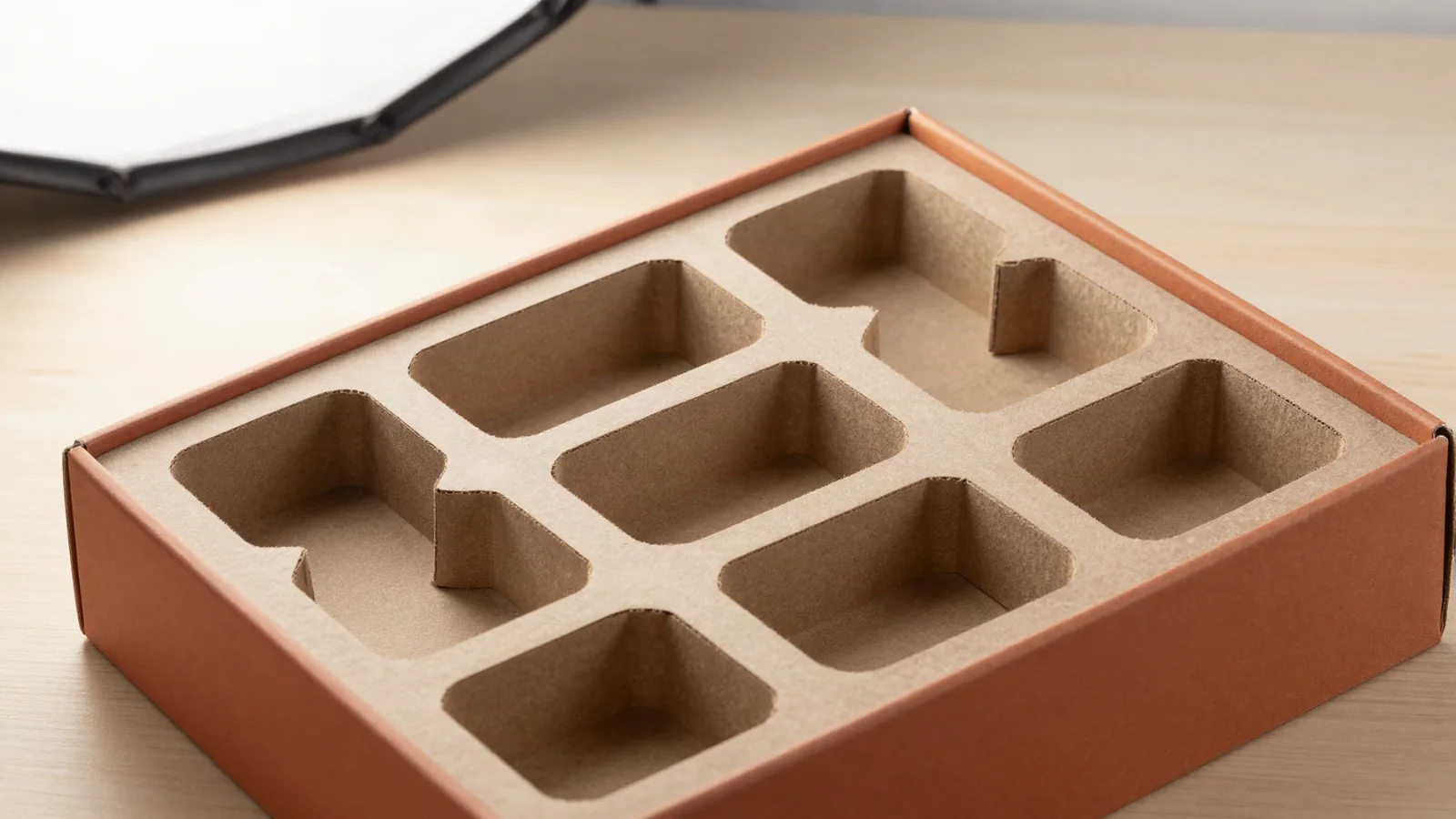




















































A foam insert box pairs an outer package with an internal foam component cut around the product. The foam holds the item in a planned position, while the box controls presentation, closure, and handling. A rigid box with foam insert is usually considered when the outer package needs a structured opening. A mailer with foam insert is considered when the outer package must travel through a shipping workflow. Quote the box and insert as one pack-out.
Start with custom foam box inserts when the cavity is the main question. Compare rigid boxes with sleeve and tray and rigid boxes with magnetic closure when the outer construction is part of the same decision. The custom packaging solutions hub is useful when the combined package needs to fit a wider packaging plan.
What should a foam insert be designed around?
A foam insert should be designed around the product's actual outer geometry, contact points, accessories, removal motion, and orientation. Send a physical sample, accurate measurements, or a dimensional drawing. Identify fragile areas, surfaces that should not be compressed, finger access, accessory pockets, documents, and lid clearance. The cavity follows the finished product and pack-out, not a generic rectangle.
| Design input | What to document | Why it affects the package |
|---|---|---|
| Product geometry | Length, width, height, curves, and sensitive surfaces | Sets the cavity shape and support points |
| Pack-out | Main item, accessories, cards, and included parts | Changes the cavity layout and insert footprint |
| Removal motion | Lift, finger access, or assisted removal | Affects cutouts, clearance, and opening behavior |
| Outer structure | Rigid box, tray, sleeve, lid, or closure | Sets the usable interior available to the insert |
How do foam and rigid box dimensions interact?
Foam and rigid box dimensions should be drawn together because insert thickness, cavity depth, wall clearance, lid depth, tray height, and sleeve fit all interact. A precise cavity cannot be used if the box interior is too shallow. A deep box can leave the product below the intended opening. Check the assembled height before artwork is finalized.
Foam type changes compression, surface feel, color, and cutting behavior. The contact surface should hold the product without putting pressure on a sensitive area. The cavity should include finger access where the product cannot be lifted from a flat edge. Put those instructions in the same approved specification as the outer box.
Should you choose a rigid box or a mailer with insert?
Choose a rigid box with foam insert when structured presentation and a fitted interior matter. Choose a mailer with insert when the outer package must be planned around shipping, closure, and the handling route. Review custom mailer boxes with insert when the package needs to combine an outer shipping format with an internal fit.
For category-specific outer structures, compare wine box packaging or jewelry boxes with lid and tray. These catalog directions can frame the outer box discussion, but they do not replace the cavity layout for the product being packed.
Which outer box details belong in the quote?
The quote should name the outer box style, interior dimensions, foam thickness, cavity layout, product orientation, lid or sleeve clearance, closure, artwork, finish, quantity, master carton notes, and delivery destination. If accessories or documents share the package, show their positions in the pack-out. If the box will be lifted from a tray, include the lift access in the drawing.
Rigid boxes with magnetic closure use a different opening sequence from rigid boxes with sleeve and tray. The closure, tray, sleeve, and insert cannot be specified separately because each changes the usable interior. Keep the product, foam, and box measurements in one file so the digital proof shows the assembled relationship.
What should the proof show before production?
The digital proof should show the cavity, foam thickness, product orientation, access points, box interior, lid or sleeve clearance, artwork, finish, quantity, and destination. Check the closed package and the open package. A flat dieline cannot show whether the product sits too low, catches on the lid, or needs a deeper finger cutout.
Production is typically 8 to 10 business days after proof approval, plus delivery. That is a planning range, not a guarantee. The clock starts after proof approval, so resolve the cavity, pack-out, artwork, and finish before approving the file.
What order terms apply to custom foam insert boxes?
Custom Packaging Lane uses a 100-unit MOQ. Pricing is from $0.49 per unit at volume, quoted to spec. Free US shipping and free design support are available. The $19.99 sample kit can help compare physical packaging direction before approval, and it is credited toward the first order.
Send the product dimensions, physical sample or drawing, preferred outer box, foam requirements, artwork status, quantity, and delivery destination for a quote tied to the complete pack-out. Confirm the cavity and box together before production.
Frequently Asked Questions
What is foam insert box packaging?
Foam insert box packaging pairs an outer box with an internal foam component shaped around the product. The box handles presentation or shipping, while the insert positions the item. The final cavity, foam thickness, clearance, interior, closure, and opening should be planned from the actual product and complete pack-out.
What information is needed for custom foam insert boxes?
Custom foam insert boxes need the product dimensions, shape, sensitive areas, accessories, orientation, removal method, and preferred outer box style. A physical sample or accurate drawing helps define the cavity, insert footprint, interior clearance, artwork relationship, and quote. Include the quantity and delivery destination.
Can a rigid box have a custom foam insert?
Yes. A rigid box can be paired with a custom foam insert when structured presentation and a fitted interior are useful. Confirm usable interior, foam thickness, cavity layout, lid or sleeve clearance, product orientation, and access points in the assembled proof before approving the design.
What is the minimum order for boxes with foam inserts?
Boxes with foam inserts use a 100-unit MOQ. Pricing is from $0.49 per unit at volume, quoted to spec, based on the approved box, insert, material, finish, closure, dimensions, and quantity. Request the complete assembled-package quote and include the delivery destination.
How long does production take for a box with foam insert?
Production for a box with foam insert is typically 8 to 10 business days after proof approval, plus delivery, and that period is not a guarantee. Confirm the insert cavity, box interior, product fit, artwork, finish, quantity, and shipping details before approval.












