




























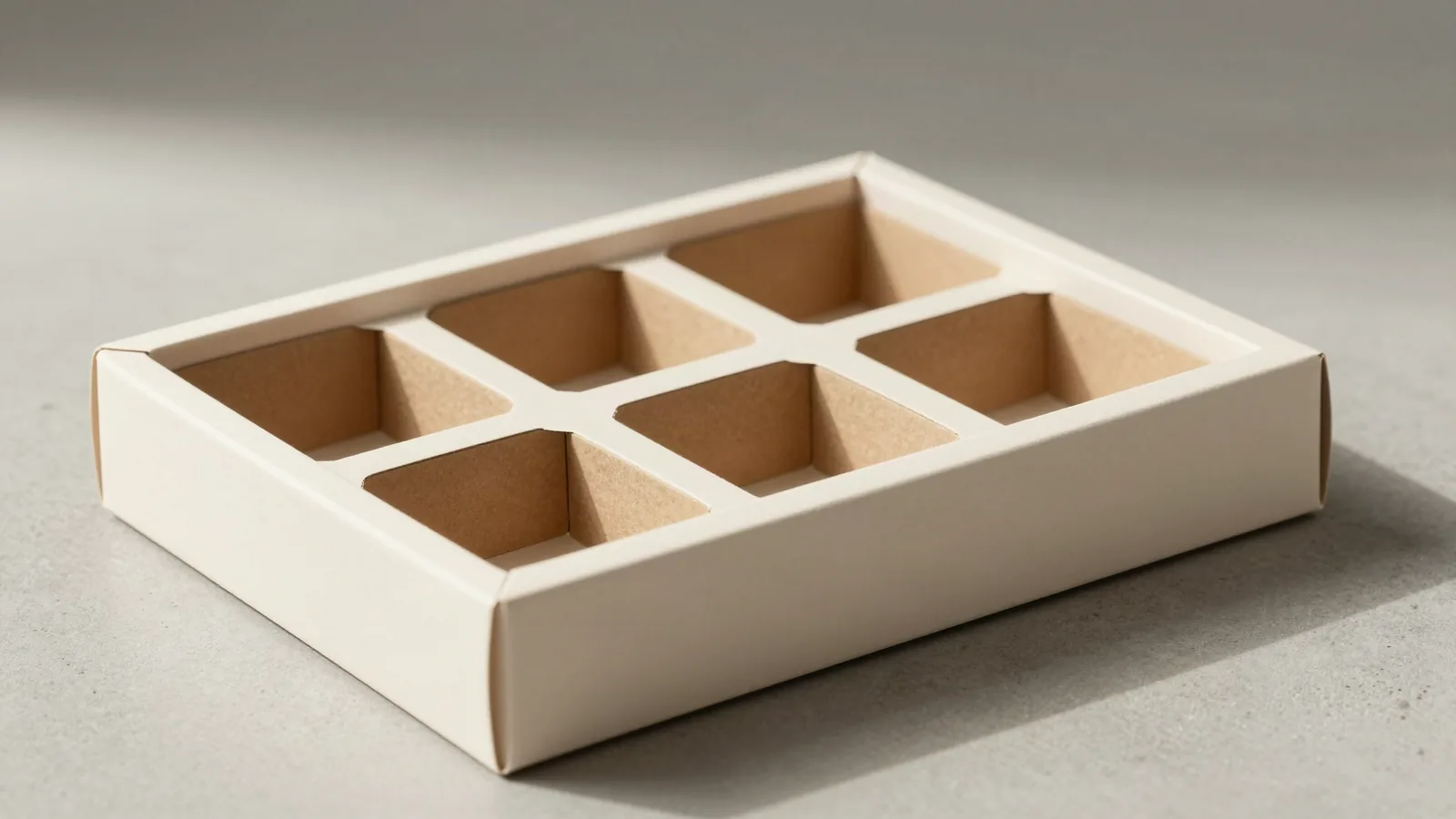




















































A custom foam package joins a product, fitted cushioning, outer structure, closure, printed surface, and packing sequence. The foam locates the item, but the box determines how it is loaded, revealed, closed, and handled. Start with product dimensions, orientation, contact points, accessories, removal path, and the job of the outer box. Catalog references include custom foam box inserts, woozy bottle boxes, votive candle boxes, and vial boxes.
What belongs in a custom foam package?
The brief needs the product, cavity layout, outer structure, closure, printed surface, and packing sequence. Mark which surfaces touch the product, where accessories sit, which side opens first, and how the item is removed. Then state whether the foam sits in a folding carton, rigid box, drawer, mailer, sleeve, or another package layer.
| Package layer | Common industry reference | Specification to provide |
|---|---|---|
| Folding outer carton | SBS (solid bleached sulfate), C1S (coated one-side), or C2S (coated two-side), 12 to 24 pt | Panel order, crease pattern, closure, and cavity depth |
| Kraft outer carton | Kraft board, 18 to 24 pt | Natural surface, print coverage, and board direction |
| Rigid presentation shell | Chipboard, 1.5 to 3 mm, wrapped in 100 to 157 gsm art paper | Lid, base, sleeve, tray, and wrap edges |
| Corrugated shipping layer | E, B, or C flute, corrugated wave profiles, with 32 ECT as a common reference | Outer size, closure, handling route, and packed arrangement |
Which outer construction fits the packing sequence?
The opening path sets the structure. A two-piece rigid box separates lid and base. A drawer or slide uses a sleeve and tray, so the pull direction belongs in the cavity drawing. A magnetic flap changes the hinge and closure area. Straight tuck end, reverse tuck end, auto-lock bottom, and crash-lock base structures organize folding cartons around scored panels and formed bottoms.
A mailer with a roll end tuck top, commonly referenced as FEFCO 0427, can put a parcel-facing shell around a fitted inner arrangement. FEFCO is a standard code system for corrugated box styles. Show both structures if the foam package travels inside another carton.
How should the material layers be chosen?
Board choice follows each layer's job. SBS, C1S, and C2S paperboard in the 12 to 24 pt range are common folding-carton references. Kraft board in the 18 to 24 pt range changes the surface and print direction. Rigid chipboard in the 1.5 to 3 mm range, wrapped in 100 to 157 gsm art paper, forms a presentation shell. Corrugated E, B, or C flutes are compared for an outer handling layer, with 32 ECT as a common board reference.
Size the box around the assembled package. Foam, cards, pouches, board thickness, and closure clearance all take space.
How should I plan cavity fit and dimensions?
Inside measurements are the starting point: length x width x depth for the assembled space around the product. Provide orientation, protrusions, closures, removable parts, and the points that need support. About 1/16 in, or 1.5 mm, is a common packaging planning tolerance, subject to the structure and contents. Check foam depth, lid clearance, accessory placement, and finger access on the same drawing.
Several cavities need a map. Mark fixed spaces, versioned spaces, and loading order so an accurate cavity is still practical to assemble.
Which print and finish choices belong on the outside?
Offset CMYK is a common reference for detailed paperboard artwork. Flexo is commonly considered for corrugated surfaces. Digital printing can suit a short run or version test when the selected process supports it. Matte or gloss lamination changes surface reflection. Soft-touch changes hand feel. Spot UV can isolate a logo or product name. Foil stamping, embossing, and debossing add detail to a lid, sleeve, or front panel.
Keep effects away from folds, seams, closures, and foam-hidden panels. The proof should mark the usable print area. Check barcode position, bleed, and RGB conversions before approval.
Which products can use a foam package?
Products with separate parts, a defined presentation, or a controlled removal path can be scoped as foam packages. Bottles need space around the container and cap. Vials may use several small cavities. Candles can pair a fitted position with a printed shell. Flexible products may sit in a box around a or beside an accessory in a . Custom veterinary medicine boxes are another catalog reference for planning the outside and inside together.
How should a quote separate the packaging layers?
A useful quote brief lists the product, cavity drawing, orientation, removal path, foam layout, outer structure, board reference, closure, printed panels, finish areas, inside and outside dimensions, quantity, destination, and artwork status. State whether the package is presentation-only, a shipping package, or an inner pack inside another carton. Separate shared structure from changing cavities when several product sizes are involved. Use custom packaging for small business as a planning reference for a clear package brief.
Custom Packaging Lane quotes to spec from a 100-unit minimum, with pricing from $0.49 per unit at volume, quoted to spec. Production is typically 8 to 10 business days after proof approval, plus delivery. Free US shipping, free design support, and a free dieline are available. The $19.99 sample kit is credited to the first order. Send the assembled dimensions and cavity map when you request the quote.
Frequently Asked Questions
How does a custom foam package differ from a foam insert box?
A custom foam package includes the product, fitted foam, outer carton or rigid shell, closure, printed surface, and packing sequence. A foam insert box usually describes the insert and its surrounding box. Use the broader package brief when the opening path, accessories, presentation, and shipping layer all affect the build.
Which materials can surround a custom foam package?
Common outer references include SBS, C1S, or C2S paperboard in the 12 to 24 pt range, kraft board in the 18 to 24 pt range, rigid chipboard in the 1.5 to 3 mm range wrapped in 100 to 157 gsm art paper, and corrugated E, B, or C flutes. The package job determines which layer belongs outside.
Which structures work with a fitted foam interior?
A fitted foam interior can be planned inside a two-piece rigid box, drawer or slide, magnetic flap, straight tuck end, reverse tuck end, auto-lock bottom, crash-lock base, or mailer. A roll end tuck top mailer is commonly referenced as FEFCO 0427. Choose from the loading path, cavity access, closure, and shipping layer.
How should I check fit for a custom foam package?
Check length x width x depth with inside measurements for the assembled package, then add product orientation, protrusions, closures, accessory placement, foam depth, lid clearance, and finger access. About 1/16 in, or 1.5 mm, is a common planning tolerance, subject to the structure and contents. Test the real product against the drawing.
What details should a foam package quote include?
A foam package quote should include the product, cavity map, orientation, removal path, foam layout, outer structure, board, closure, print coverage, finish areas, inside and outside dimensions, accessories, quantity, destination, and artwork status. State whether the package is a presentation box, outer shipper, or inner pack so the quote covers the assembled job.












