


























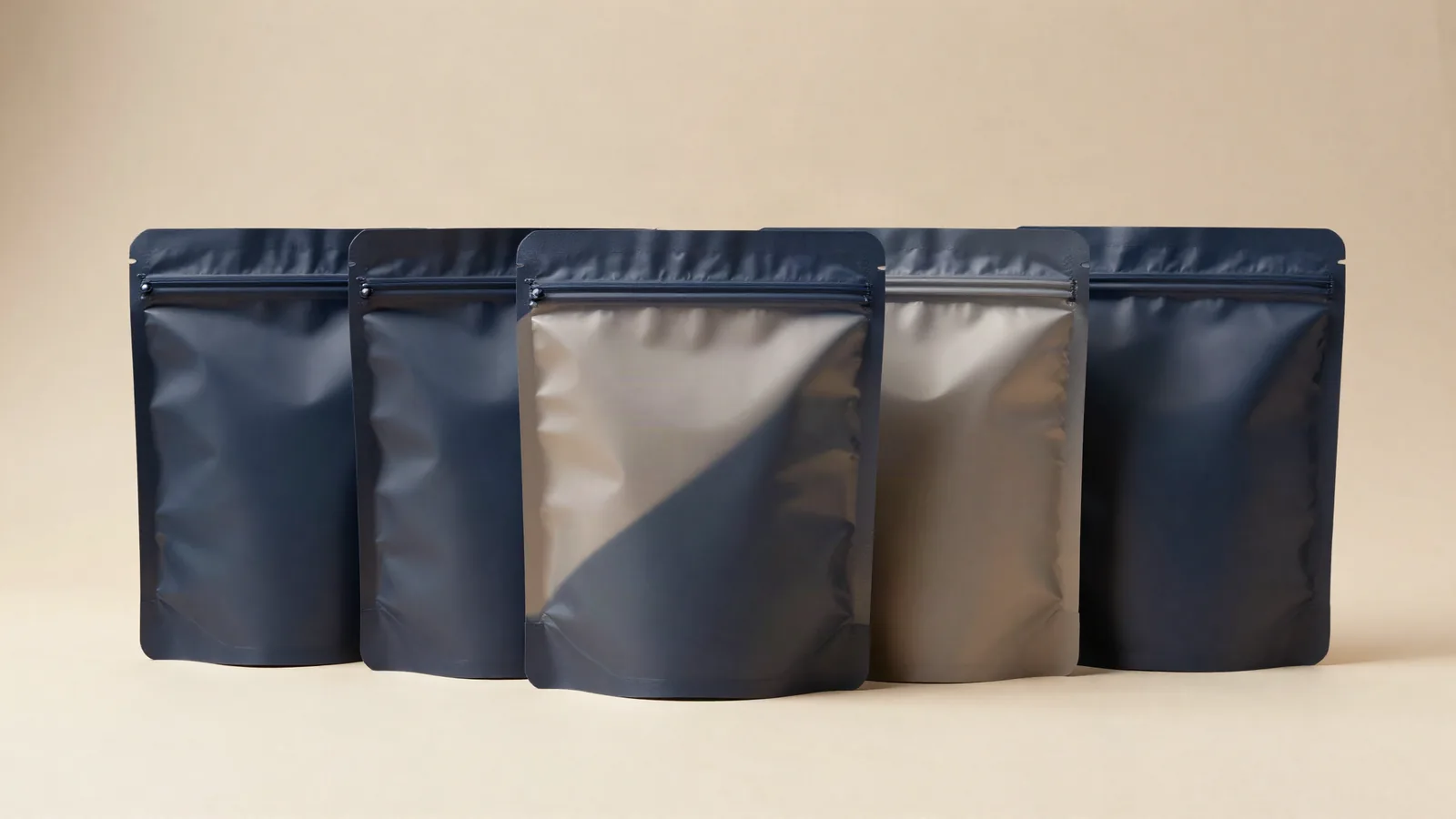













































Heat sealable Mylar bags use a laminate with an inner surface that bonds when the mouth is heated and pressed. The outer surface can carry print, while the barrier portion and film gauge support the package construction. A bag is heat sealable because of its seal layer and opening design, not because it simply looks metallic.
Why does the inner seal layer determine sealability?
The inner seal layer is the film surface that meets across the mouth and forms the heat-activated bond. Heat, pressure, and dwell bring matching sealant surfaces together. Dwell is the time that the heated sealing jaws hold the mouth closed. The quote needs to identify which layer faces inward at the opening.
Describe the product, fill path, mouth, and closing equipment together. That record focuses the material choice on the surface that will actually be joined, rather than on the bag's exterior appearance. If the inner surfaces do not match the sealing method, a metallic exterior cannot fix the problem.
How do the film layers work together?
| Film part | Job in the bag | Sealability check |
|---|---|---|
| Outer film | Visible print and handling surface | Keep artwork clear of the joined edge |
| Barrier layer | Supports the selected flexible package construction | Keep the layer order consistent |
| Inner seal layer | Forms the heat-activated bond | Face the matching seal surface |
| Film gauge | Changes feel, folding, and handling | Review it with the full laminate |
| Finished mouth | Creates the closing boundary | Leave a clean path for heat and pressure |
Film gauge is thickness. It changes how a pouch bends and handles, but gauge alone does not prove that a bag can be heat sealed. The inner seal layer, its position, the mouth geometry, and the sealing conditions decide whether the package closes as planned.
How does film gauge affect a heat-sealable pouch?
Film gauge affects a heat-sealable pouch by changing its thickness, feel, folding behavior, and handling at the mouth. It does not replace a compatible seal layer. CPL's Mylar material spec sheet should record the selected gauge and seal layer together for the custom bag.
A heavier film can change how the filled package sits in the jaws and how much material folds into the seal area. Check the gauge with the bag dimensions, fill level, closure, and equipment rather than choosing from exterior appearance alone.
What does the bag shape change at the opening?
The bag shape changes how the mouth sits in the sealing equipment. Gussets, corners, deep fills, irregular outlines, and die-cut edges can create alignment issues near the top edge. Test the filled bag in the orientation planned for packing because a flat drawing does not show every handling problem at the mouth.
Keep the seal path clear through corners and transitions. A product pressed into the mouth can interrupt the bond, and a shaped edge can reduce the flat area available to the seal. Put the outline, fill level, and closure direction on the same proof.
How should artwork respect the heat-seal zone?
Artwork should leave an unprinted margin where the two seal surfaces meet. The proof should show the opening direction, seal area, tear path, printed panels, and any trim or bleed. Bleed is extra artwork beyond the trim line, so the file does not leave a white edge after cutting. Keep small type and important copy away from scores, trims, and the heat-joined edge.
Low-resolution art can look acceptable on a monitor and still print soft. RGB art can also shift when converted for press. Check the file before approval, then review the digital proof with the seal path visible. Printed Mylar and heat sealability can coexist when the laminate, mouth, and artwork are planned as one package.
Which CPL bag formats can use this material direction?
Custom Mylar heat seal bags are the direct catalog reference. Mylar bags for freeze drying provide a use-led flexible format, while large Mylar bags bring larger fill and alignment questions. Irregular-shape Mylar bags and die-cut Mylar bags show why the outline must be reviewed with the seal path.
How should you test a heat-sealable Mylar bag?
Test a sample with the intended laminate, gauge, outline, artwork, fill, and equipment. Fill the bag as production will fill it, place the mouth in the planned orientation, and inspect the clear margin, edge alignment, joined area, and film around the closure. Repeat the check after a meaningful change to the shape, fill, film, artwork, or equipment.
Custom orders have a 100-unit MOQ. Pricing is from $0.49 per unit at volume, quoted to spec. Production is typically 8 to 10 business days after proof approval, plus delivery. Free US shipping and free design support are available. The $19.99 sample kit gives you a physical reference before approval. For the broader project route, use custom packaging solutions.
Frequently Asked Questions
What makes Mylar bags heat sealable?
Heat sealable Mylar bags use a layered film with a compatible inner seal layer at the mouth. Heat, pressure, and dwell bring matching seal surfaces together to close the bag. The final result also depends on the mouth geometry, equipment, settings, fill level, and orientation during packing.
Does film gauge determine whether a Mylar bag can be heat sealed?
Film gauge changes the bag's thickness, feel, folding, and handling, but it does not determine sealability by itself. Heat sealable Mylar bags need a compatible inner seal layer, a clear mouth, and sealing conditions that match the selected construction. Confirm those details before production.
Can printed Mylar bags have a heat-sealed opening?
Printed Mylar bags can have a heat-sealed opening when the laminate includes a compatible inner seal layer. The artwork should leave a clear unprinted margin at the mouth and keep small copy away from trim, scores, and the joined edge. Test the printed format after filling it as planned.
Do all custom Mylar bag shapes use the same seal construction?
Custom Mylar bag shapes do not automatically use the same seal construction. Flat, large, die-cut, and irregular formats change opening alignment and the available seal path. Include the exact outline, fill level, mouth, and closure direction in the specification, then confirm the film and seal-layer details.
How should a heat-sealable Mylar bag be tested?
A heat-sealable Mylar bag should be tested with the intended film, gauge, shape, artwork, fill, and equipment. Inspect the mouth alignment, clear seal area, joined edge, and material around the closure. Repeat the test after changing the shape, fill, laminate, artwork, or sealing equipment.