
















































































What are Mylar freeze dry bags?
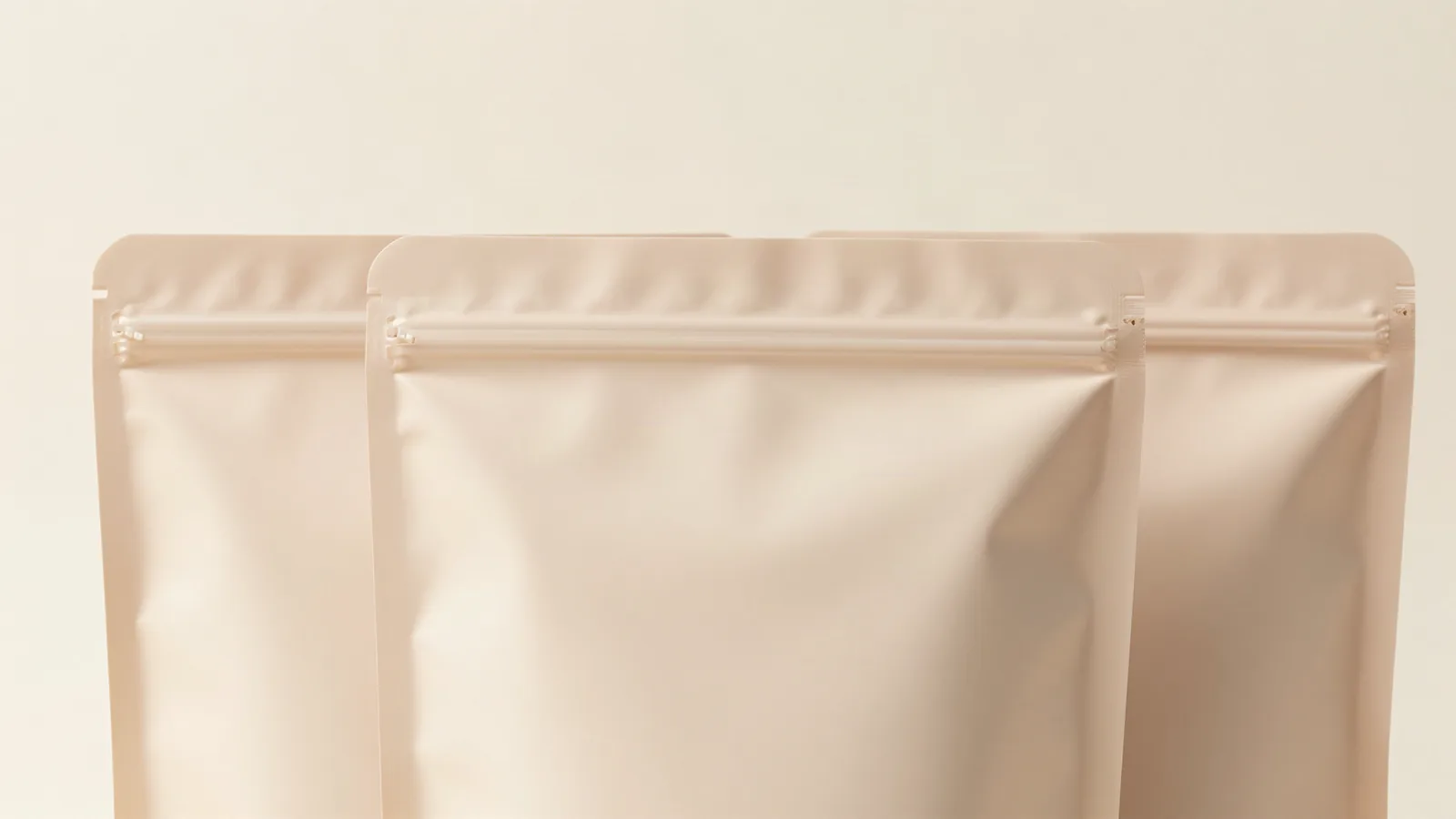
Mylar freeze dry bags are flexible barrier pouches selected around a dried product's fill size, storage conditions, closure, and seal. In packaging, Mylar commonly refers to a polyester film or laminate, not one universal bag construction. A freeze-dry bag should therefore be specified by its actual layers and dimensions, not by the name alone. If the package may touch food, ask us about food-contact options for your product.
The material choice affects filling and handling. A metallized film layer can reduce passage of light, oxygen, moisture, and odor compared with a basic plastic film, while the inner sealant layer closes under heat. The zipper, seal area, tear notch, and filled geometry still determine how the finished bag behaves.
How do mil thickness and oxygen barrier data affect selection?
Mil-thickness is the stated film thickness, and one mil equals one-thousandth of an inch. Oxygen-barrier data is a test value that describes oxygen transmission through a specified construction under stated conditions. Read both values with the layer stack, bag size, closure, and intended storage workflow.
Thickness changes hand feel, stiffness, and resistance to handling stress, but thickness alone does not predict storage life. A published oxygen value also needs its test basis. Use the actual specification for the selected format, not a generic number copied from another pouch.
| Specification | What it describes | Buyer check |
|---|---|---|
| Mil thickness | Film thickness stated in mils. One mil is one-thousandth of an inch. | Compare the stated thickness with handling and seal needs. |
| Oxygen barrier | Oxygen transmission through the selected construction under stated test conditions. | Request the construction and test basis for the chosen bag. |
| Layer stack | Outer film, barrier layer, and inner sealant layer working as one structure. | Confirm that the layers match the storage and filling plan. |
| Closure | Zipper, heat seal, tear notch, or a combined opening plan. | Check how the customer opens and recloses the package. |
Which closure and size fit the fill?
A closure should match the way the customer opens the package. A zipper supports repeated access, while a heat seal creates a closed top after filling. A bag can combine both, but the seal area must stay free of powder, crumbs, or product pieces. Contamination in that zone can interfere with the seal.
Start with filled dimensions, not an empty-bag guess. Leave usable room for the product to settle, the closure to engage, and the seal to sit flat. A large bag may hold more but can take more shelf and shipping space. A shaped bag can change the seal path, so test it with a representative fill.
For the direct catalog reference, see Mylar bags for freeze-drying. Compare large Mylar bags for a larger footprint, custom Mylar ziplock bags for repeat opening, or die-cut Mylar bags when the outline is part of the presentation.
How does the barrier layer affect light and moisture exposure?
A barrier layer works by making the path through the film harder for gases, vapor, and light. Metallized film reflects and reduces transmission, while a foil laminate can create an opaque structure with a strong barrier. Neither description replaces the chosen bag's specification. The zipper and heat-sealed edge also matter because the package has more than one path between the contents and the outside.
Storage claims should stay tied to the product, fill process, seal, and storage conditions. A bag specification can guide the packaging choice. It cannot by itself promise a fixed storage life without product-specific evidence.
What should the dieline and artwork show?
A dieline is the flat cutting template that marks the bag outline, panels, folds, scores, zipper, and seal areas. For a pouch, the proof should show where the product sits and which areas remain clear for conversion and sealing. Keep type away from edges and functional features.
Low-resolution art can look soft after print. RGB artwork can shift when converted for press. A barcode or small type set too close to a score, zipper, or seal is difficult to correct after production begins. We provide free design support and send a digital proof before anything prints. That proof is the time to check bleed, panel order, opening direction, and required package information.
What should I inspect in a sample?
Fill the sample with a representative amount and check the pouch through the steps a customer will use. Look at how the product settles, whether the zipper engages, whether the seal area stays clean, and whether the bag stands, lies flat, or stores as expected. Check the front panel after filling, not only the empty film.
The $19.99 sample kit can help compare material feel, closure action, and finish before the custom direction is approved. The kit is credited toward the first order.
What should a quote for Mylar freeze dry bags include?
Send the product type, filled dimensions, closure, seal method, desired barrier information, artwork status, quantity, and delivery location. The MOQ is 100 units. Pricing is from $0.49 per unit at volume, quoted to spec. Production is typically 8 to 10 business days after proof approval, plus delivery.
Free US shipping and free design support are available. For the broader artwork and structure path, use custom packaging design. The next useful step is to request the selected bag specification before approving the digital proof.
Frequently Asked Questions
Are Mylar bags suitable for freeze-dried food storage?
Mylar freeze dry bags can be considered for barrier-focused storage packaging, but the selected film, closure, seal, and intended use still need review. A metallized or foil barrier layer can reduce light, oxygen, moisture, and odor transmission. If the package may touch food, ask us about food-contact options for your product before approving the construction.
What does mil thickness mean for a freeze-dry bag?
Mil thickness describes the stated thickness of the film construction. One mil equals one-thousandth of an inch. A thicker structure can change hand feel, stiffness, and handling behavior, but thickness alone does not decide barrier performance or storage results. Compare the selected bag's thickness with its layer stack, seal plan, size, and filling workflow.
Do freeze-dry bags need a heat seal if they have a zipper?
A zipper and a heat seal serve different package actions. A zipper supports repeated opening, while a heat seal closes the bag after filling. A freeze-dry bag can use both, but product must stay out of the seal area. Choose the closure around how the customer opens the package and how the filled bag will be stored.
Can freeze-dried food bags use custom printing?
Custom printed Mylar bags can carry product names, directions, storage wording, and brand artwork. The artwork still needs clear space around the zipper, seal, notch, and edges. Custom Packaging Lane provides free design support and sends a digital proof before anything prints. Ask us about food-contact options if the bag may touch food.
What MOQ and production timing apply to Mylar freeze dry bags?
Custom Packaging Lane uses a 100-unit MOQ for Mylar freeze dry bags. Pricing is from $0.49 per unit at volume, quoted to spec. Production is typically 8 to 10 business days after proof approval, plus delivery. Free US shipping and free design support are available, and the $19.99 sample kit is credited toward the first order.












